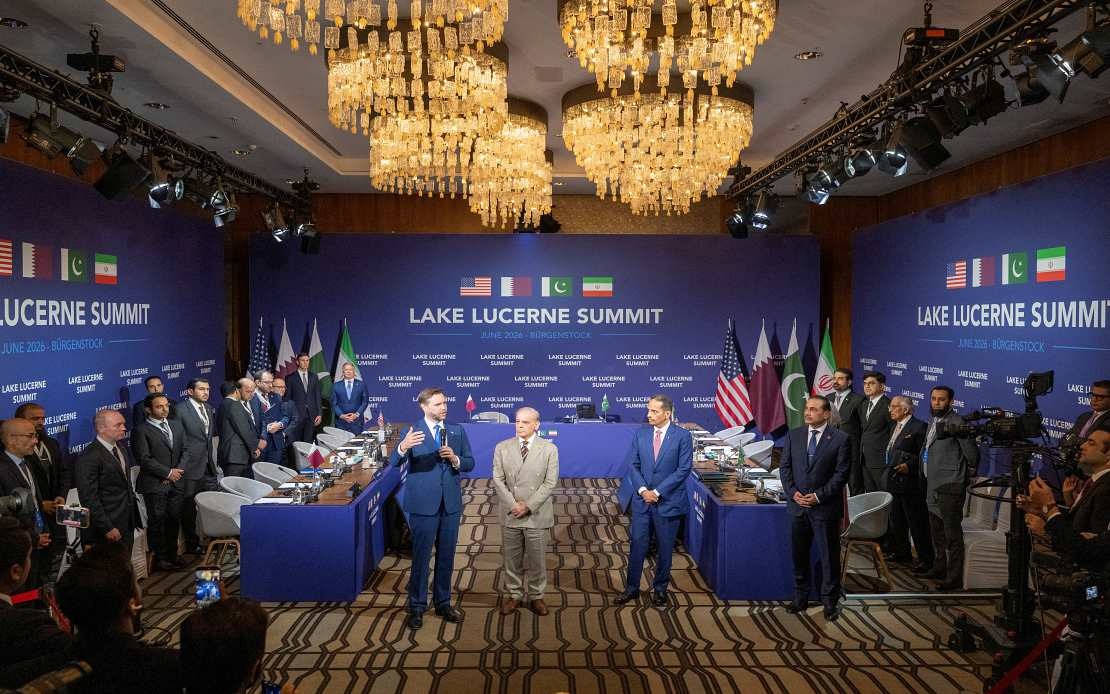
Mediation efforts between the United States and Iran have entered a promising new phase following the conclusion of the first round of high-level talks at the Lake Lucerne Summit in Switzerland, according to a joint statement issued by Qatar and Pakistan on Monday, June 22. The two nations, acting as key facilitators in this delicate diplomatic process, characterised the initial discussions as having unfolded within "a positive and constructive atmosphere," with negotiators achieving what they described as "encouraging progress" on several fronts.
Among the most tangible outcomes from these opening negotiations was the establishment of a formal mechanism dedicated to sustaining technical discussions between the parties. This institutional framework represents a critical step toward ensuring that engagement remains structured and focused on substantive issues rather than devolving into rhetorical exchanges. The creation of this channel reflects a shared commitment to maintaining momentum in what has historically been a fraught relationship characterised by decades of tension and mutual suspicion.
Equally significant was the formation of a high-level oversight committee tasked with managing the broader political dimensions of the mediation process. This body will maintain regular contact with the negotiating teams on the ground and will oversee a network of specialised working groups, each concentrating on distinct but interconnected areas of dispute. The compartmentalisation of negotiations into thematic subgroups—addressing the Iranian nuclear programme, sanctions architecture, and implementation mechanisms—allows negotiators to make granular progress on technical matters whilst senior officials maintain focus on the wider strategic picture.
The working groups will pay particular attention to ensuring compliance with a Memorandum of Understanding signed in the week preceding the summit. This document establishes the foundational principles and timelines governing the entire negotiation process. By designating specialised bodies to monitor adherence to its terms, both the US and Iran signal an intention to translate diplomatic rhetoric into concrete institutional arrangements. For Southeast Asian observers, particularly those in Malaysia with significant economic interests tied to regional stability, such institutional rigour matters enormously.
The negotiating parties have committed to an ambitious timeline, with the high-level committee endorsing a roadmap that aims to produce a final, comprehensive agreement within sixty days of the summit. This deadline creates genuine pressure on all sides to move beyond preliminary posturing and engage in substantive problem-solving. For a dispute that has festered for generations, the willingness to set a firm endpoint to negotiations—rather than allowing talks to drift indefinitely—suggests a degree of political will that many observers had begun to doubt possible.
Parallel to these political negotiations, the two sides have agreed to establish a direct communication channel designed to prevent miscalculation and unintended escalation. This hotline-style arrangement covers the specific timeframe outlined in the foundational Memorandum of Understanding and carries particular significance given the volatile nature of the maritime domain in the Persian Gulf region. By creating mechanisms to avoid incidents, the negotiators acknowledge that even minor accidents or misunderstandings could derail the entire peace process.
The Strait of Hormuz, which separates Iran from the Arabian Peninsula and serves as the world's most critical chokepoint for oil transit, has long been a flashpoint for US-Iran tensions. Roughly one-third of all seaborne traded oil passes through these waters annually, making freedom of navigation in the strait a matter of global economic importance. Malaysia, as a maritime nation heavily dependent on energy imports and shipping routes, has a direct stake in ensuring that political tensions do not translate into actual disruptions to commercial passage. The agreement to establish a communication channel specifically aimed at protecting merchant shipping through the strait directly addresses one of the most economically consequential sources of potential conflict.
The role of Qatar and Pakistan as mediators underscores the complex web of regional and international relationships that shape Middle Eastern diplomacy. Both nations maintain relationships with the United States whilst simultaneously enjoying strong ties with Iran, positioning them uniquely as honest brokers. Qatar's experience hosting major international forums and its influence as a regional financial power lend weight to its diplomatic efforts. Pakistan, with its own complicated history of balancing relationships with both Washington and Tehran, brings additional credibility to any joint initiative aimed at reducing bilateral tensions.
For Malaysian policymakers and business leaders, the implications of renewed US-Iran engagement extend beyond mere regional stability. Extended confrontation between these two powers has created numerous inefficiencies and risks throughout global trade networks, raising costs for businesses far removed from the Middle East. A stabilisation of US-Iran relations could eventually permit the reintegration of Iranian oil into global markets at less volatile prices, benefiting energy-importing nations across Southeast Asia. Furthermore, reduced geopolitical friction in the Persian Gulf reduces the security risks faced by Malaysian vessels operating in waters increasingly militarised by competing powers.
The establishment of technical working groups focused specifically on sanctions-related issues signals that both sides recognise the economic dimension of their dispute as central to any durable resolution. Sanctions have represented perhaps the most coercive tool the United States has wielded against Iran, and their eventual removal—either partial or complete—would constitute a major shift in bilateral relations. The willingness to discuss sanctions mechanisms formally, rather than treating them as non-negotiable impositions, suggests movement toward eventual compromise.
The agreed roadmap itself merits closer analysis. The sixty-day timeframe, while compressed compared to typical international negotiations, remains realistic enough to avoid appearing performative. This schedule suggests that negotiators have likely identified the major substantive areas where compromise remains possible, and that they have devoted considerable groundwork to understanding each side's red lines and flexibility ranges. Seasoned diplomacy observers will recognise that such tight timelines typically emerge only after extensive shuttle diplomacy and back-channel communication have already narrowed the gap between positions.
As these negotiations proceed, regional actors including Malaysia should monitor developments carefully whilst preparing contingency plans should talks falter. The establishment of these institutional frameworks and communication channels represents a meaningful shift in tone and approach, yet the underlying structural tensions between Washington and Tehran remain formidable. Success will ultimately depend on whether both sides can translate constructive atmospheres into concrete compromises on the most contentious issues.

