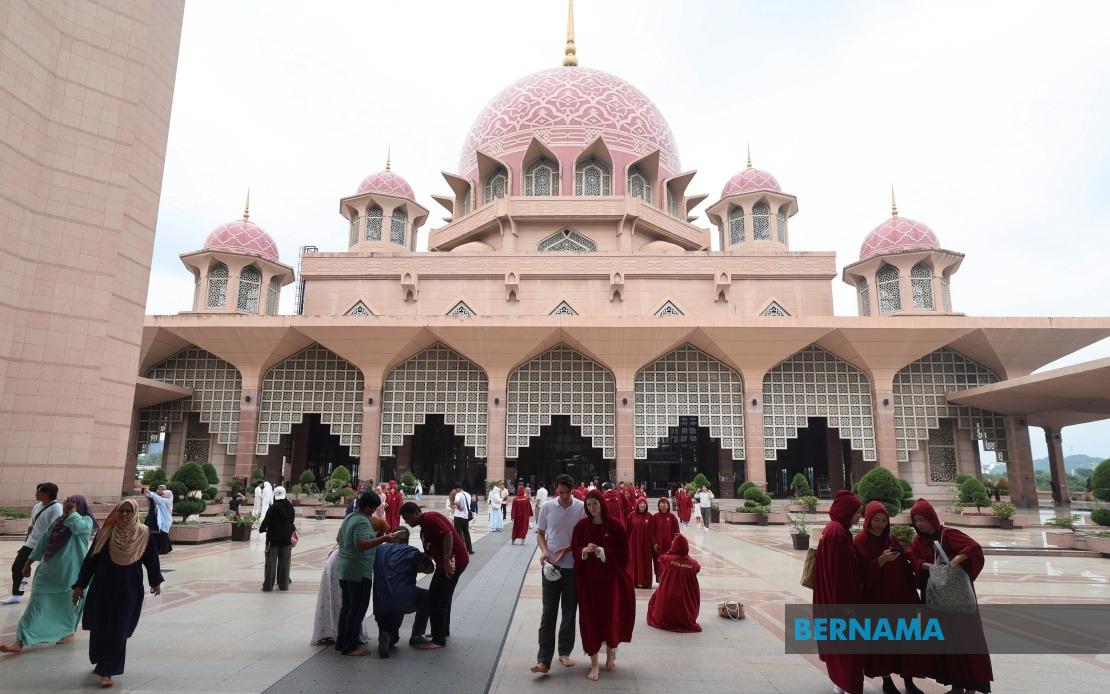
The Putra Mosque in Putrajaya will serve as the backdrop for a significant gathering celebrating the Islamic new year on June 17, drawing approximately 5,000 attendees from both Malaysia and abroad. The National Maal Hijrah 1448H/2026M ceremony represents one of the country's foremost observances of the Muslim calendar's commencement, anchoring itself in the historical migration of Prophet Muhammad that established the foundations of Islamic civilization. The occasion underscores Malaysia's continued commitment to honouring Islamic heritage whilst maintaining its position as a multicultural nation that respects the religious significance of its Muslim-majority population.
Sultan of Perak Sultan Nazrin Shah will preside over the proceedings, lending the gathering considerable ceremonial weight and institutional endorsement from Malaysia's royal establishment. His presence signals the importance accorded to this observance at the highest levels of government and state authority. The attendees will encompass not merely ceremonial figures but a comprehensive representation of Malaysia's institutional landscape, including Deputy Prime Ministers Datuk Seri Ahmad Zahid Hamidi and Datuk Seri Fadillah Yusof, various Cabinet ministers, international diplomatic representatives, and senior civil service officials. This breadth of attendance demonstrates the scale and formal recognition given to the Maal Hijrah commemoration within Malaysia's governance framework.
The centrepiece of the morning's programme will revolve around the Sultan's royal address, a moment traditionally reserved for reflecting upon the deeper meanings of the Hijrah narrative and its contemporary relevance for Muslim societies. This speech will establish the thematic foundation for subsequent proceedings and set the moral and spiritual tenor for the entire celebration. Following the address, the ceremony will transition to the presentation of the National and International Tokoh Maal Hijrah Awards, an accolade system designed to recognise and celebrate individuals who have demonstrated exceptional contributions to Islamic knowledge, practice, and advancement.
These prestigious awards operate within a carefully calibrated framework that evaluates nominees across multiple dimensions of achievement and character. Recipients must demonstrate profound expertise within their respective professional domains, coupled with moral integrity and ethical conduct that exemplifies Islamic values. The selection criteria explicitly emphasise contributions made at both domestic and international levels, reflecting Malaysia's aspiration to position itself as a centre of Islamic thought and leadership within the global Muslim community. By honouring these individuals, the national celebration acknowledges that Islamic advancement extends far beyond ritual observance, encompassing intellectual, scientific, social, and cultural endeavours.
The Department of Islamic Development Malaysia (JAKIM) has shaped this year's commemoration around a unifying conceptual framework designed to inspire contemporary reflection on the Hijrah's enduring significance. Rather than treating the migration as a historical episode confined to the seventh century, JAKIM's thematic approach encourages Muslims to contemplate how the Hijrah's principles of transformation, courage, and commitment to faith might catalyse positive developments in their own lives and communities. This interpretive strategy bridges historical consciousness with modern relevance, suggesting that the Hijrah embodies timeless lessons applicable to contemporary challenges facing both individuals and societies.
A notable innovation distinguishing this year's observance is the Tausiyyah @ Maal Hijrah programme, which took place at the mosque on the day preceding the main event. This supplementary initiative focused upon tadabbur, an Islamic practice emphasising deep contemplation and reflection upon Quranic verses. Rather than presenting the Quran as a text merely to be recited, the programme endeavoured to facilitate genuine comprehension and spiritual absorption of its teachings. Distinguished qari—professional Quranic reciters—delivered passages whilst facilitators guided participants through interpretive reflection, helping attendees extract wisdom from the verses and contemplate their practical application within daily existence. This methodology recognises that authentic religious engagement requires intellectual and emotional participation rather than passive reception.
The Tausiyyah programme structure acknowledges that many Muslims hunger for deeper scriptural literacy and meaningful engagement with Islamic source materials. By providing contexts wherein Quranic wisdom could be explored through contemplative lenses, JAKIM has created pathways for spiritual growth that extend beyond conventional ceremonial boundaries. Participants gained opportunities to move beyond surface familiarity with Quranic language towards substantive understanding of the guidance these verses offer for navigating life's complexities. This approach resonates particularly within Southeast Asian contexts, where Islamic education often coexists with secular institutional frameworks, creating particular hunger for spaces supporting integrated faith and intellectual development.
Extending the celebration's reach beyond the single ceremonial moment, JAKIM has scheduled a follow-up lecture series commencing the subsequent day at the Putrajaya Islamic Complex Auditorium. The National and International Tokoh Maal Hijrah Lecture 1448H/2026 will commence at nine in the morning, providing the award recipients with platforms to distil and share their accumulated expertise with broader audiences. These lectures represent more than mere testimonial opportunities; they constitute deliberate mechanisms for knowledge transfer and intellectual dissemination. By inviting award recipients to articulate their experiences and insights, the institutional arrangement converts individual achievement into collective educational resource, amplifying the impact of their contributions beyond their immediate professional spheres.
For Malaysian readers and broader Southeast Asian observers, this celebration encapsulates several meaningful dimensions worth contemplating. The event demonstrates how Muslim-majority nations can maintain robust religious observance whilst simultaneously engaging with pluralistic governance structures and international diplomatic frameworks. The prominence of both government officials and international representatives signals that Islamic cultural celebration and secular administrative governance need not exist in tension; instead, they can coexist within complementary institutional spaces. Furthermore, the emphasis upon intellectual, moral, and professional excellence as criteria for Islamic distinction reflects emerging trends in contemporary Muslim thought that reconcile traditional religious values with modern achievement paradigms, suggesting pathways for societies navigating the intricate relationship between faith and development.