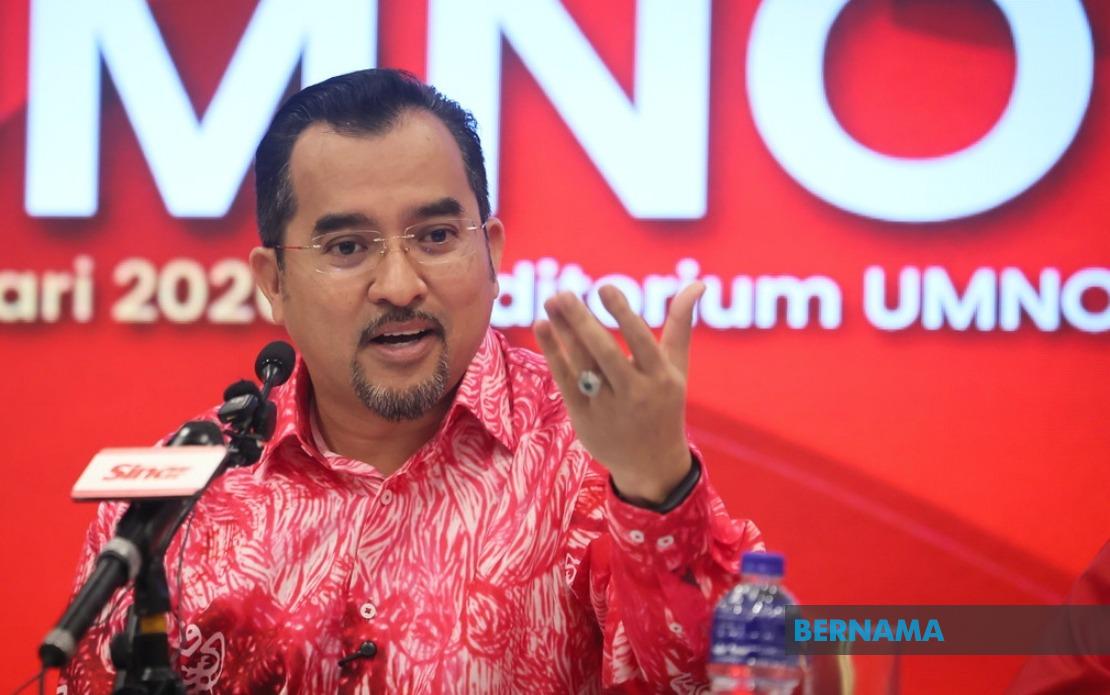
UMNO's secretary-general has publicly attributed the resignation of Supreme Council member Datuk Dr Mohd Puad Zarkashi to personal grievance rather than principle, claiming the longtime politician quit because his son failed to secure the party's nomination for the Rengit state seat. Datuk Dr Asyraf Wajdi Dusuki made the assertion on Facebook, seeking to reframe the narrative surrounding a high-profile defection that could undermine UMNO's standing as the Johor state election campaign enters its final phase ahead of the June 27 nomination day.
The Rengit candidacy represents a flashpoint in UMNO's candidate selection process for what constitutes a significant electoral contest in Malaysia's southernmost state. Polling is scheduled for July 11, following the dissolution of the Johor State Legislative Assembly on June 1. The timing of Puad's exit, mere days before nomination closes, suggests institutional tensions beneath UMNO's surface that extend beyond routine party management, particularly as selection decisions carry substantial weight in determining electoral fortunes across multiple constituencies.
According to Asyraf Wajdi's account, Puad's dissatisfaction crystallised into explicit threats directed at the party hierarchy. The secretary-general characterised these communications as attempts to leverage personal ambitions through coercion, with Puad allegedly warning that he would abandon UMNO and publicly attack the organisation if leaders refused to nominate his son. This pattern of conditional loyalty, Asyraf Wajdi contended, extends backwards to the Najib Tun Razak era, when Puad reportedly threatened departure unless renominated as Member of Parliament for Batu Pahat, establishing what he frames as a troubling precedent of individual demands superseding collective party interests.
The secretary-general acknowledged the younger Puad's apparent credentials, conceding that the son possesses youth and potential as a prospective leader. Nevertheless, Asyraf Wajdi argued that candidate selection involves intricate calculations spanning multiple variables beyond individual promise. This statement implicitly raises questions about what those determining factors were and why they weighed against a younger generation supposedly the party's future. Such opacity in decision-making processes has historically fuelled resentment among ambitious figures within UMNO and contributed to defections that weaken organisational cohesion.
Crucially, Puad's original Facebook announcement framed his resignation as enabling greater freedom of expression rather than retaliation for disappointed preferences. This characterisation suggests ideological or strategic divergences beyond mere candidacy disputes, though Asyraf Wajdi's interpretation pushes a purely transactional explanation. The discrepancy between these narratives indicates competing visions of UMNO's direction and decision-making legitimacy—a fundamental tension afflicting major Malaysian political parties when prominent members depart.
Ashyraf Wajdi also seized the opportunity to counter Puad's allegations that Johor's palace wielded controlling influence over state UMNO operations and orchestrated the legislative assembly dissolution. By characterising these claims as slander, the secretary-general sought to insulate the monarchy from suggestions of partisan interference, a politically sensitive matter in a state where royal prerogatives carry historical and constitutional weight. The defensive posture suggests Puad's accusations struck at vulnerabilities UMNO wishes to keep submerged during a crucial election campaign.
The episode underscores UMNO's structural challenge: maintaining internal discipline while projecting an image of meritocratic governance. Asyraf Wajdi's assertion that UMNO is not a hereditary party prioritising familial networks contradicts perceptions among grassroots members who observe powerful families dominating nomination processes across Malaysian politics. Whether legitimate or not, such perceptions corrode institutional legitimacy and create grievances exploitable by rival parties seeking to poach dissidents or mobilise swing voters disgusted by perceived nepotism.
From a broader Southeast Asian perspective, Puad's departure exemplifies chronic weaknesses afflicting established parties across the region. When internal mechanisms for reconciling ambition with organisational needs falter, talented figures defect, fragment the vote, or migrate to competing formations. This dynamic particularly affects Malaysia's Malay-Muslim political landscape, where UMNO historically enjoyed organisational dominance now increasingly contested by Perikatan Nasional and other challengers offering alternative platforms for ambitious politicians excluded from traditional hierarchies.
The Johor election itself carries implications extending beyond state politics. As Malaysia's third-largest state by population and economically significant industrial hub, Johor's direction influences regional perceptions of BN's viability and Malay-Muslim electoral preferences. Large-scale defections or candidate controversies inject uncertainty into campaign momentum. Asyraf Wajdi's public response therefore serves not merely to explain a personnel decision but to signal UMNO's confidence and organisational stability—though the necessity of detailed public explanation paradoxically suggests underlying fragility.
Ashyraf Wajdi's emphasis that UMNO's mission transcends personal satisfaction reflects institutional rhetoric prioritising collective identity over individual advancement. Yet within Malaysian political culture, such appeals frequently ring hollow when observers note that senior figures often enjoy unequal access to nominations and positions. The tension between meritocratic principles and factional patronage remains irresolvable within current UMNO structures, creating perpetual vulnerability to accusations of hypocrisy when candidates are rejected.
Looking forward, Puad's next moves will bear watching. Whether he contests as an independent, joins another coalition partner, or withdraws from active politics will signal both his personal calculus and broader trends in Malaysian political alignment. His defection during a critical election campaign represents a concrete loss of legitimacy and organisational capacity for UMNO precisely when unity matters most. Asyraf Wajdi's detailed public refutation, while attempting damage control, inadvertently highlights tensions that extend far beyond one candidate's snub and probe deeper questions about UMNO's relevance to contemporary Malaysian politics.

