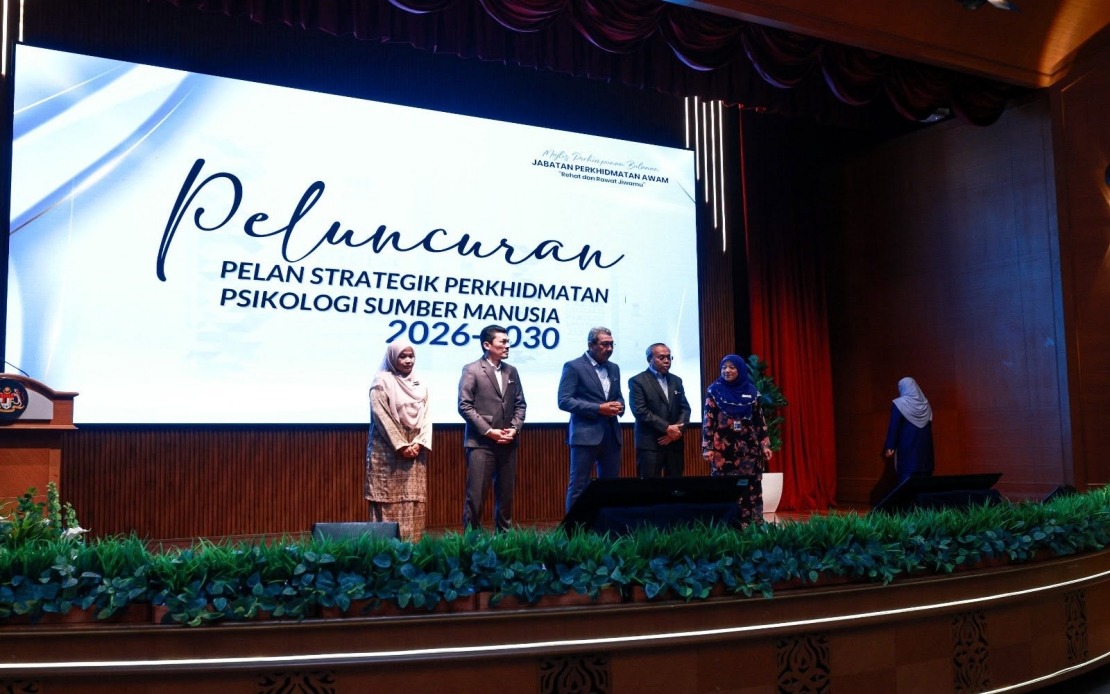
The Public Service Department has taken a significant step toward institutionalising mental health support across Malaysia's civil service by unveiling a comprehensive strategic framework spanning 2026 to 2030. Launched during the PSD Monthly Assembly in Putrajaya on June 19, 2026, the Human Resources Psychology Services Strategic Plan represents a coordinated effort to embed psychological well-being into the fabric of government operations. The initiative was officially inaugurated by Tan Sri Wan Ahmad Dahlan Abdul Aziz, the PSD's Director-General, signalling top-level commitment to what has historically been a neglected dimension of workplace wellness in the Malaysian public sector.
The strategic plan is built on three foundational pillars that address the comprehensive nature of mental health intervention. Comprising 12 distinct strategies, 22 operational programmes, and 48 key performance indicators, the framework aims to measure and track progress systematically across all federal and state government agencies. This structured approach moves beyond rhetoric, establishing concrete metrics against which individual departments and the civil service as a whole can be held accountable. The specificity of the KPIs suggests that policymakers recognise the need for tangible evidence of impact rather than relying on qualitative assessments alone.
Central to the campaign messaging is the concept of "Rawat," which translates to care or treatment in Malay. This terminology deliberately emphasises proactive intervention rather than reactive crisis management. Tan Sri Wan Ahmad Dahlan stressed that civil servants must actively dismantle the stigma surrounding psychological services, openly acknowledge struggles when they arise, and seek professional assistance without fear of judgment or career consequence. This messaging strategy directly challenges entrenched cultural attitudes within the bureaucracy, where discussing mental health has traditionally been viewed as weakness or instability potentially damaging to career progression.
The campaign theme "Rest and Treat (R&R) Your Soul" encapsulates a dual mandate: acknowledging that exhaustion is genuine and requires respite, while simultaneously encouraging individuals to address underlying psychological concerns through structured support. This framing recognises that Malaysian civil servants face mounting pressures from rapid digitalisation, increased public expectations, and often constrained resources. The directive to "rest when you are tired and take care of your soul before it gets worse" implicitly recognises that unaddressed mental health challenges compound over time, potentially leading to burnout, decreased productivity, and higher turnover rates—all costly outcomes for government operations.
The timing of this initiative reflects broader regional and global trends. Southeast Asian governments have increasingly acknowledged that civil service reform cannot succeed without attending to workforce mental health. Singapore, Thailand, and Indonesia have implemented or expanded similar programmes in recent years, recognising that a psychologically healthy workforce directly correlates with better public service delivery. Malaysia's initiative positions the country within this progressive framework, though questions remain about implementation capacity given existing resource constraints within the psychological services sector.
Integrating this mental health strategy with the existing H.E.M.A.T work culture framework demonstrates sophisticated policy design. H.E.M.A.T—encompassing governance improvements, empathy prioritisation, progressive thinking, innovation, and transparent administration—creates an enabling environment for the psychological services plan to take root. Together, these complementary initiatives suggest a holistic vision for civil service transformation where systemic improvements support individual well-being, and healthy personnel contribute to better governance outcomes.
However, significant implementation challenges loom. Malaysia's existing pool of qualified mental health professionals remains limited relative to the civil service population of approximately 1.6 million. The 22 programmes outlined in the plan will likely require substantial training of counsellors, occupational health specialists, and peer support coordinators within government agencies. Budget allocation for these activities, though not detailed in the announcement, will be critical to determining whether this represents genuine systemic change or symbolic gesture.
The emphasis on destigmatisation carries particular weight in the Malaysian context, where cultural attitudes toward mental illness remain heavily influenced by traditional beliefs and religious perspectives. Civil servants, particularly in conservative regions or hierarchical departments, may still hesitate to access services despite official encouragement. Building trust in confidentiality systems will require transparent communication about data protection and clear assurances that seeking help will not trigger punitive action.
For Malaysian organisations outside government, this PSD initiative sets a potential benchmark. Private sector employers and state-owned enterprises may feel pressure to develop comparable frameworks, potentially accelerating mental health awareness across the broader Malaysian workplace. The plan's emphasis on measurable KPIs could likewise influence how other sectors approach programme evaluation, moving away from input-focused metrics toward outcome-focused assessment.
The strategic plan also addresses a growing recognition that mental health support represents not merely a welfare consideration but an investment in operational efficiency. Reduced absenteeism, lower turnover, improved decision-making quality, and enhanced public-facing service all flow from psychologically supported workforces. This business case rationale may resonate more effectively with budget-conscious government officials than purely humanitarian arguments.
Implementation will unfold across multiple phases, with early months likely focused on building infrastructure—establishing psychological support units in major agencies, training frontline managers to recognise distress indicators, and launching awareness campaigns to normalise service utilisation. Subsequent phases should see programme maturation and evidence accumulation regarding which interventions prove most effective for different population segments within the civil service.
Success will ultimately be measured not by strategic documents published but by meaningful shifts in how civil servants experience their work environment. Whether this plan catalyses genuine cultural change or remains aspirational depends on sustained commitment from leadership, adequate resource allocation, and genuine organisational change beyond the announcement phase. For now, the initiative signals that Malaysia's government recognises workforce mental health as central to civil service excellence.

