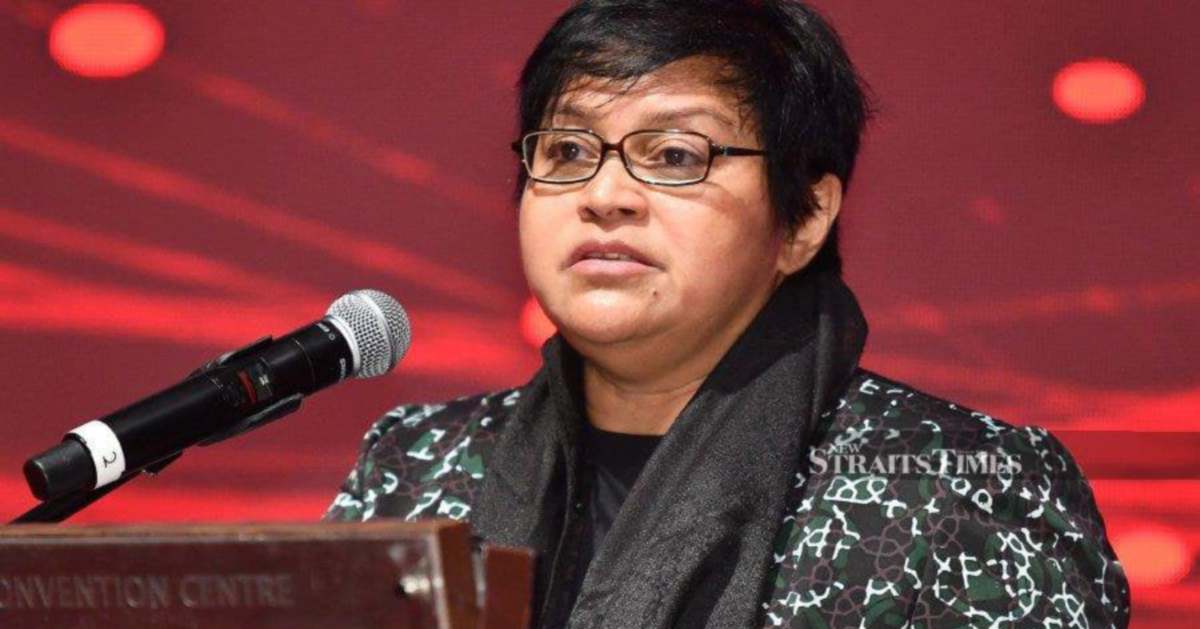
Umno information chief Datuk Seri Azalina Othman Said has pushed back against speculation over potential coalition configurations in Johor, emphasizing that the timing remains inappropriate for such deliberations. Speaking from Putrajaya, she stressed that meaningful discussions about forming a government arrangement—whether through conventional coalition or unity frameworks—should be deferred until the electorate has cast their votes and the actual election outcome becomes clear.
Her remarks reflect a measured approach adopted by senior Umno figures ahead of electoral contests, where premature public discourse about power-sharing could invite accusations of arrogance or create friction with potential coalition partners. The caution also suggests internal party discipline, preventing rival factions from staking competing claims to government positions before the people have spoken. In Malaysian political tradition, such restraint from top-tier leadership typically signals confidence in the party's prospects while maintaining flexibility for post-election negotiations.
The statement carries particular relevance for Johor, a state where Umno maintains substantial organisational strength and historical electoral influence. As the southern anchor of Malaysia and home to one of the country's most developed economies, Johor remains strategically significant for any party seeking to form federal or state-level governments. Umno's electoral fortunes in the state have direct implications for national political configurations, making Johor a barometer of broader Malay-Muslim voting patterns across the peninsula.
Azalina's intervention underscores the distinction between pre-election positioning and post-election reality. While political analysts and opposition observers may openly speculate about various coalition scenarios, serving government figures typically maintain public neutrality on such matters. This convention reflects democratic principles that acknowledge voters' primacy in determining political outcomes. By adhering to this practice, Umno leadership signals respect for the electoral process and avoids the appearance of predetermined results.
The reference to potential unity government models merits particular attention given Malaysia's recent political trajectory. Unity frameworks have emerged as viable alternatives to traditional winner-take-all governments, especially in polarised environments where no single party commands overwhelming majorities. Johor, like other Malaysian states, has witnessed experiments with cross-party cooperation, though such arrangements remain relatively novel in state politics outside of recent federal-level precedents. Any Johor unity model would depend on negotiated agreements post-election, making premature public discussion potentially counterproductive.
The timing of Azalina's statement also reflects broader patterns within Umno itself. The party has undertaken significant organisational restructuring and renewal efforts aimed at consolidating support among traditional constituencies while recalibrating its positioning within Malaysia's complex multi-ethnic political marketplace. Senior leaders emphasise party discipline and coordinated messaging to project coherence and strength ahead of electoral contests. Individual leaders going rogue with pre-election coalition proposals would undermine these messaging disciplines.
For Malaysian voters, particularly those in Johor, Azalina's emphasis on waiting for election results carries an implicit message: that the party remains confident in its ability to earn voter mandates through legitimate democratic processes rather than through backroom arrangements negotiated in advance. This rhetorical positioning aligns with broader democratic principles that position election results as the sole legitimate source of governmental authority. At the same time, it acknowledges the practical reality that coalition mathematics in Malaysia's multi-party system frequently require post-election negotiations.
Regional observers watching Malaysian politics will note how such leadership statements reveal the balance between internal party coordination and democratic accountability. While Umno operates as a tightly disciplined organisation capable of rapid coordination, its senior figures must also calibrate public communications to maintain legitimacy with voters who increasingly expect transparency and respect for electoral processes. The tension between these imperatives regularly surfaces in pre-election discourse.
The substance of Azalina's remarks also implicitly acknowledges that Johor's electoral outcome remains genuinely uncertain despite Umno's historical dominance. If the party's victory were entirely assured, there would be little need to emphasise waiting for results. Her cautionary stance suggests party strategists recognise that the state's political landscape has evolved, with various opposition formations having strengthened their grassroots presence in certain constituencies. This realistic assessment shapes how Umno frames its approach to coalition discussions.
Looking forward, Azalina's position establishes a clear framework within which Umno will likely conduct post-election negotiations. By publicly committing to result-based discussions rather than predetermined arrangements, the party preserves its flexibility to pursue optimal coalition configurations once actual numbers are known. This approach differs substantially from prematurely announcing which parties Umno would or would not work with—declarations that could limit negotiating options or provoke unnecessary conflicts with potential partners.
For Southeast Asian observers tracking Malaysian developments, such episodes illustrate how sophisticated state-level politics operate within federal systems where electoral timing, coalition mathematics, and inter-party relationships create complex strategic environments. Johor's significance extends beyond its state boundaries, influencing perceptions about which political forces can effectively govern Malaysia's largest developed economy and most strategically important state. Azalina's statement, therefore, serves multiple audiences with different information needs and political interests.
Ultimately, the information chief's emphasis on deferring coalition discussions until votes are counted represents standard political practice that protects party interests while respecting electoral legitimacy. Whether through deliberate strategy or simple acknowledgment of democratic norms, such positioning allows Umno to maintain its flexibility for post-election negotiations while projecting confidence and respect for voters' ultimate authority in determining Malaysia's political future.

