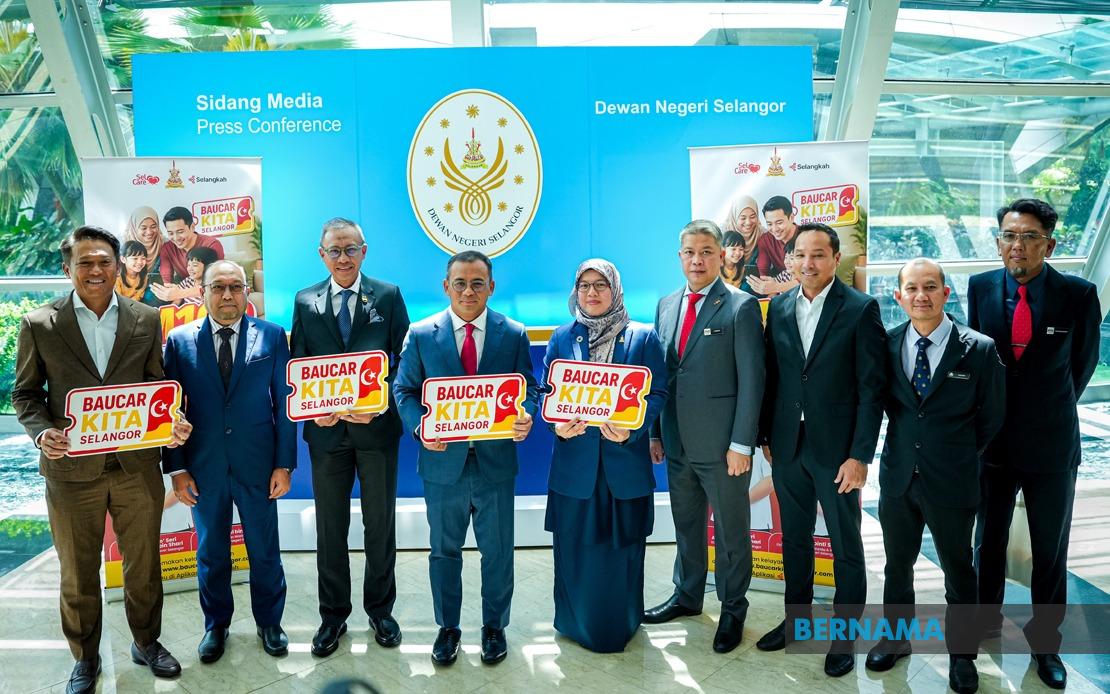
The Selangor state government has declared that all land-related prerequisites for constructing Port Klang's third terminal on Pulau Carey have been finalised since December, removing a significant administrative hurdle from the long-delayed infrastructure project. Menteri Besar Datuk Seri Amirudin Shari made this announcement on June 22, signalling that at least one dimension of the multi-faceted development has been resolved following months of complex negotiations and administrative processes.
The land arrangement encompasses a substantial footprint spanning approximately 1,012 hectares of seabed area designated for the actual port facilities, complemented by 688 hectares of land owned by Yayasan Selangor and an additional 86 hectares available for immediate development. This combination of marine and terrestrial space provides the physical foundation necessary for what is intended to be a world-class port facility designed to enhance Malaysia's maritime infrastructure and regional competitiveness. The specificity of these figures underscores the level of detailed planning and surveying that has gone into mapping out the project's spatial requirements.
From the state government's perspective, Amirudin emphasised that Selangor has demonstrated its commitment by completing its obligations regarding land acquisition and preparation. The state administration has maintained readiness to commence development activities since the beginning of 2024, contingent only on obtaining the necessary federal authorisations. The Port Klang Authority has already conducted extensive studies to identify and demarcate the specific parcels of land suited for port development, while the Selangor State Development Corporation (PKNS) is concurrently engaging with the private sector developer to coordinate the transition from planning to active construction.
Despite these developments on the land front, the project faces a critical impasse at the federal level, where fundamental questions about port ownership and jurisdictional authority remain unresolved. The implementation timeline remains hostage to federal government decisions, particularly those emanating from the Transport Ministry regarding the institutional framework under which the port will operate. This bureaucratic standoff has become the primary constraint on project advancement, even as all preparatory groundwork at the state level has been completed.
A significant complication has emerged from legal advice indicating that Malaysian ports must be owned by the Federal Government and cannot be structured as privately owned entities. This legal position has created tension between the state government's desire to move forward quickly and the federal framework that governs port operations nationally. Amirudin stated that Selangor is awaiting definitive guidance from Kuala Lumpur on whether the federal government intends to assume direct control of the project or whether it will grant specific regulatory approvals that would enable private-sector construction to commence under concession arrangements.
The urgency of securing federal clarity has become increasingly apparent given the project's timeline and the competitive dynamics of regional port development. Amirudin underscored that speed of execution is paramount because the third terminal will not be built on existing terrestrial land but rather constructed through an extensive land reclamation process on seabed area. This marine engineering approach means that preliminary land preparation will take considerable time, making every month of delay a direct subtraction from the window available for completion. The reclamation methodology adds both cost and duration to the development, intensifying the pressure to begin work as soon as regulatory obstacles are cleared.
Transport Minister Anthony Loke Siew Fook had indicated on June 18 that Selangor was actively refining solutions to address land-related complexities for the initial phase of third terminal development. His statement suggested that multiple parties—the Transport Ministry, the Selangor State Government, and private-sector investors—were engaged in substantive discussions aimed at fashioning a workable concession model. This multilateral negotiation process reflects the complexity of balancing state-level development aspirations with federal oversight responsibilities and private-sector commercial interests.
For Malaysian stakeholders, the third terminal represents a critical infrastructure investment with significant ramifications for the country's port capacity and regional logistics hub positioning. Port Klang currently handles the majority of Malaysia's containerised cargo and serves as a gateway for regional trade, making any expansion strategically important for economic growth. The third terminal project has been mooted for years, and its repeated delays have become a point of concern for shipping lines and logistics operators seeking expanded capacity in Malaysia rather than diverting cargo to competing ports in Singapore, Thailand, or other regional locations.
The distinction between the state's completion of land matters and the federal government's pending jurisdictional decisions illustrates a broader pattern in Malaysian infrastructure development where state and federal authorities must coordinate closely. Selangor has demonstrated administrative competence in securing the necessary territory and preparing the groundwork, but the project's progression now rests entirely with federal-level determinations about ownership structures and regulatory frameworks. The concession model mentioned by Transport Minister Loke could potentially resolve the ownership dilemma by allowing federal ownership while granting operational rights to a private concessionaire, a structure used successfully in other Malaysian infrastructure projects.
The delays in the third terminal project have not occurred in isolation but against a backdrop of broader discussions about Malaysia's port infrastructure strategy and competition with regional neighbours. Singapore's continued investment in port capacity expansion and Thailand's development initiatives have heightened awareness within Malaysian policymaking circles that every month of postponement in the third terminal allows competitors to capture market share and operational advantages. The government has previously emphasised the importance of this project for maintaining Malaysia's relevance as a major transhipment and container port destination in Southeast Asia.
Stakeholders in the logistics and shipping sectors will be watching closely for movement on the federal approval front. Construction companies involved in large-scale maritime engineering projects, equipment suppliers, and service providers are all positioned to benefit once the project progresses from planning into active implementation. The knock-on effects will extend to employment generation, particularly for skilled workers in marine construction, engineering, and related trades. Beyond the immediate construction phase, the operational third terminal will require substantial ongoing staffing across maritime services, cargo handling, customs operations, and administrative functions.
The coming weeks will be critical in determining whether the federal government opts for direct ownership and operation or chooses a concession framework that would expedite private-sector involvement. Both approaches have precedents in regional port development and present different advantages regarding speed of implementation and long-term operational efficiency. What remains certain is that the land barriers to the project have been definitively removed, leaving the resolution of federal jurisdictional questions as the sole remaining impediment to transforming Port Klang's third terminal from concept to active construction site.

