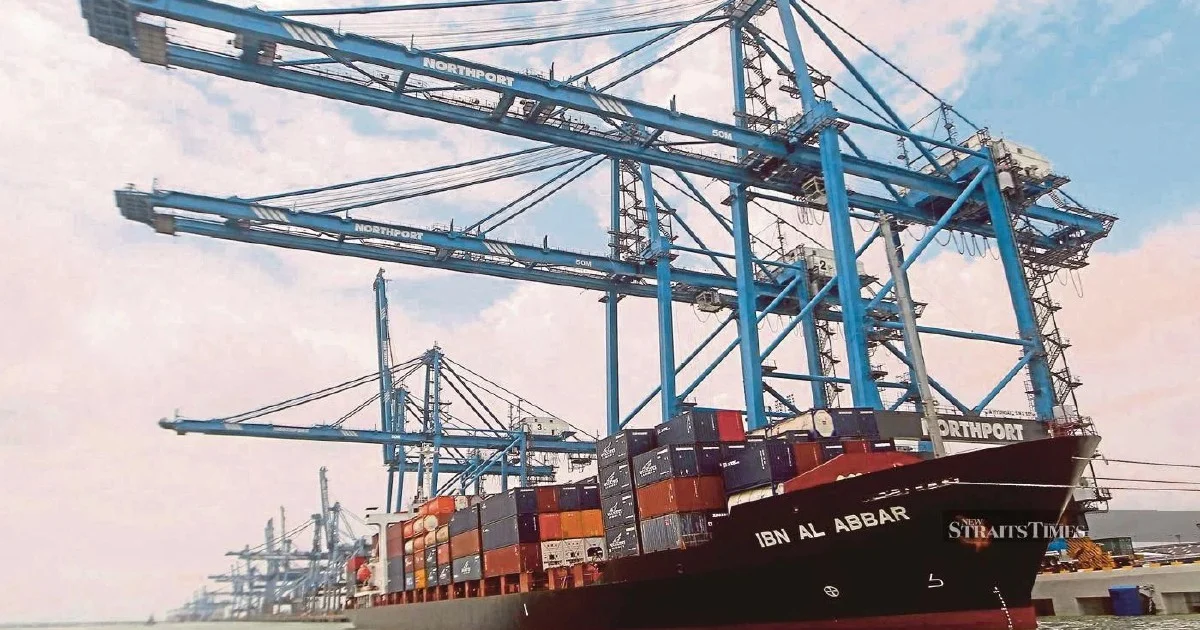
Transport Minister Anthony Loke has signalled that the ambitious Port Klang 3 expansion project remains firmly in the development pipeline, with realistic prospects of breaking ground before the year concludes if authorities can expedite resolution of land disputes with Selangor's administration. Speaking at Port Klang today, Loke reaffirmed the government's commitment to the multi-billion ringgit initiative, which forms a cornerstone of Malaysia's long-term maritime infrastructure modernisation strategy.
The Port Klang 3 project represents a substantial expansion of Malaysia's primary container handling facility, located in Selangor's Klang district. This facility functions as the nation's busiest and most consequential deep-water port, processing the overwhelming majority of Malaysia's containerised cargo and serving as a critical gateway for regional supply chains. The proposed third phase aims to augment the existing port's capacity substantially, accommodating larger modern vessels and higher throughput volumes essential for sustaining Malaysia's competitive position in global maritime commerce.
Land acquisition complications have emerged as the principal impediment to commencing construction activities. The transport ministry and port authorities must negotiate with the Selangor government to secure the necessary terrestrial parcels adjacent to and surrounding the existing port infrastructure. These negotiations, while proceeding constructively, have extended beyond initially anticipated timelines, creating uncertainty about project commencement. Loke's intervention signals heightened ministerial attention to accelerating resolution of these bureaucratic and administrative bottlenecks.
The significance of Port Klang 3 extends well beyond Selangor's borders. As Malaysia's economy increasingly relies on international trade, particularly with China, India, and other Asian economies, port capacity directly constrains national export volumes and import competitiveness. The existing Port Klang infrastructure, despite recent efficiency improvements, approaches practical capacity limits during peak seasons. Without expanded facilities, Malaysian exporters face shipping delays and elevated logistics costs, disadvantaging their regional competitiveness against rival nations with more modern port infrastructure.
The project aligns with Malaysia's broader Fifteenth Malaysia Plan development priorities, which emphasise strengthening digital and physical infrastructure to support long-term economic growth. Transport policymakers view port modernisation as foundational to attracting foreign direct investment, particularly in high-value manufacturing and logistics sectors. Regional competitors, notably Singapore and Thailand, have substantially expanded their container-handling capabilities in recent years, motivating Malaysian authorities to accelerate domestic port development.
Loke's optimistic timeline reflects confidence that protracted negotiations with the Selangor government will yield productive agreements imminently. However, land acquisition in Malaysia's most developed state often involves intricate consultations with multiple stakeholders, including local authorities, affected landowners, and potentially existing land-use commitments. The complexity of these arrangements typically extends project preparation phases considerably, and political dynamics between federal and state-level administrations occasionally introduce additional delays.
Construction commencement remains contingent upon finalising comprehensive land transfer agreements, securing necessary environmental clearances, and completing detailed design finalisation. Concurrently, the project requires substantial capital mobilisation, involving both government funding and private sector participation through public-private partnership arrangements. International bidders will compete for major construction contracts, introducing additional timeline variables depending on tender processes and contractor availability.
The Port Klang 3 initiative carries profound implications for Malaysia's maritime economy and regional logistics ecosystem. Successful and timely implementation would enhance Malaysia's capacity to capture growing container traffic from surrounding countries, potentially establishing Port Klang as a preferred Southeast Asian transhipment hub rivalling established regional competitors. Conversely, construction delays would perpetuate existing bottlenecks, potentially encouraging shipping companies to route cargo through alternative regional ports with superior capacity, eroding Malaysia's share of valuable maritime commerce.
Industry stakeholders have repeatedly emphasised that port capacity limitations represent urgent constraints on Malaysian export competitiveness. Manufacturing sectors particularly dependent on efficient maritime logistics, including electronics, automotive components, and petrochemical products, have advocated forcefully for accelerated port expansion. Successful completion of Port Klang 3 would substantially alleviate these longstanding operational challenges, improving logistics efficiency across multiple industries.
Loke's public commitment to achieving construction commencement within the current financial year reflects ministerial determination to overcome administrative obstacles that have historically delayed Malaysian infrastructure megaprojects. Announcing specific timelines increases political accountability and creates institutional momentum for advancing negotiations with state authorities. However, infrastructure development in Malaysia frequently experiences unforeseen complications, and external factors including global supply chain disruptions or material price fluctuations could still impact final timelines beyond governmental control.
The resolution of Port Klang 3 land complications will establish important precedents for future major infrastructure undertakings requiring extensive land acquisition and inter-governmental coordination. Successfully navigating federal-state negotiations and demonstrating efficient project preparation could streamline processes for subsequent initiatives, from transportation corridors to special economic zones. Conversely, prolonged delays would reinforce perceptions that bureaucratic complexity constrains Malaysian infrastructure development relative to more agile regional competitors.

