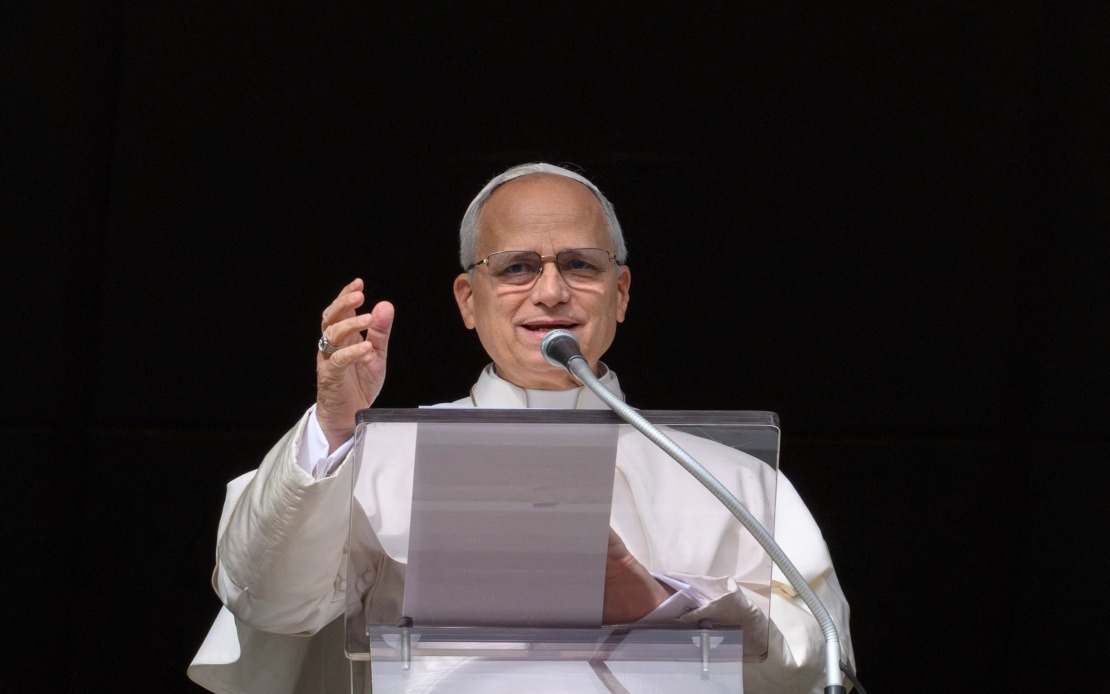
Pope Leo XIV issued a significant warning this week about the false premise that artificial intelligence operates free from moral influence, challenging a widespread assumption among technologists and policymakers that AI can somehow remain neutral in its design and application. Speaking through social media, the pontiff argued forcefully that the notion of moral neutrality in AI is fundamentally flawed, serving instead as a convenient fiction that obscures the deeply embedded value systems inherent in every algorithm and data model that powers modern artificial intelligence systems.
The pontiff's central argument rests on a straightforward but profound observation: every artificial intelligence system necessarily incorporates decisions about what data to prioritize, which outcomes to optimize for, and whose interests the system serves. These are not technical choices divorced from ethics but rather represent deliberate selections that encode particular worldviews. When developers choose which datasets to train an AI model on, they are making implicit choices about whose voices and experiences will be represented in the system's outputs. When engineers design a system to minimize certain types of errors while accepting higher rates of others, they are making value judgments about which stakes matter more.
Central to Leo's message is the insistence that ethical scrutiny of artificial intelligence must extend far beyond examining how the technology is ultimately deployed or misused. Too often, the debate about AI ethics focuses narrowly on end-use scenarios—whether a facial recognition system might be used for surveillance, or whether an algorithmic hiring tool discriminates against qualified candidates. While such questions remain important, the pontiff's intervention highlights a critical upstream consideration that frequently escapes public attention: the foundational design choices baked into AI systems from their inception. The data chosen for training, the metrics selected for optimization, and the human vision embedded within the mathematical models all merit the same ethical scrutiny typically reserved for discussions of AI applications.
The pope emphasized that this vision of the human person and society that gets embedded in AI systems shapes not merely how the technology functions but what it fundamentally assumes about human dignity, worth, and flourishing. If an AI system is trained primarily on data reflecting privileged populations while underrepresenting marginalized communities, that system will inherit those biases and perpetuate them at scale. If an algorithm is optimized solely for profit maximization without constraints protecting worker welfare or environmental sustainability, it encodes a particular moral philosophy—one that treats other values as secondary. In this sense, AI systems are never neutral vessels executing instructions; they are expressions of human choices made tangible through code.
Leo's call for clarity around accountability structures addresses perhaps the most practically urgent dimension of his warning. As artificial intelligence systems increasingly influence consequential decisions—determining credit eligibility, guiding medical diagnoses, filtering job applications, informing criminal justice recommendations—the question of who bears responsibility becomes increasingly critical. The pontiff argues that accountability must be clearly assigned at every stage of an AI system's life cycle. This includes those who originally conceive and design the systems, who must justify the values they embed. It extends to the developers and engineers who build those designs into functional code. It encompasses those who deploy these systems within institutions and make day-to-day decisions about their use. And it necessarily includes oversight mechanisms capable of monitoring systems in operation, challenging their outputs when warranted, and remedying harms when they occur.
For Malaysian and Southeast Asian readers, this papal intervention carries particular significance given the region's rapid adoption of AI technologies across banking, healthcare, government services, and commerce. As Malaysian companies and government agencies increasingly integrate artificial intelligence into their operations, the pontiff's warning about embedded moral choices becomes locally relevant. A biased hiring algorithm deployed in a Malaysian company will not merely reflect biases present in Western datasets but will actively encode those biases into employment decisions affecting Malaysian workers. An AI system designed in Silicon Valley with particular assumptions about family structure or individual autonomy may distribute resources or opportunities in ways misaligned with Southeast Asian social contexts and values.
The pontiff's emphasis on identifying who must account for decisions carries additional weight in the Malaysian context, where questions of corporate accountability and government transparency remain active areas of public concern. If an AI system makes a consequential error—denying a loan application, flagging a person for law enforcement investigation, or recommending a medical treatment—someone must be capable and willing to explain that decision to the affected person. Someone must be able to correct the system when it errs. Currently, many institutions deploying AI systems struggle to answer basic accountability questions, often claiming that the complexity of machine learning makes specific decisions impossible to explain or audit. Leo's intervention suggests that such claims should not be accepted as inevitable technical limitations but rather viewed as failures of institutional responsibility.
The practical implication of Leo's argument is that Malaysian policymakers and corporate leaders cannot treat AI ethics as an afterthought addressed only once systems are already deployed. Instead, the moral scrutiny must begin upstream, in the earliest conceptual stages of system design. This requires bringing together technologists, ethicists, community representatives, and affected populations to deliberate about what values should guide a particular AI system. What constitutes success for the system? Whose interests should it prioritize? What harms might it cause, and how should those be mitigated? These conversations are difficult and time-consuming, but Leo's argument suggests they are unavoidable if institutions wish to claim that their AI systems serve the common good rather than merely advancing narrow interests while claiming technical neutrality.
The pope's intervention also implicitly critiques a tendency within technology sectors to treat questions of values and ethics as secondary concerns—matters to be addressed through compliance departments and ethics review boards after core systems are already designed. Instead, Leo's framing suggests that ethical questions should be constitutive of technological design from the beginning. This represents a significant reorientation from how many organizations currently approach AI development, where technical teams build systems first and ethics teams are later asked to assess whether they meet regulatory requirements. A values-first approach would instead begin by asking what kind of society and what conception of human dignity the system should serve, then design technical specifications accordingly.
More broadly, Leo's warning serves as a reminder that artificial intelligence is a human creation reflecting human choices, not an autonomous force that operates according to laws of nature. This distinction matters tremendously because it shifts responsibility. If AI systems were genuinely neutral—like physics or mathematics—then their social effects would be unfortunate but inevitable consequences of natural law. But if AI systems embed moral choices, then those effects become matters of collective responsibility. When an AI system produces unjust outcomes, society cannot blame technology itself but must instead examine the humans who designed, deployed, and continue to oversee that system. For Malaysia and Southeast Asia, accepting this responsibility requires building institutional capacity to ask hard questions about artificial intelligence before systems are deployed at scale.

