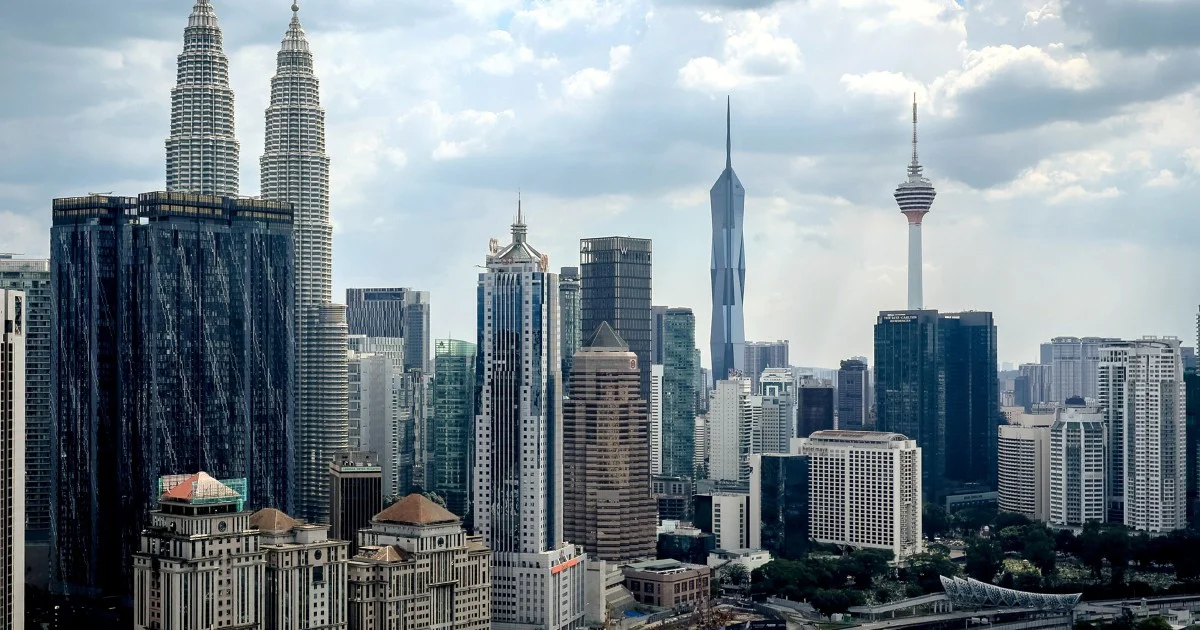
Malaysia's investment authorities have moved to reassure the business community that mounting chatter over the timing of the 16th general election and shifting political dynamics are not substantially deterring foreign capital inflows into the country. The Ministry of Investment, Trade and Industry (Miti) acknowledged on Tuesday that while political uncertainty captures headlines and dominates boardroom conversations, multinational corporations and international investment funds are making allocation decisions based on a broader array of factors that extend well beyond Malaysia's electoral calendar.
The ministry's assessment arrives at a delicate moment in Malaysia's political trajectory, with analysts, opposition figures, and political observers increasingly speculating about when Prime Minister Anwar Ibrahim might dissolve parliament and trigger fresh elections. That constitutional possibility has generated considerable media attention and parliamentary discourse over recent months, prompting questions about whether foreign investors are pausing or reconsidering their expansion plans in Malaysia pending greater clarity on the political direction.
Miti's position reflects what investment promotion professionals across Southeast Asia have long observed: that foreign direct investment flows respond primarily to measurable economic fundamentals, regulatory frameworks, workforce quality, and infrastructure capabilities rather than election cycles alone. Foreign investors typically distinguish between political noise—the routine positioning and statements that characterize any functioning democracy—and structural political instability, which manifests through institutional breakdown, policy reversals, or the sudden abandonment of business-friendly frameworks.
The distinction carries particular weight for Malaysia, which has positioned itself as a stable regional investment destination and competes directly with neighbouring Indonesia, Thailand, and Vietnam for multinational capital. Investors allocating hundreds of millions or billions of dollars across Asia conduct sophisticated due diligence that isolates genuine governance risks from ordinary political contestation. A scheduled or anticipated election, even one that attracts speculation months in advance, does not typically trigger the same caution as situations involving constitutional crises, sudden policy reversals, or doubts about institutional resilience.
Nevertheless, Miti's statement does not dismiss political stability as irrelevant to investment decisions. The ministry emphasised that investors do consider the broader political environment when deciding whether to establish manufacturing plants, regional headquarters, or technology research centres in a particular jurisdiction. Political stability functions as a prerequisite rather than a primary differentiator—investors assume it exists and focus their analytical energies on other variables. Should genuine instability emerge, however, it can quickly become disqualifying, particularly for sectors requiring long-term capital commitments and stable regulatory environments.
The timing of Miti's clarification suggests an attempt to prevent election speculation from undermining Malaysia's carefully cultivated image as a reliable investment partner. Foreign investors often make allocation decisions in summer and autumn months ahead of their next fiscal year, meaning perceptions created during this period can influence capital flows for extended periods. By publicly categorising GE16 speculation as peripheral to investment decision-making, the ministry aims to preserve Malaysia's attractiveness relative to competing destinations in a region where political cycles and election timing create similar uncertainties.
For Malaysian policymakers, the challenge involves maintaining business confidence without appearing to dismiss legitimate questions about political direction. The opposition and independent analysts have the constitutional right to speculate about election timing and campaign messaging, yet such discourse should not, in the government's view, spook foreign investors accustomed to navigating election cycles across mature democracies. Several major economies from Japan to South Korea to Germany experience regular elections without experiencing significant investment disruptions, suggesting that investors have developed sophisticated mechanisms for distinguishing routine political processes from material governance risks.
Miti's remarks also reflect recognition that Malaysian economic performance increasingly depends on maintaining robust foreign investment in competitive sectors including semiconductors, electric vehicle production, renewable energy, and digital services. These industries face intense global competition for capital, and losing investment to alternative Asian locations due to political perception problems would carry substantial costs for employment, innovation, and long-term economic dynamism. The ministry thus has strong incentives to convince both domestic and foreign stakeholders that ordinary political developments should not trigger investment hesitation.
The broader question underlying Miti's statement concerns which political factors genuinely matter to investors and which primarily concern media commentators and political participants. Most multinational corporations care deeply about intellectual property protection, labour law stability, regulatory transparency, tax treatment, and infrastructure quality. They care moderately about regime change if it threatens to reverse these underlying conditions. They care minimally about which political party holds office, provided that succession follows constitutional processes and business fundamentals remain intact. An anticipated election, announced in orderly fashion through normal democratic procedures, fits this least-concerning category.
Still, the ministry's public intervention suggests that some investors or industry associations may have raised concerns, or that government officials detected emerging scepticism about Malaysia's near-term political outlook. By proactively addressing the question, Miti seeks to prevent election speculation from metastasising into a genuine confidence problem. Southeast Asian investment climates can shift rapidly if international media begin portraying a country as politically uncertain, and perception management thus constitutes an important policy tool for investment promotion authorities.
Looking forward, Malaysia's ability to sustain foreign investment during its political cycle will depend substantially on whether actual government policies remain consistent with stated pro-business frameworks and whether transitions, if they occur, preserve institutional continuity. Countries across the region have discovered that investors forgive ordinary political contests but punish unexpected policy reversals or doubts about government commitment to market-oriented frameworks. Provided Malaysia's electoral processes unfold predictably and policymakers maintain their demonstrated commitment to investment-friendly regulations, Miti's assessment that GE16 speculation need not deter foreign capital appears well-grounded.

