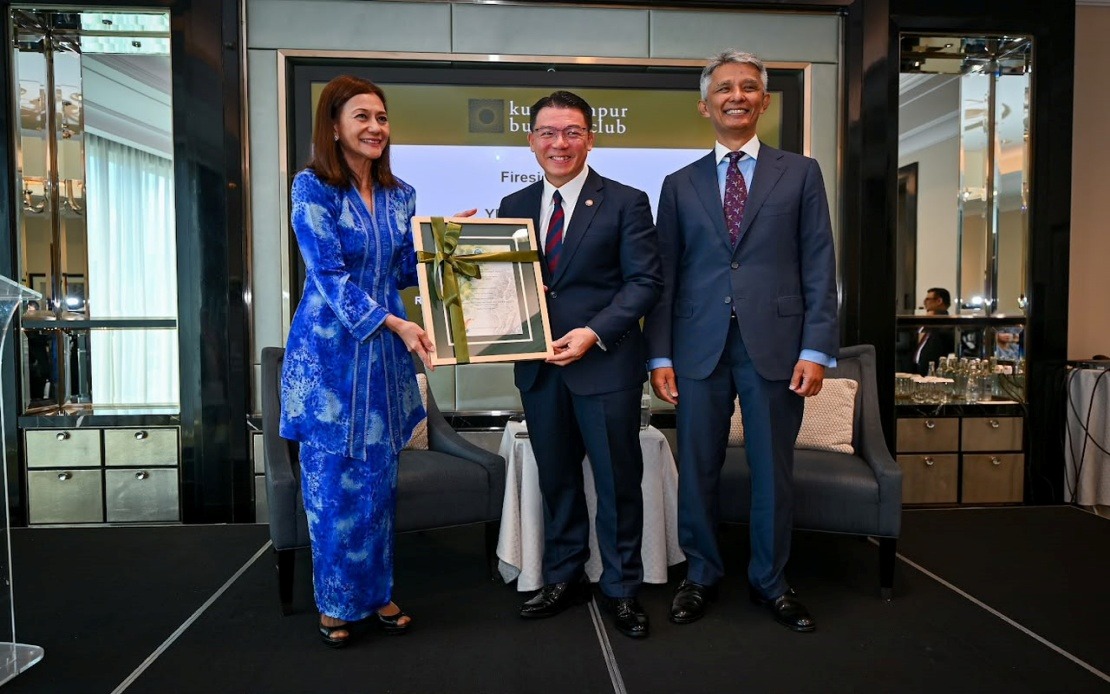
Housing and Local Government Minister Nga Kor Ming has underscored the importance of unwavering policy continuity as Malaysia pursues its ambitious economic transformation agenda. Speaking at a Kuala Lumpur Business Club forum, Nga argued that sustained implementation of the MADANI framework represents the cornerstone of translating ongoing reforms into measurable, lasting economic benefits for the nation. The emphasis on policy stability reflects growing recognition within government circles that Malaysia's complex structural reforms require long-term commitment rather than ad-hoc interventions or shifts in strategic direction.
Nga framed policy consistency as more than mere administrative preference, positioning it as a critical factor in maintaining investor confidence and preserving Malaysia's competitive edge. In an increasingly volatile global economic environment where capital flows rapidly across borders, foreign investors prioritise jurisdictions demonstrating clear governance direction and predictable regulatory frameworks. Malaysia, facing competition from neighbouring economies and rising powers in Asia, must therefore demonstrate that reforms undertaken under the current administration will persist regardless of electoral cycles or political transitions. Without such assurance, multinational corporations and institutional investors may hesitate to commit significant capital to long-term ventures within Malaysian territory.
Central to Nga's argument is the notion that a renewed electoral mandate would furnish the government with the political capital and temporal runway necessary to deepen structural reforms comprehensively. Economic transformation, particularly of the scale Malaysia envisions, cannot be accomplished within a single five-year term. Building institutional capacity, recalibrating regulatory frameworks, upgrading infrastructure, and reorienting human capital toward emerging sectors all demand sustained effort across multiple government cycles. A fresh mandate would signal to both domestic stakeholders and international observers that the electorate has endorsed the government's trajectory, thereby eliminating uncertainty and enabling planners to operate with confidence in multi-decade strategic planning horizons.
The MADANI government, under Prime Minister Datuk Seri Anwar Ibrahim, has already recorded tangible progress across governance, economic management, and international relations, according to Nga's assessment. These accomplishments extend beyond headline figures to encompass qualitative improvements in institutional functioning and international reputation. The government has initiated significant anticorruption drives, evidenced by improvements in Malaysia's Corruption Perceptions Index ranking, which directly influences how external stakeholders evaluate the nation's investment climate and institutional reliability. Stronger international credit ratings, reflecting enhanced fiscal credibility, have reduced Malaysia's borrowing costs and expanded policy flexibility for future development spending.
Malaysia's success in attracting foreign direct investment has become increasingly dependent on the diplomatic and strategic partnerships that the current administration has cultivated globally. The RM52.73 billion strategic partnership with Turkmenistan and emerging energy collaborations with Russia exemplify efforts to diversify Malaysia's investment sources and reduce reliance on traditional Western and regional investors. These partnerships, negotiated at the highest political levels, would likely face disruption or renegotiation if Malaysia's policy direction shifted dramatically. Investors committing capital based on agreements negotiated with the current administration require confidence that subsequent governments will honour those commitments and maintain the diplomatic relationships underpinning them.
The urban economy dimension highlighted during the Business Club forum reflects Malaysia's recognition that cities will drive future growth and innovation. The MADANI framework's emphasis on reshaping urban development—through improved governance, sustainable planning, and technology integration—targets the concentration of economic activity in metropolitan areas. Sustained policy implementation allows municipal administrations to plan infrastructure investments with certainty, enabling developers and businesses to align their strategies with publicly announced urban development trajectories. Frequent policy reversals or redirection introduce project delays and investment uncertainty, ultimately undermining the very urban competitiveness that Malaysia seeks to enhance.
From a Southeast Asian perspective, Malaysia's emphasis on policy continuity carries broader regional implications. The Association of Southeast Asian Nations increasingly competes for foreign investment and regional leadership status against both fellow member states and external powers. Nations that demonstrate institutional stability and predictable governance tend to attract higher-quality investment and secure larger shares of regional capital flows. Malaysia's success in this competition depends partly on projecting an image of orderly, consistent governance—a characteristic that policy continuity directly reinforces. Conversely, any perception of policy instability would advantage competing economies such as Vietnam, Indonesia, or Thailand, which are aggressively pursuing their own investment attraction strategies.
The practical challenge for Malaysia lies in balancing policy continuity with the need for innovation and adaptation. Rigidly adhering to outdated frameworks would prove counterproductive; instead, continuity must encompass evolutionary refinement of policies in response to changing economic conditions and emerging opportunities. The MADANI framework appears designed to accommodate such flexibility within an overarching strategic vision, enabling tactical adjustments without abandoning core objectives. This distinction between strategic consistency and tactical flexibility represents a sophisticated approach to governance that Malaysian policymakers are attempting to communicate to both domestic constituencies and international observers.
The fireside chat format adopted by the Kuala Lumpur Business Club facilitated direct dialogue between Minister Nga and business leaders—a constituency whose investment and employment decisions directly determine whether reform intentions translate into economic outcomes. Business community perspectives on policy stability carry particular weight because executives must evaluate whether government commitments will remain firm across market cycles. If business leaders emerge from such forums convinced of sustained policy commitment, they are more likely to approve capital expenditures, hire additional employees, and expand operations—outcomes that transform policy statements into tangible economic growth.
Looking forward, the government's capacity to deliver on its reform agenda will ultimately determine whether continued policy emphasis on institutional stability translates into expanded opportunity for Malaysia. Sustained excellence in governance implementation, transparent communication of reform progress, and demonstrated willingness to adapt policies when evidence warrants adjustment will build the credibility necessary to secure both electoral endorsement and sustained investor confidence. The forthcoming electoral cycle therefore represents not merely a political threshold but an opportunity for the government to consolidate support for its development agenda by demonstrating concrete, visible improvements in citizens' living standards and economic opportunity—outcomes that justify the premium Nga places on policy continuity.

