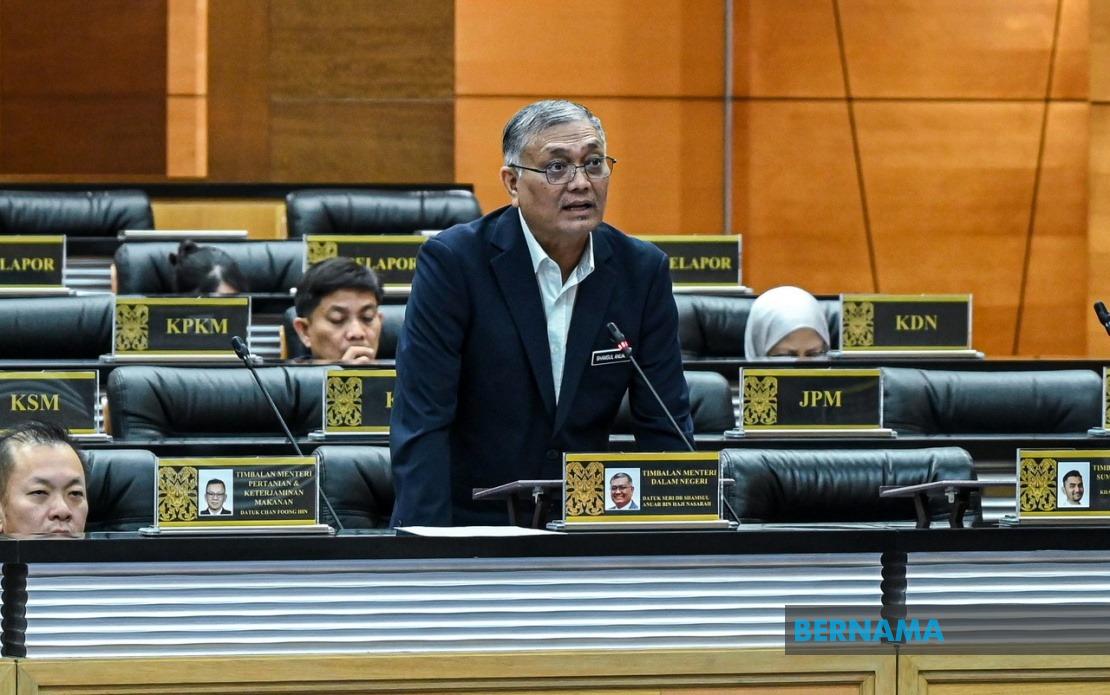
Deputy Home Minister Datuk Seri Dr Shamsul Anuar Nasarah has reinforced police commitment to investigative independence, declaring that the Royal Malaysian Police will not afford preferential treatment to any person caught up in sensitive inquiries, irrespective of their status or political connections. The assurance emerged during parliamentary proceedings as lawmakers sought clarity on the progress of several contentious investigations that have drawn considerable public attention over recent years.
Central to the minister's statement was the ongoing police examination of an intimate video recording that surfaced online in 2019, creating significant upheaval at the time and reportedly involving a figure with recent high-level government experience. Authorities continue their pursuit of the original source material as well as the technical apparatus involved in its creation and dissemination, indicating that the investigation remains active despite the passage of several years. The protracted nature of this inquiry underscores the complexity of digital forensics and the challenges law enforcement encounters when tracing content through multiple devices and platforms.
Shamsul Anuar articulated a position of steadfast institutional neutrality, asserting that investigative processes at the police department adhere to professional standards, operate with transparency, and distribute fairness uniformly across all subjects regardless of their rank, party association, or previous governmental tenure. This declaration carries particular weight given Malaysia's political volatility and recurring public concern about whether law enforcement agencies maintain genuine operational independence from political pressure. The minister's emphasis on these principles signals an attempt to demonstrate institutional credibility at a moment when questions about impartial governance have intermittently surfaced in national discourse.
The parliamentary inquiry itself was prompted by Datuk Wan Saifulruddin Wan Jan of Tasek Gelugor, representing Perikatan Nasional, who sought updates across multiple high-profile cases. His question reflected broader legislative interest in tracking investigative momentum and ensuring that complex matters receive sustained attention from authorities. The diversity of cases under discussion illustrated the breadth of law enforcement challenges confronting the country, spanning digital crimes, integrity violations, and cross-border matters.
Regarding the 2019 video case specifically, police have initiated proceedings under multiple legislative frameworks, including Section 292, Section 377B, and Section 504 of the Penal Code, which address obscenity, consensual adult conduct, and defamation respectively. Additionally, authorities have invoked Section 233 of the Communications and Multimedia Act 1998, reflecting the digital nature of the alleged offence and establishing that the investigation encompasses contemporary cybercrime legislation. This multi-statute approach demonstrates prosecutorial thoroughness in constructing potential cases.
A separate inquiry involving the son-in-law of former Prime Minister Tan Sri Muhyiddin Yassin has been assigned to the Malaysian Anti-Corruption Commission rather than remaining within police purview, with the MACC having already secured an arrest warrant against the individual. This investigative division illustrates Malaysia's institutional approach to specialized inquiries, delegating corruption matters to dedicated agencies with specific expertise and mandate. The minister declined to elaborate beyond confirming the warrant's issuance, citing ongoing proceedings and the necessity of protecting investigation integrity.
On the broader question of international cooperation, Shamsul Anuar outlined Malaysia's extradition framework, governed by the Extradition Act 1992 and supplemented by bilateral treaties. The nation maintains formal arrangements with eleven countries and has acceded to the ASEAN Extradition Treaty, positioning itself within regional and international mechanisms for pursuing individuals who flee across borders. Malaysia has signalled openness to negotiating additional agreements, reflecting awareness that transnational crime requires coordinated responses and that treaty expansion strengthens law enforcement capability.
The extradition landscape carries particular relevance for Southeast Asian nations given the region's interconnected geography and the reality that fugitives may seek refuge in neighbouring jurisdictions. Malaysia's participation in formal frameworks provides channels for pursuing suspects regardless of location while establishing reciprocal obligations that enhance regional security cooperation. For Malaysian businesses and citizens operating across borders, these arrangements offer protection and recourse when encountering fraud or criminal activity perpetrated from foreign locations.
The minister's parliamentary clarifications reflect an apparent effort to address public concerns about investigative impartiality during a period when Malaysia's political environment remains fractious and public trust in institutions faces periodic testing. By articulating principles of institutional independence, the government endeavours to reassure both domestic constituencies and international observers that law enforcement operates according to professional standards rather than political dictate. However, such assurances require consistent demonstration through investigative outcomes and transparent disclosure of investigative progress.
The handling of high-profile cases remains an acid test of institutional credibility in Malaysia. When individuals with prominent political connections become subjects of investigation, public scrutiny intensifies and confidence in investigative fairness faces genuine challenge. The government's capacity to pursue investigations comprehensively while demonstrating equivalent rigour regardless of a suspect's background ultimately determines whether institutional credibility strengthens or erodes. These cases therefore extend beyond their immediate factual dimensions to carry significance for Malaysia's broader governance architecture and citizens' confidence in the rule of law.

