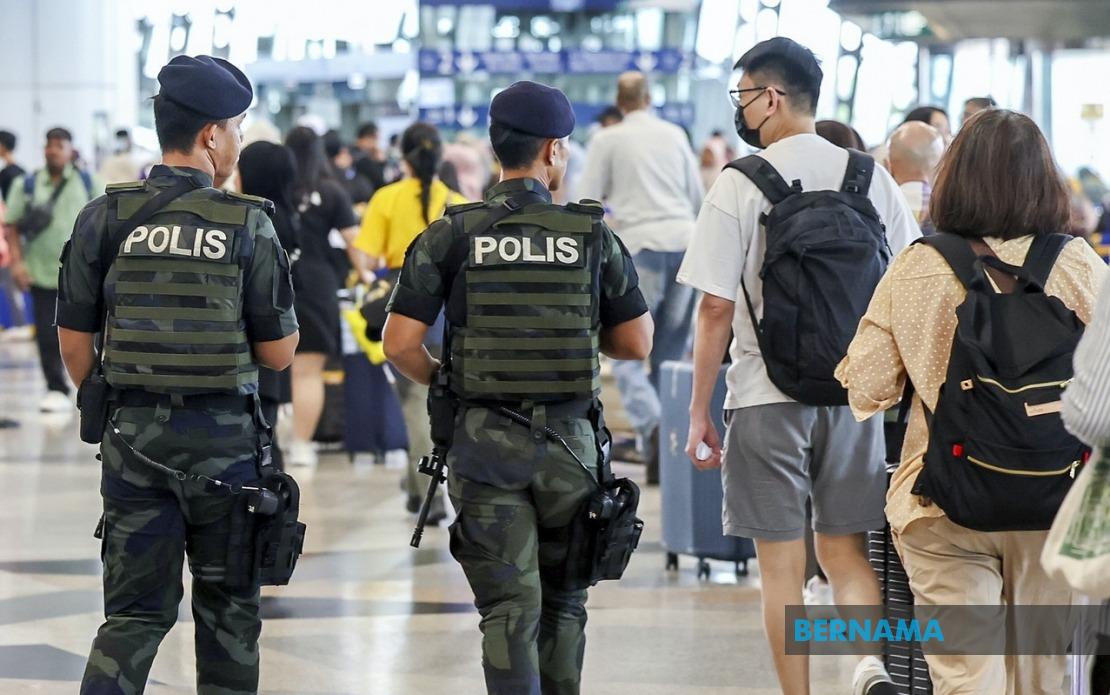
The Malaysian government has announced a significant overhaul of airport security protocols in response to the arrest of a Malaysian pilot in Indonesia for alleged drug smuggling. Communications Minister Datuk Seri Fahmi Fadzil revealed the decision at a weekly press conference in Putrajaya on August 5, emphasising that the move represents an urgent priority for the administration. The decision emerged from discussions between the Home Ministry and the Transport Ministry during a Cabinet meeting, where officials presented concerns about current security gaps at Malaysian airports.
The cornerstone of the security enhancement involves transferring responsibility for the Aviation Security (AVSEC) unit from auxiliary police personnel to the Royal Malaysia Police (PDRM). This structural change marks a substantial shift in how Malaysia manages aviation security at its airports. Currently, the AVSEC units operate under auxiliary police management, which Fahmi indicated has proven insufficient given recent incidents. By bringing the Royal Malaysia Police directly into these operations, the government aims to establish stronger oversight and more rigorous enforcement of security protocols.
The case that prompted this response involved a 39-year-old Malaysian pilot detained by Indonesian authorities at the Soekarno-Hatta International Airport in Jakarta. Investigators discovered 15 packages allegedly containing approximately 70,114 capsules of ecstasy and methamphetamine, with a street value in Indonesia estimated at RM45 million. The incident raises uncomfortable questions about how such quantities could potentially pass through Malaysian airport systems and highlights vulnerabilities in existing screening procedures that authorities had not previously acknowledged publicly.
Beyond the immediate police deployment, Malaysia Aviation Group (MAG) will be directed to comprehensively review its vetting procedures for flight personnel. This includes re-evaluating background screening mechanisms and health assessment protocols for both pilots and co-pilots. The instruction suggests that previous screening standards may not have been stringent enough to detect individuals with involvement in illegal activities. For a nation that prides itself on aviation safety and maintains significant regional air traffic operations, such a review carries substantial implications for how the industry manages human capital oversight.
Fahmi explained that the Royal Malaysia Police and the Malaysian Border Control and Protection Agency (AKPS) have received orders to conduct a thorough examination of security infrastructure at airports. This investigation aims to identify any weaknesses or loopholes that could be exploited for illegal activities, particularly drug smuggling. The dual agency approach reflects recognition that airport security operates across multiple jurisdictions and requires coordinated effort between different governmental bodies. Such coordination has historically been a challenge in Malaysian security operations.
The government indicated it would consider establishing a special investigation team to examine the Indonesian case more comprehensively, though no final decision has been made. Fahmi emphasised that Malaysian authorities have only received preliminary briefings from the Transport and Home Ministers thus far. Since the case remains active in Indonesia, with the Indonesian National Police (POLRI) continuing their investigation, Malaysian officials believe they need time to obtain complete documentation before launching parallel investigations or taking additional action.
The implications of this incident extend beyond a single criminal case. Malaysia's aviation sector represents a crucial component of the nation's economic infrastructure, with major airlines and significant international traffic. Any perception that security procedures are inadequate could affect passenger confidence and international standing. The swift governmental response demonstrates awareness of these concerns and an effort to reassert control over aviation security frameworks.
For Southeast Asian readers, this development carries broader significance regarding regional aviation security standards. Malaysia operates as a transit hub for considerable air traffic in the region, and vulnerabilities here could potentially affect security across neighbouring nations. The incident underscores how international drug trafficking networks exploit aviation systems and the need for coordinated regional approaches to enforcement. Other Southeast Asian countries may observe Malaysia's response as a potential model for their own security reviews.
The restructuring of AVSEC operations also reflects a broader philosophical shift in how Malaysia approaches security governance. Moving from auxiliary police to regular police personnel suggests recognition that some security functions require the full resources and accountability mechanisms of professional law enforcement agencies. This decision could have wider implications for how other auxiliary security operations are evaluated within the Malaysian government.
Fahmi's emphasis on understanding "who else may have been involved" indicates official concern that the arrested pilot may not have acted alone. Drug smuggling operations of this magnitude typically involve networks of accomplices, from procurement sources to distribution contacts. If investigations reveal involvement of additional Malaysian aviation personnel or ground staff, the scandal could expand significantly and necessitate broader institutional reforms.
The government's stated commitment to comprehensive measures reflects understanding that closing loopholes requires multi-layered approaches. Personnel reforms alone are insufficient without supporting systemic changes such as enhanced screening technologies, more frequent inspections, and improved inter-agency communication protocols. The announcements suggest Malaysian authorities recognise that aviation security requires constant evolution to outpace criminal innovation.
Moving forward, observers should monitor whether these announced measures translate into concrete implementation. Airport security reforms, while necessary, require sustained resource allocation and institutional coordination. The test of this government response will be evident within months, as the newly deployed police personnel integrate into AVSEC operations and aviation industry screening protocols undergo revision. The incident has evidently shaken official confidence in existing procedures, potentially catalysing the kind of security sector modernisation that has been under discussion in Malaysian policy circles.

