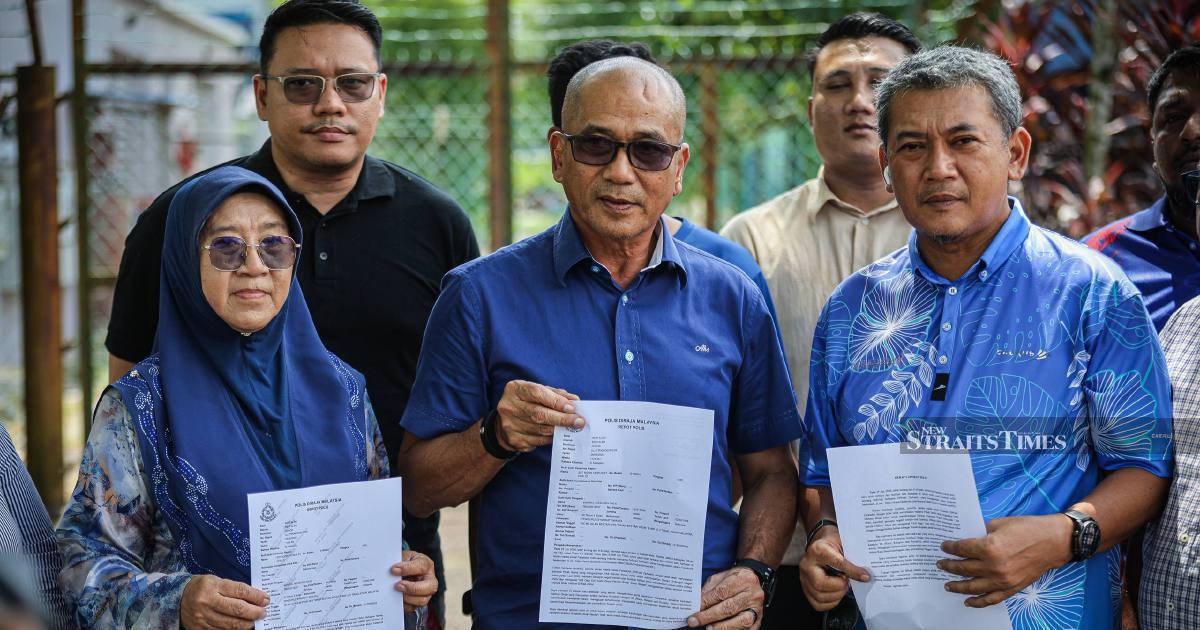
Johor's political landscape has become markedly turbulent following a coordinated police reporting campaign by Barisan Nasional members against Datuk Dr Mohd Puad Zarkashi, a former prominent figure within Umno's supreme council. The move reflects deepening tensions within the party's state machinery and signals escalating concerns over allegations that have touched upon the sensitive relationship between the monarchy and party politics in Malaysia's southern state.
The allegations made by Puad concerning what he described as inappropriate palace involvement in Johor's political affairs have triggered sharp reactions from the state's Barisan Nasional establishment. Rather than engaging publicly with the substantive claims, party members opted for the formal avenue of lodging police reports, a strategic choice that elevates the matter beyond internal party discourse into the realm of potential legal consequences. This tactical manoeuvre underscores the gravity with which the party's machinery views Puad's statements and the sensitivity surrounding any discussion of institutional influence over electoral or factional politics.
The decision by multiple Barisan Nasional members to coordinate police filings suggests a deliberate institutional response rather than isolated complaints. Such coordinated action typically indicates either explicit party direction or at minimum tacit approval from party leadership. In Malaysia's political context, where institutional hierarchy and party discipline remain paramount, the involvement of several members rather than individuals acting independently suggests this reflects broader party sentiment regarding Puad's public discourse.
Puad, who held considerable seniority within Umno's organizational structure as a supreme council member, possesses significant knowledge of party operations and internal political machinations. His decision to make public allegations despite his standing within the party indicates either a dramatic rupture with party discipline or reflects deeper factional divisions that have become impossible to manage through traditional internal mechanisms. The escalation from private party matters to public allegations and now to police involvement represents a notable breakdown in customary conflict resolution within Umno.
In Malaysian political tradition, claims involving palace interference in state politics carry substantial weight and potential ramifications. The monarchy holds constitutional significance, and suggestions of inappropriate involvement in partisan political matters touch upon fundamental questions of institutional propriety. The Johor palace, in particular, maintains considerable influence within the state's political ecosystem, making allegations regarding its role especially sensitive for those seeking to govern through conventional political channels.
The timing and nature of these allegations warrant examination within the broader context of Johor's recent political history. The state has witnessed considerable turbulence in recent years, with shifts in power dynamics and changing factional alignments within Umno. Puad's allegations likely relate to specific episodes or decisions that he views as evidence of inappropriate external influence on party affairs and governance matters. Understanding these grievances requires considering the particular disputes and power struggles that have characterized Johor politics.
The police reporting strategy employed by Barisan Nasional members effectively shifts the burden of addressing these allegations away from internal party processes. By formalizing complaints through the police apparatus, the matter potentially enters the domain of criminal investigation, where investigative procedures and evidentiary standards differ markedly from party accountability mechanisms. This approach also creates a legal dimension that may constrain Puad's ability to make further public statements without legal risk.
For Malaysian observers of political dynamics, this situation illustrates the complex interplay between institutional forces, factional politics, and personal ambitions that characterize contemporary political competition. The involvement of palace-related allegations adds layers of constitutional and ceremonial significance that extend beyond conventional party rivalries. The manner in which these allegations are adjudicated will carry implications not merely for Puad's political future but for broader questions regarding appropriate institutional relationships within Malaysia's Westminster-derived political system.
The implications for Johor's political stability and governance warrant consideration. When senior party figures make public allegations of institutional impropriety, and when party responses involve police mechanisms rather than substantive engagement, the overall institutional health of political processes comes into question. The state requires political mechanisms capable of processing internal conflicts and governance disputes without resort to criminal processes or institutional conflict.
This episode also reflects evolving patterns within Malaysian political parties regarding how senior figures who have fallen from favour are managed. Rather than negotiated exits or internal reconciliation, the emerging pattern increasingly involves public allegations, police involvement, and adversarial legal proceedings. Such developments may indicate transformations in party culture and factional dynamics that warrant broader scholarly and journalistic attention.
Going forward, the trajectory of police investigations and any potential legal proceedings will substantially shape both Puad's political future and the broader narrative surrounding institutional relationships in Johor governance. The matter also raises questions for other state and federal political actors regarding appropriate mechanisms for addressing allegations of institutional overreach and factional conflict within Malaysia's political system.

