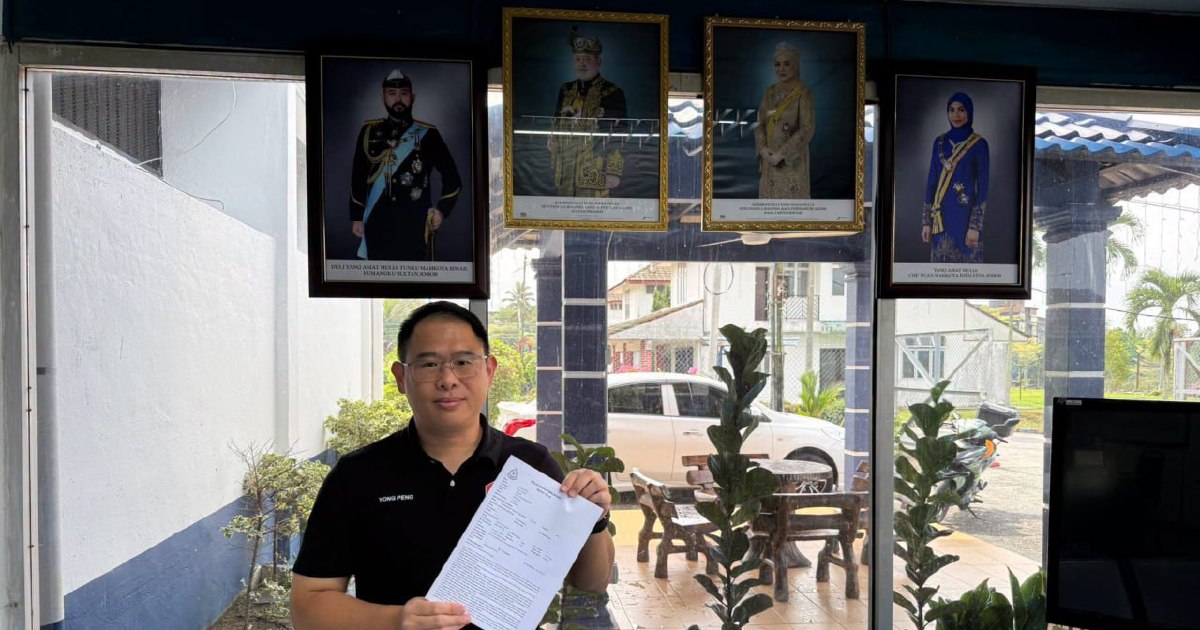
A police report has been lodged against allegations made by a public figure linking the Johor palace to the decision to dissolve the state assembly, according to recent developments in the state's political landscape. The complaint centres on contentious remarks that appeared to implicate royal involvement in the legislative chamber's dismissal, a matter that has triggered considerable debate about the boundaries between constitutional monarchy and executive decision-making in Malaysia's federal structure.
The incident reflects deepening sensitivities within Johor's political establishment regarding how state institutions and palace prerogatives interact during moments of constitutional crisis. When a state assembly is dissolved, multiple actors typically influence the process—the menteri besar, the ruling coalition's parliamentary majority, and formal procedures outlined in the state constitution. The suggestion that palace machinery actively steered this outcome has proven controversial, with observers questioning whether such claims constitute legitimate political commentary or breach protocols around discussing royal institutions.
Johor, as Malaysia's second-largest state by economy and population, occupies significant weight in the country's broader political equilibrium. The Johor sultanate maintains particular historical standing as one of the federation's more assertive state monarchies, with a documented tradition of engaging closely in gubernatorial appointments and constitutional interpretation. This history lends additional weight to allegations regarding palace involvement in assembly decisions, as observers understand the institution's proven capacity to shape political outcomes within the state framework.
The filing of a police report itself represents an escalation in the dispute, suggesting that those responding to the allegations believe legal recourse is warranted. In Malaysia's political culture, such reports often precede investigations under legislation protecting the dignity of constitutional institutions or laws governing sedition and defamatory speech. The decision to involve law enforcement indicates that defenders of the palace have chosen to move beyond rhetorical response into formal legal channels—a shift that may dampen further public discussion of palace-assembly dynamics.
Context surrounding assembly dissolutions in Malaysian states frequently remains opaque to public scrutiny. Unlike federal parliament, where dissolution procedures occur through relatively transparent constitutional mechanisms and electoral campaigns, state assembly dissolution often involves quieter negotiations among political elites. Johor's recent dissolution would have followed such patterns, with final decisions documented in gazette notices rather than detailed public reasoning. This opacity creates space for speculation and competing narratives about which actors drove the outcome.
The broader Malaysian political system has experienced growing friction between traditional royal prerogatives and modern democratic expectations regarding transparency and accountability. Younger voters and civil society advocates increasingly question whether constitutional monarchies should exercise significant discretionary influence over electoral timing and legislative survival—areas that newer democracies typically reserve for elected representatives. These tensions have surfaced in previous constitutional crises across multiple states, with royalty and elected officials trading public accusations about who bears responsibility for institutional outcomes.
Johor's particular significance in this debate stems partly from the sultanate's comparative economic power and strategic location adjacent to Singapore. The state accounts for a substantial share of Malaysia's foreign direct investment and manufacturing output, making political stability a concern for business communities beyond the state boundary. Allegations that palace involvement disrupts predictable political processes or contradicts stated executive intentions thus carry implications extending beyond Johor's borders into investor confidence discussions and international perceptions of Malaysian governance stability.
The individual against whom the report was filed presumably made specific, identifiable claims rather than offering vague speculation about palace influence. Police investigations into such matters typically examine whether statements crossed thresholds established in relevant legislation—whether they constitute factual allegations subject to defamation standards, political commentary benefiting from broader speech protections, or claims that breach sections of the Penal Code addressing sedition or insult to constitutional institutions. The threshold between protected speech and actionable offense has proven disputed in recent Malaysian cases.
This episode also illuminates how Malaysia's constitutional framework creates potential ambiguities regarding state palace powers during political transitions. While the Federal Constitution establishes broad parameters for monarchical authority, specific applications to scenarios like assembly dissolution often depend on state-level constitutions, established conventions, and precedents interpreted by particular legal advisors. When political actors dispute palace influence, they are sometimes disagreeing about constitutional interpretation rather than disputing demonstrable facts—a reality that complicates police investigations relying on conventional evidentiary standards.
The complaint's processing through police channels suggests officials consider the matter serious enough to warrant formal documentation and potential investigation. Whether this leads to further action—such as criminal charges, civil suits, or disciplinary measures—remains uncertain and depends on investigative findings and prosecutorial judgment. Regardless of procedural outcomes, the episode reinforces that questions about palace involvement in Johor political decisions remain contested terrain where different constituencies hold sharply divergent views about propriety and constitutional legitimacy.
For Malaysian political observers, the incident underscores persistent tensions between institutions accustomed to substantial discretionary authority and constituencies increasingly demanding that governmental decisions emerge through transparent, accountable mechanisms. The resolution of this particular complaint may offer limited clarification on underlying constitutional questions, as police investigations and potential prosecutions typically focus on whether specific speech breached legal boundaries rather than adjudicating broader institutional disputes. Nonetheless, the filing signals that Johor's political class remains divided on how these tensions should be negotiated.

