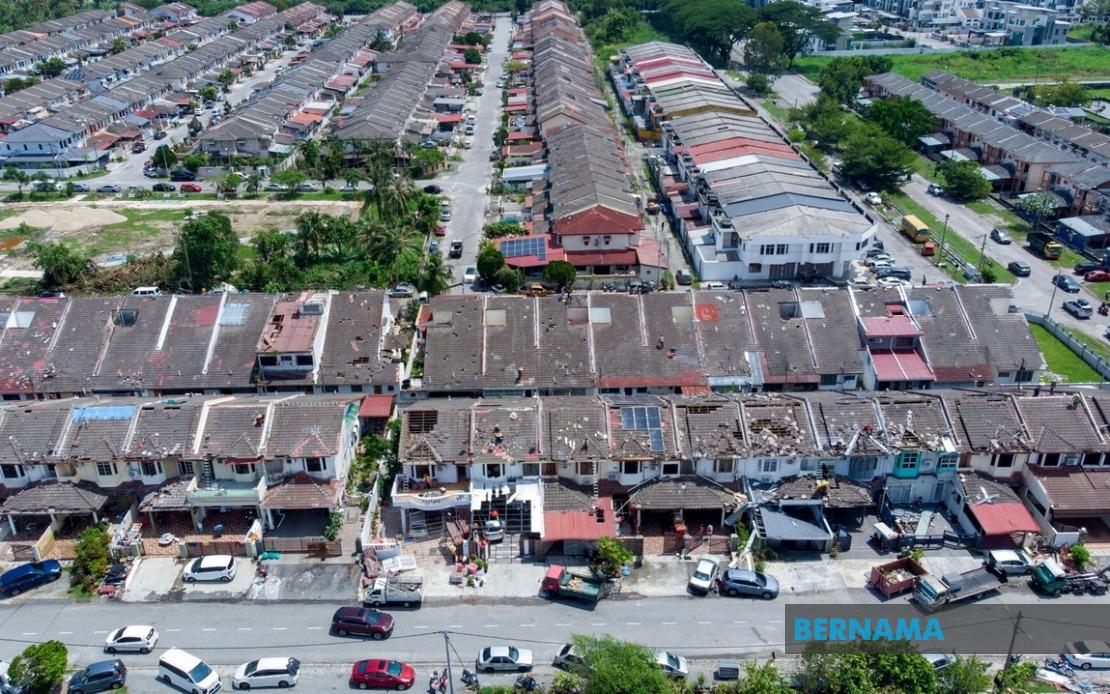
The Royal Malaysia Police have cordoned off disaster-affected zones spanning five separate areas within Bercham following a devastating storm that struck the community on Friday. Entry and exit restrictions have been implemented across the affected neighbourhood, with authorities citing the need to maintain security and prevent criminal activity during the recovery period. The decision reflects standard protocol following major natural disasters in Malaysia, where police typically establish controlled access points to protect vulnerable properties and prevent opportunistic crimes.
According to Ipoh district police chief ACP Muhammad Najib Hamzah, the authorities are maintaining careful oversight while allowing residents reasonable flexibility to access their homes. Recognising the practical challenges residents face in retrieving belongings and beginning repairs, police have implemented a tiered approach that grants greater movement during daylight hours while imposing stricter controls after dark. This strategy attempts to balance the humanitarian needs of affected families with the security imperative to protect properties in areas currently without essential services.
The night-time restrictions take on heightened significance given that several neighbourhoods, particularly Anjung Bercham, remain without electricity following the storm. These darkened areas present particular vulnerability to theft and break-ins, prompting police to exercise enhanced vigilance during evening hours. Residents wishing to undertake clean-up work or retrieve items after sunset must now undergo verification procedures, with officers confirming property ownership before permitting entry. This measure, while potentially inconvenient for some residents, reflects legitimate concerns about criminals exploiting the chaos of disaster recovery to commit theft under the guise of legitimate activity.
The scope of the disaster extends across multiple residential communities in the Bercham area. Affected neighbourhoods include Anjung Bercham Utara, Taman Mujur, Kampung Bercham, Kampung Tersusun Tasek, Taman Pusat Bercham, and Taman Indah Sakti. Each of these areas sustained varying degrees of damage, collectively affecting more than 200 residential properties according to initial assessments by Ipoh Barat Member of Parliament M. Kulasegaran. The geographic spread of damage indicates the storm's considerable power and the scale of the recovery challenge facing authorities and residents.
As of early Friday morning, police had registered 492 storm-related reports through their Op Bencana disaster response system. This figure encompasses damage reports, missing persons enquiries, and requests for assistance from affected residents. Significantly, authorities have indicated that no deadline exists for residents to lodge reports, allowing those dealing with immediate safety concerns or shelter needs time to address critical priorities before undertaking the bureaucratic process of formal disaster documentation. This administrative flexibility recognises the practical realities facing disaster-affected communities.
The financial impact of the storm remains under assessment. Authorities have not yet finalised calculations of total losses across the affected zones, suggesting that comprehensive damage surveys are still underway. Such assessments typically take considerable time, particularly when evaluating structural damage to multiple properties, loss of personal possessions, and disruption to livelihoods. The eventual loss figure will inform insurance claims, government relief allocations, and broader disaster response planning for the region.
Meteorological experts have attributed the storm to a landspout phenomenon, according to Kulasegaran's analysis. A landspout represents a relatively rare occurrence in Malaysian weather patterns, where a rotating column of air forms beneath a developing cloud system and makes contact with the ground. Unlike conventional tornadoes that descend from fully-formed thunderstorms, landspouts develop more rapidly and with less warning, making them particularly dangerous to populated areas. The classification as a landspout underscores that this event fell outside normal seasonal weather patterns for Perak and carries implications for disaster preparedness planning.
For Malaysian residents and Southeast Asian observers, the Bercham incident highlights the growing significance of extreme weather events in the region and the operational challenges authorities face in managing disaster response. The police cordon approach reflects established practice but also raises questions about balancing security with humanitarian access during recovery phases. The involvement of a deputy minister in immediate disaster assessment indicates recognition at the national level of the severity of the incident, suggesting potential eligibility for state or federal disaster relief funding.
The storm's damage to residential infrastructure across multiple neighbourhoods creates cascading challenges beyond the immediate physical destruction. Extended electricity outages compromise residents' ability to preserve food, refrigerate medicines, or undertake repairs safely. The restriction on night-time movement, while justified for security reasons, potentially delays urgent repair work or retrieval of essential items. These secondary effects often prove as consequential as primary storm damage, particularly for vulnerable populations including elderly residents and families with young children.
Police coordination through the Incident Control Post established at Bercham police station represents the institutional response framework for this disaster. Such control posts serve as coordination hubs where multiple agencies—police, fire and rescue, local authorities, and emergency management—collaborate on information sharing and response prioritisation. The effectiveness of this coordination structure in coming weeks will significantly influence recovery timelines for affected residents.
The incident carries implications for disaster preparedness discussions across Peninsular Malaysia. Climate scientists increasingly document shifts in extreme weather patterns, including intensification of severe storms in certain regions. The Bercham storm, attributed to an unusual meteorological phenomenon, provides data points for long-term weather pattern analysis and may inform updated building codes or emergency response protocols for Perak and neighbouring states.

