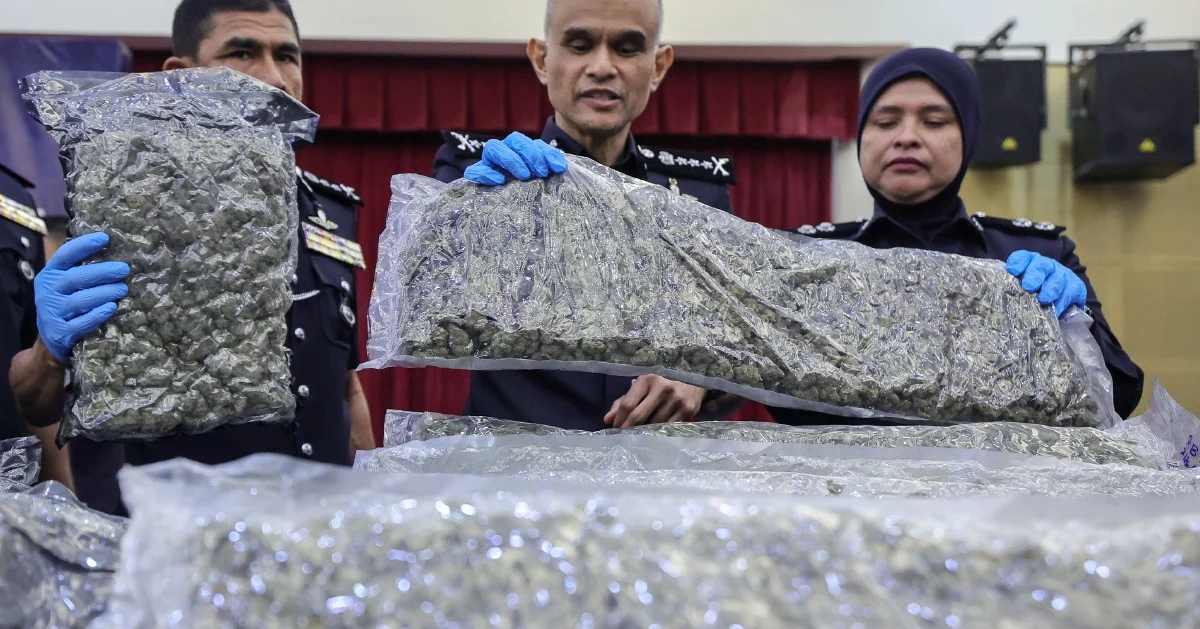
Malaysia's narcotics enforcement effort has intensified with a major breakthrough at Kuala Lumpur International Airport, where authorities have intercepted more than half a tonne of cannabis material and rounded up dozens of suspects in what appears to be a coordinated international trafficking scheme. The seizure and subsequent arrests represent a substantial disruption to drug supply chains passing through one of Southeast Asia's busiest aviation gateways, signalling renewed effectiveness in border security operations that have faced mounting pressure from increasingly sophisticated smuggling methods.
The 650 kilogrammes of cannabis buds confiscated since the start of January represents a single haul of exceptional proportions for Malaysia's drug enforcement agencies. Rather than isolated incidents, police investigation reveals a structured trafficking network involving 38 individuals spanning multiple nationalities and operational roles. The inclusion of foreign nationals among those detained suggests the operation was part of larger international smuggling rings exploiting Malaysia's strategic geographical position and extensive air connectivity to distribute contraband throughout the region and potentially beyond.
KLIA's vulnerability to drug smuggling has been a persistent concern for Malaysian authorities, who face constant pressure from trafficking organisations seeking to exploit the airport's massive passenger throughput and complex cargo handling systems. The facility processes over 50 million passengers annually, creating numerous concealment opportunities within baggage, mail systems, and cargo shipments. The concentrated seizure during a six-month period demonstrates that despite increased vigilance, significant quantities of controlled substances continue reaching the airport's departure and arrival zones.
The diversified composition of the arrested group—incorporating both local and international elements—illustrates how modern drug trafficking has become truly globalised in character. Rather than operating as isolated cells, these networks function as extended supply chains with specialised roles including procurement, transportation, concealment, distribution, and money laundering. The apprehension of multiple nationalities suggests international coordination with counterparts in source countries, transit zones, and destination markets operating with apparent synchronisation.
Cannabis cultivation has expanded significantly across Southeast Asia in recent years, with clandestine operations flourishing in remote regions with weak enforcement capacity. The scale of the KLIA interception indicates Malaysia may serve as either a key transit point for production originating elsewhere in the region or potentially harbouring domestic growing operations supplying outbound shipments. Police investigations may reveal critical intelligence about upstream sources, downstream markets, and the financial infrastructure sustaining these operations across borders.
The timing of this disclosure comes amid broader regional concerns about narcotics trafficking intensifying throughout Southeast Asia. Thailand's recent legislation permitting limited cannabis cultivation for medical purposes has created regulatory ambiguities that traffickers potentially exploit to obscure the provenance of illicit material. The proliferation of dark web marketplaces has simultaneously expanded distribution capabilities, allowing traffickers to market directly to consumers while maintaining operational anonymity.
For Malaysia specifically, the discovery underscores vulnerabilities in the screening protocols at the nation's primary international gateway despite substantial government investment in detection technology. The Customs Department and police narcotics units work in coordination at KLIA, yet the sheer volume of passengers and cargo creates inherent challenges in achieving comprehensive coverage. Traffickers continuously adapt concealment methods, employing vacuum-sealed packaging, chemical masking, and increasingly sophisticated methods designed to defeat detection dogs and scanning equipment.
The 38 arrests represent considerable achievement in disrupting the trafficking chain at a critical juncture, yet authorities acknowledge that dismantling networks requires tracing both upstream suppliers and downstream distribution. Intelligence gleaned from interrogating arrested individuals may facilitate parallel operations targeting colleagues, facilitators, and money laundering networks. Collaboration with international law enforcement agencies becomes essential when tracking transnational organisations operating across multiple jurisdictions with limited information-sharing protocols.
The confiscation carries significant implications for drug availability within Malaysian communities. Cannabis consumption, particularly among younger demographics, has risen measurably over the past decade despite stringent domestic narcotics laws. The reduction in street-level supply could temporarily increase prices, potentially disrupting user networks. However, without corresponding dismantling of distribution infrastructure and addressing underlying demand factors, traffickers typically respond by establishing alternative routes and supply mechanisms within months of major seizures.
Police have indicated investigations remain ongoing with potential for additional arrests as financial records and communication intercepts undergo analysis. The complexity of prosecuting international trafficking cases presents considerable legal challenges, particularly when evidence collection occurred across multiple jurisdictions without harmonised procedural frameworks. Malaysian courts typically pursue charges under the Dangerous Drugs Act, which carries severe penalties including lengthy imprisonment and capital punishment for trafficking convictions involving specified quantity thresholds.
The seizure reinforces Malaysia's commitment to international drug enforcement whilst highlighting persistent structural vulnerabilities within regional aviation infrastructure. KLIA's strategic importance as a regional hub conversely makes it an attractive target for trafficking organisations seeking efficient distribution platforms. Sustained enforcement success requires continuous technological upgrading, intelligence-led operations targeting high-risk shipments, and expanded bilateral cooperation with airlines, customs authorities, and law enforcement agencies throughout Southeast Asia.
Longer-term solutions demand addressing socioeconomic factors driving drug production in source countries alongside regulatory harmonisation preventing traffickers from exploiting jurisdictional differences. Malaysia's experience at KLIA demonstrates that tactical enforcement victories, whilst valuable, require complementary strategies targeting organisational structures, financial systems, and underlying market conditions sustaining the illicit narcotics trade.

