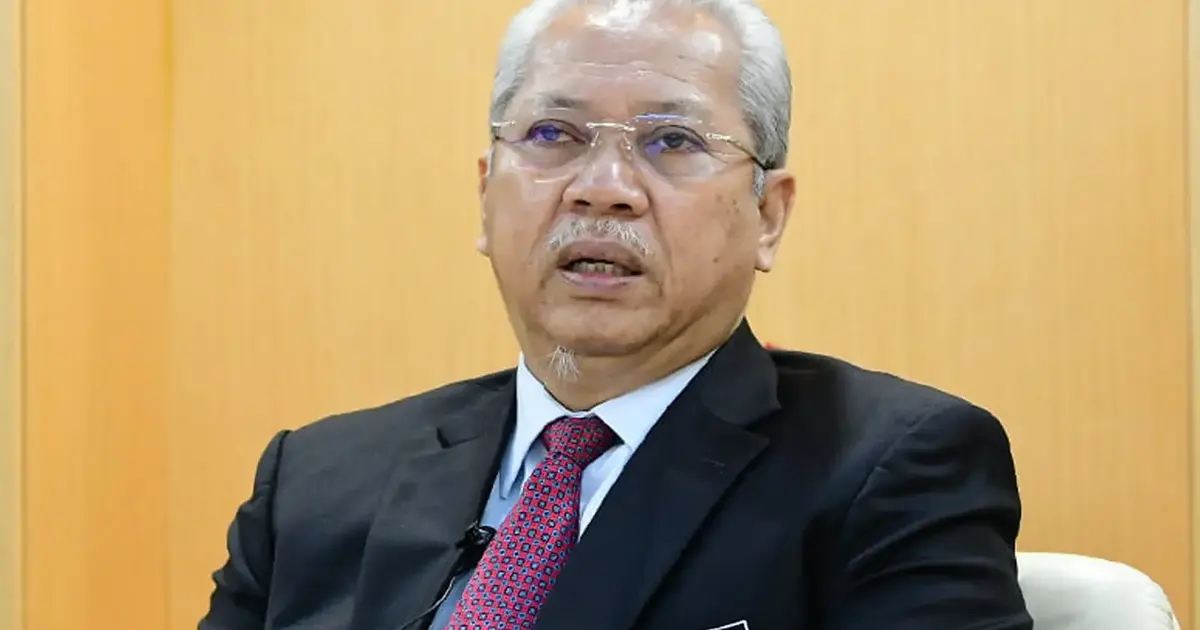
Perikatan Nasional has scheduled its Supreme Council meeting for Monday to address a mounting list of internal disputes that threaten the stability of the opposition coalition, according to Information Chief Annuar Musa. The agenda centres on three interconnected issues: clarifying Bersatu's future role within the alliance, determining rights to the PN logo, and finalising seat distributions for state elections in Johor and Negeri Sembilan.
Annuar Musa emphasised that the complexity of these matters precludes resolution through alternative channels or preliminary discussions, necessitating the formal authority of the Supreme Council. The coalition's leadership framework reserves such consequential decisions for the body's plenary sessions, where each member party holds voting representation. By invoking this procedure, PN signals both the gravity of internal disagreements and its commitment to resolving them through established protocols rather than allowing friction to fester.
Questions regarding Bersatu's continued membership represent the most fundamental challenge before the Council. The party's ambiguous status—neither fully integrated nor formally separated from the coalition—has created operational complications that extend beyond symbolic concerns. Uncertainty about Bersatu's alignment affects coalition campaign strategy, resource allocation, and voter messaging across all member parties. Until this matter receives formal adjudication, downstream decisions about electoral mechanics remain provisional.
The logo dispute carries similar constitutional weight. Coalition symbols carry legal and electoral significance in Malaysian politics, affecting candidate registration, campaign materials, and party identification on ballots. Competing claims over logo usage could fragment voter perception and complicate election administration. The Supreme Council's impending decision will establish clear proprietary rights and usage parameters, preventing future confusion or unauthorised application.
Seat allocation disputes in Johor and Negeri Sembilan reflect broader tensions within multi-party coalitions competing for limited electoral real estate. These states represent significant political prizes, with their collective parliamentary representation and state assembly seats offering pathways to substantive political influence. How PN distributes candidacies between Bersatu, PAS, and other component parties reveals hierarchical relationships and reward mechanisms within the alliance. Inequitable allocations can breed resentment; excessive accommodation of any single party risks marginalising others, potentially triggering exits or reduced campaign effort.
For Malaysian readers tracking opposition coalition dynamics, this meeting carries immediate implications. The stability of PN influences electoral competitiveness across multiple jurisdictions and affects the broader political balance at both state and federal levels. A successful resolution at Monday's session would stabilise the coalition heading into campaign periods, allowing unified messaging and coordinated resource deployment. Conversely, prolonged dispute resolution could spill into public view, damaging coalition credibility and providing ammunition to rival political forces.
The timing of this Supreme Council convocation also signals internal pressure to reach decisions before candidate nomination processes commence. Malaysian electoral law imposes strict timelines for nominations and registration, leaving narrow windows for final configuration decisions. If PN allows internal disputes to remain unresolved as nomination deadlines approach, practical complications multiply—disputed candidates might face double registrations, ballot papers could require corrections, and voter confidence would suffer from visible coalition disorder.
Bersatu's position merits particular scrutiny given its historical significance within PN's formation. The party's founder, Muhyiddin Yassin, served as Prime Minister during PN's previous iteration, lending Bersatu considerable symbolic weight and leadership claim. However, recent political realignments and defections have altered the party's parliamentary strength and electoral viability. Whether Bersatu receives continued prominence or experiences relative diminishment within seat allocations will reflect PN's assessment of the party's contemporary political value versus its historical contributions.
The logo question, while seemingly administrative, touches on coalition identity and branding strategy. Political symbols operate as shorthand communication channels, particularly important in Malaysian constituencies where voter education remains uneven. A clear, recognised, uniformly applied logo strengthens coalition visibility and facilitates voter coordination across different states and elections. Muddled branding creates confusion that disadvantages the coalition relative to better-organised competitors.
Johor and Negeri Sembilan hold particular strategic weight in Malaysian electoral mathematics. Johor, the nation's second-largest state by population, commands considerable parliamentary representation and substantial state assembly seats. Negeri Sembilan, while smaller, remains politically significant and regionally influential within the Klang Valley orbit. PN's performance in these states will substantially impact its aggregate seat count and viability as a potential federal government alternative. Securing optimal seat allocations now positions component parties for maximum electoral advantage.
Annuar Musa's public statement confirming Monday's meeting demonstrates coalition leadership's recognition that opacity breeds speculation and rumour. By publicly acknowledging the meeting and its agenda, PN leadership projects confidence in internal processes and signals determination to resolve matters systematically. This transparency, limited though it remains, reassures coalition members and supporters that serious problems receive serious attention at appropriate institutional levels.
Observers of Malaysian opposition politics will scrutinise Monday's outcomes carefully. The decisions reached—or deferred—will reveal PN's true operational health and the respective leverage of component parties. A unified coalition emerging from constructive problem-solving enhances electoral prospects; a coalition barely containing internal fractures invites further deterioration.

