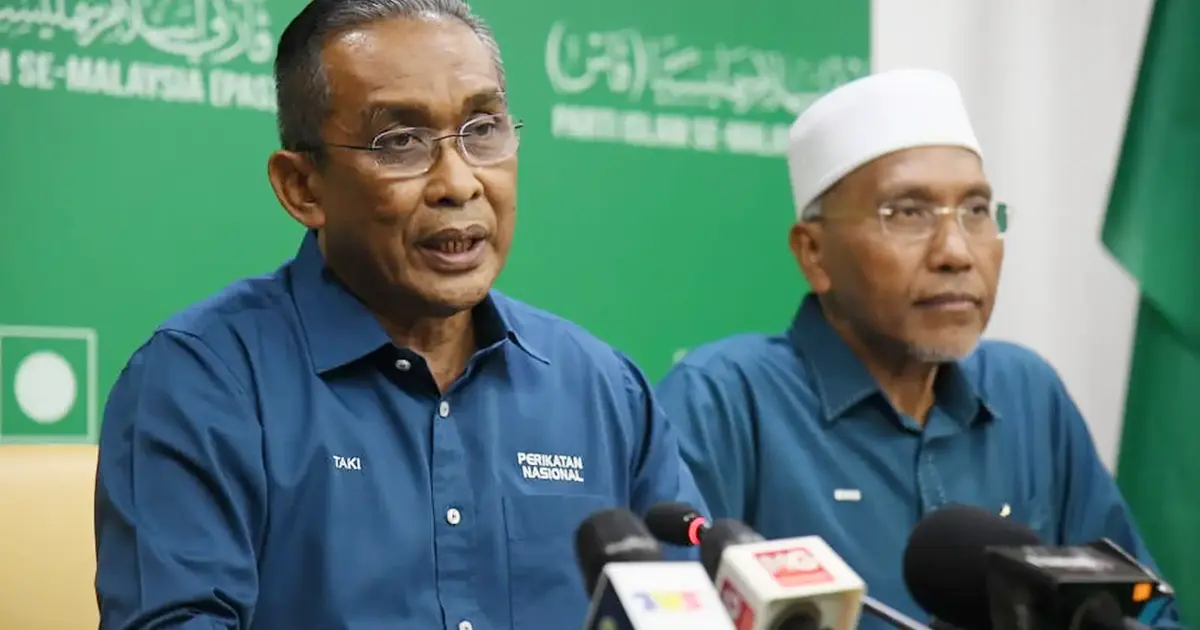
Perikatan Nasional's governance structure has tightened considerably, with the coalition's secretary-general Takiyuddin Hassan establishing a new requirement that all internal meetings and activities must receive approval from the coalition chairman before proceeding. This directive represents a significant shift in operational procedure for the opposition bloc, which currently comprises Bersatu, PAS, and other member parties. The announcement came in response to media reports suggesting that Bersatu president Muhyiddin Yassin had independently attempted to organise a PN Supreme Council gathering without following established protocols.
The development underscores underlying tensions within PN's leadership hierarchy and raises questions about the appropriate balance of power between the coalition's principal office-holders. Takiyuddin's intervention establishes a clear chain of command within the opposition grouping, essentially requiring that major party activities funnel through the chairman's office for authorisation. This mechanism appears designed to prevent individual party presidents, particularly Muhyiddin, from unilaterally convening important PN forums that might carry significant political weight or messaging implications.
For Malaysian political observers, this formalisation of approval procedures reflects broader complexities within opposition coalitions during Malaysia's fractious political landscape. Unlike single-party structures where internal discipline typically flows through established hierarchies, multi-party coalitions require negotiated frameworks that respect both collective decision-making and individual party autonomy. PN's new requirement tilts the balance toward centralised control, concentrating procedural authority in the hands of one individual—the chairman—at a potential cost to the flexibility and responsiveness of member parties.
Bersatu's position within this framework warrants particular scrutiny. As the largest opposition party by parliamentary seat count and the party that anchored PN's formation, Bersatu might reasonably expect greater latitude in convening coalition bodies. Muhyiddin's attempt to organise the Supreme Council meeting suggests he believed such authority extended to him as his party's leader. Takiyuddin's counter-move implies a different interpretation: that the PN chairman, rather than individual party presidents, holds sole discretion over when and whether coalition meetings occur. This distinction carries real implications for how policy, strategy, and internal disputes are managed within the opposition bloc.
The timing of this announcement also merits consideration within Malaysia's broader political calendar. With general elections potentially within the next 18 months and competing narratives about PN's direction and leadership, controlling the formal convening of Supreme Council sessions becomes strategically significant. Such meetings typically address coalition-wide policy positions, seat allocations, resource distribution, and public messaging—matters central to election readiness. By requiring chairman approval, Takiyuddin's new procedure gives whoever occupies that position substantial influence over the timing and agenda of these critical deliberations.
For Malaysian voters and political analysts seeking to understand opposition dynamics, this development illustrates the persistent fragility of multi-party coalitions in Malaysian politics. Throughout recent years, opposition groupings have repeatedly struggled with similar governance questions: how to maintain unity while respecting member autonomy, how to balance power between parties of different sizes, and how to prevent any single component from dominating coalition affairs. PN's formal requirement mirrors tensions that plagued Pakatan Harapan during its 2018-2020 government, suggesting these structural challenges remain unresolved within Malaysia's opposition ecosystem.
The practical implementation of Takiyuddin's directive will likely reveal whether this represents a temporary measure addressing immediate internal friction or a permanent institutional shift. If consistently applied, it could entrench chairman authority in ways that either strengthen coalition cohesion or breed resentment among members feeling marginalised from decision-making. If selectively enforced, it risks appearing politically motivated and further eroding trust between constituent parties.
International comparisons offer limited guidance for PN's situation. Few opposition coalitions operate under such formal procedural constraints, partly because most democracies feature smaller opposition groups or bi-polar political systems with less complex multi-party dynamics. Southeast Asian precedents offer mixed lessons: Thailand's scattered opposition fragments offer little relevant experience, while Indonesia's diverse multi-party system manages through less formalised consensus-building rather than explicit approval hierarchies.
For Malaysian stakeholders monitoring PN's trajectory, Takiyuddin's announcement signifies that questions of internal governance are now as significant as policy positions in determining coalition sustainability. The opposition's electoral competitiveness increasingly depends less on political platforms and more on whether its constituent parties can function as a cohesive unit. By centralising meeting approval authority, PN has chosen a governance model emphasising hierarchical control over distributed decision-making. Whether this architecture ultimately strengthens or weakens the opposition's electoral prospects will become apparent only through implementation and member party response over coming months.

