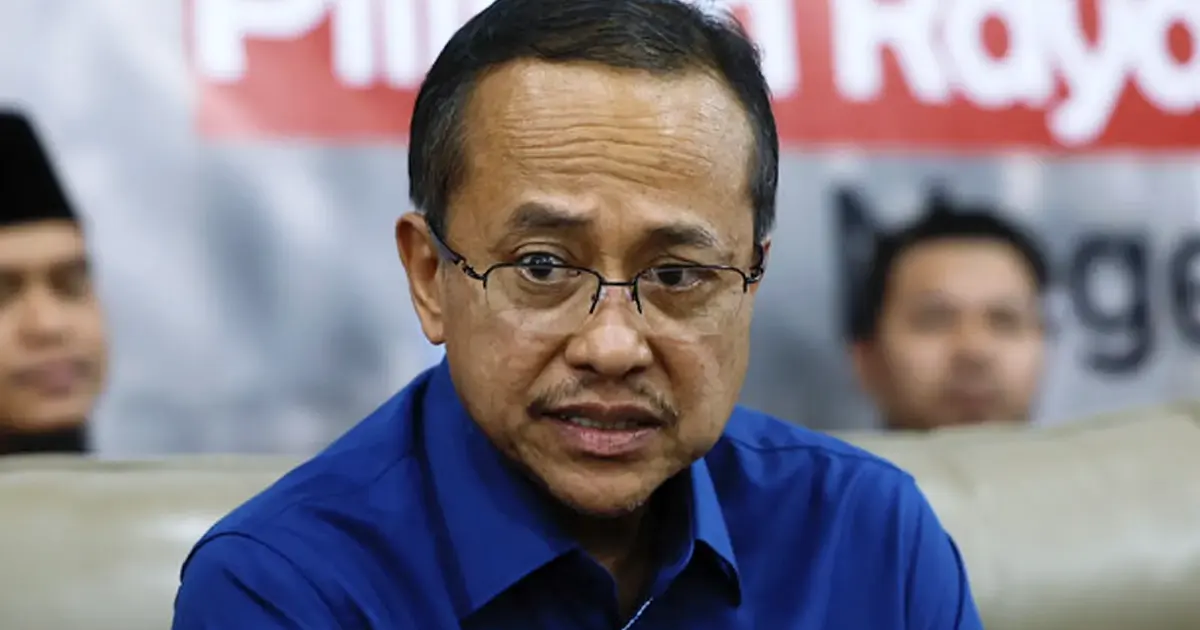
Perikatan Nasional chairman Samsuri Yaakob has moved to allay fears that voter confusion might arise from both PAS and Bersatu employing the coalition's logo during electoral contests. In a reassuring statement, Samsuri pointed out that the structural arrangement of the electoral alliance has been carefully managed to prevent any overlapping of campaign materials or ballot presentations that could mislead the electorate.
The question of which parties within PN ought to display the coalition insignia has emerged as a minor but notable point of discussion within Malaysia's fractious opposition coalition. The technical resolution, according to Samsuri's explanation, hinges fundamentally on the seat allocation process that divides the electoral map between the constituent members. Each party within the alliance is assigned distinct constituencies where it will field candidates, thereby eliminating the scenario in which voters in the same locality encounter multiple PN-affiliated contestants bearing identical branding.
This clarification addresses a practical concern that arises whenever multi-party coalitions contest elections under a unified symbol. The risk of brand confusion is particularly acute in Malaysian politics, where voters in different parliamentary or state assembly divisions might otherwise observe identical logos representing rival candidates from allied parties. Such situations can create genuine bewilderment, especially among voters with limited exposure to detailed campaign messaging or those relying primarily on ballot symbols to distinguish candidates.
PAS and Bersatu occupy distinct ideological and organisational positions within the PN framework, though both have committed to the broader coalition's electoral objectives. PAS brings its established network across peninsular Malaysia and traditional support bases, while Bersatu has sought to position itself as an alternative vehicle for Malay-majority voters. The decision to permit both parties to use the PN logo reflects a political compromise designed to maintain coalition cohesion while allowing each party to retain sufficient autonomy and visibility.
The seat-sharing arrangement that undergirds Samsuri's reassurance represents one of the more intricate aspects of PN's internal mechanics. Rather than imposing a single electoral vehicle through which all candidates must run, the coalition has adopted a federalist model that permits member parties to contest under their own banners and colours in their designated territories, while simultaneously leveraging the broader PN brand for coalition-wide messaging. This approach acknowledges the reality that PAS and Bersatu maintain separate party infrastructures, membership bases, and political identities that cannot easily be subsumed into a unified structure.
For Malaysian voters, the practical implication is relatively straightforward. When entering a polling station, a voter in a constituency allocated to PAS will encounter a PAS candidate using PN imagery, while a voter in a Bersatu-designated seat will find a Bersatu candidate using the same coalition logo. This territorial division removes the possibility of ballot confusion that could otherwise complicate the voting process. Samsuri's statement essentially formalises and justifies an arrangement that has already been negotiated and implemented across PN's electoral strategy.
The coalition's approach also reflects pragmatic lessons drawn from previous Malaysian electoral alliances. Past experiments with unified party vehicles or overly complex coalition arrangements have sometimes generated confusion among voters and logistical problems at polling stations. By maintaining clear territorial assignments and ensuring that only one PN-aligned candidate appears on any given ballot, the coalition minimises such risks while preserving the strategic value of a unified brand.
From a broader Southeast Asian perspective, the PN model of multi-party cooperation within a shared electoral framework offers an interesting case study in how diverse political forces can operate collectively without eliminating institutional differentiation. This approach contrasts sharply with coalition arrangements in some neighbouring democracies, where partners either fully merge or maintain completely separate identities throughout electoral campaigns. The Malaysian compromise enables parties to project unity in broad messaging while maintaining distinct organisational autonomy.
Samsuri's reassurance nonetheless presupposes that the seat-allocation agreement holds firm and that both PAS and Bersatu adhere strictly to their assigned territories. Any breakdown in this understanding, or any contested overlaps in electoral assignments, could quickly resurrect the confusion that Samsuri has now dismissed. Maintaining discipline across multiple parties with divergent interests remains an ongoing challenge for any coalition, particularly one operating in the relatively fluid terrain of Malaysian opposition politics.
The practical effectiveness of Samsuri's clarification will ultimately be measured in electoral outcomes and voter feedback. If voters in PN-contested constituencies navigate the balloting process without difficulty and if both parties successfully campaign under the shared logo without duplicating efforts or sending contradictory signals, the coalition's approach will have validated itself. Conversely, any reports of voter confusion or complaints from party workers about brand overlap could require the coalition to revisit its logo-sharing arrangement.
For Malaysia's broader political system, the PN experience with multi-party branding under a unified logo contributes to an evolving understanding of how coalitions can function in a competitive, democratic environment. As political alignments continue to shift and new coalitions form ahead of future elections, the precedent established by PN's current arrangement may inform how other opposition or ruling coalition partners negotiate similar questions of brand identity and electoral presentation.

