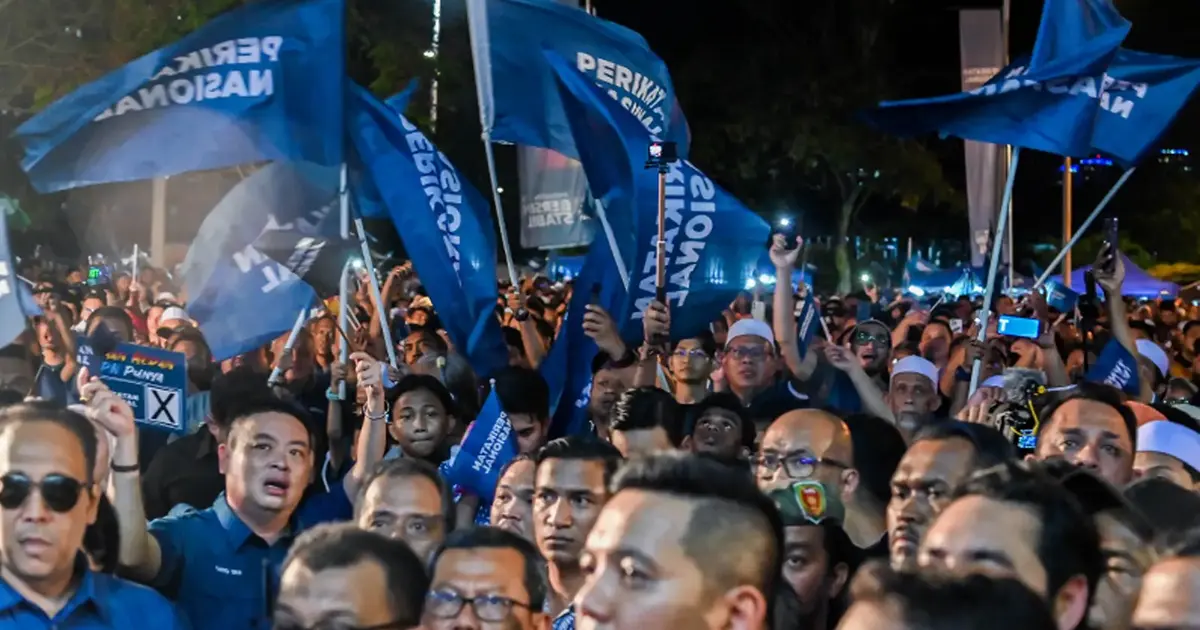
The Perikatan Nasional opposition alliance faces mounting pressure to remain cohesive as internal strife between its two dominant components—PAS and Bersatu—has evolved from episodic disputes into what analysts now characterize as sustained, low-intensity conflict. Yusri Ibrahim, chief researcher at the Ilham Centre, has warned that the coalition's structural integrity is increasingly precarious, with the current phase of antagonism between the Islamist party and the Malay-Muslim outfit adopting tactics reminiscent of prolonged insurgent campaigns rather than conventional political disagreement.
The deterioration in relations between PAS and Bersatu reflects deeper ideological and strategic fissures that have accumulated since the two parties formally aligned within the PN framework. Where their partnership was once presented as a unifying force capable of challenging the Anwar Ibrahim-led federal government, the day-to-day mechanics of sharing power at state level and coordinating parliamentary opposition have exposed fundamental incompatibilities in leadership vision, resource distribution, and electoral calculation. These tensions have festered quietly within party structures before erupting into increasingly public displays of acrimony.
Yusri Ibrahim's characterization of the conflict as entering a "guerrilla war" phase carries significant analytical weight. Unlike acute crises that resolve quickly through negotiation or structural collapse, guerrilla campaigns persist through episodic attacks, strategic retreats, and the slow accumulation of grievances. Applied to PN's predicament, this metaphor suggests neither party is prepared for decisive confrontation that would cleave the coalition, yet neither is willing to subordinate its interests for the collective good. Instead, both PAS and Bersatu appear trapped in cycles of mutual provocation—parliamentary ambushes, media salvos, and factional maneuvering—that erode trust without offering resolution.
For Malaysian observers monitoring opposition politics, the implications are substantial. A fragmented PN would reshape the parliamentary arithmetic and potentially alter the political calculus heading toward the next general election. Currently, PN's unified stance against the federal government provides a counterweight to Pakatan Harapan's coalition, even when that opposition lacks numerical strength to overturn government initiatives. Should the alliance splinter into competing blocs, opposition effectiveness would plummet, and individual components would need to navigate complex realignment scenarios with other parties, including potentially revisiting relationships with UMNO's Barisan Nasional.
The PAS-Bersatu quarrel also reflects divergent strategic priorities that have become increasingly difficult to reconcile within a single alliance structure. PAS, rooted in Islamic constituencies and increasingly dominant in northern and eastern peninsular states, pursues objectives centered on religious governance, Malay-Muslim advancement, and state-level consolidation of power. Bersatu, by contrast, emerged from a UMNO schism with a leadership cadre oriented toward national politics and personal political rehabilitation, seeking to position itself as a moderate Malay-led alternative. These positioning differences create friction over parliamentary tactics, candidate selection processes, and the allocation of ministerial portfolios in states where PN holds power.
Geographical and demographic factors compound these organizational tensions. In states where both parties operate—such as Kedah, Perlis, and Terengganu—competition for electoral candidacy and control of state administration has triggered grassroots friction that party leadership has struggled to manage through conventional mediation channels. Local party operatives, seeking advancement and influence, exploit these disputes to gain leverage within their respective hierarchies, converting what might remain abstract policy disagreements at national level into concrete struggles for position at state and district levels.
The sustainability of PN as a viable coalition structure increasingly depends on whether senior leadership within both parties can implement conflict-management mechanisms robust enough to withstand the centrifugal forces now evident. Historical precedent offers limited encouragement. Previous Malaysian opposition coalitions—including the original Pakatan Rakyat experiment between PKR, DAP, and PAS—similarly fragmented when internal resource conflicts and strategic divergences accumulated faster than institutional mechanisms could resolve them. PN's architects were cognizant of these historical lessons, yet structural remedies appear insufficient against the current intensity of factional antagonism.
Regional implications merit consideration as well. Thailand and Singapore, observing Malaysia's coalition politics, are attentive to whether opposition coalitions can maintain organizational discipline and strategic coherence. A fracturing PN might suggest to regional observers that Malaysian political institutions struggle with managing ideological and personality-driven conflict within multiparty coalitions, a concern relevant to broader Southeast Asian democratization trends. Similarly, the business community in Malaysia and the region has vested interest in opposition credibility as a political counterweight; a weakened opposition could be interpreted as confirming government dominance and reducing checks on executive decision-making.
Policymakers within both PAS and Bersatu face a critical juncture. Choosing path dependence—continuing current patterns of mutual criticism and tactical harassment—yields the worst possible outcome: a nominally intact but functionally hollowed alliance that exerts minimal influence on government policy while consuming organizational resources. Conversely, formal dissolution, while painful, would at least clarify political alignments and permit both parties to pursue strategies optimized for their particular constituencies. The intermediate path of sustained guerrilla-style conflict, as Yusri Ibrahim suggests is currently unfolding, perpetuates uncertainty and prevents coherent long-term planning.
The trajectory of PN's internal cohesion will likely determine the shape of Malaysia's opposition politics through the remainder of this parliamentary term and into the pre-election maneuvering expected to intensify in 2024 and 2025. Whether current leadership demonstrates capacity for conflict resolution or whether the coalition evolves toward irrelevance remains an open question with substantial consequences for Malaysian political competition.