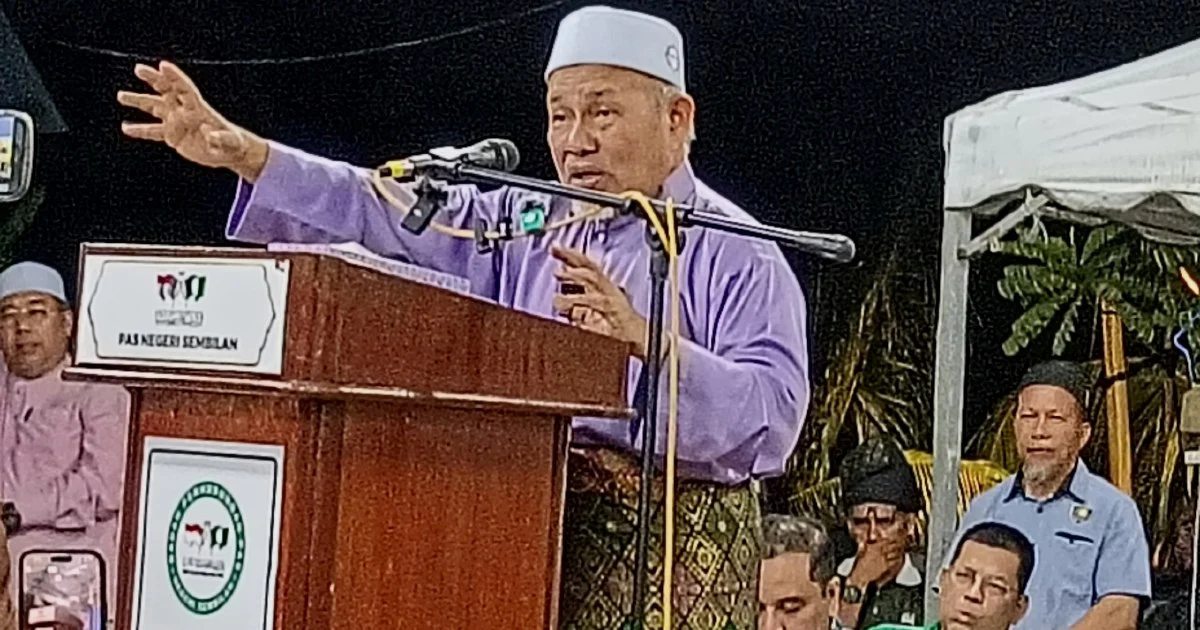
The Perikatan Nasional coalition is not the singular property of Bersatu but rather a shared political enterprise among all its constituent members, according to Datuk Seri Tuan Ibrahim Tuan Man, the deputy president of PAS. His comments emerge in response to recent tensions over the direction and control of the three-party alliance that currently forms Malaysia's ruling administration, highlighting the delicate internal dynamics that characterise the federal government structure.
Tuan Ibrahim's statement represents a significant reaffirmation of PAS's standing within the coalition and reflects broader anxieties among the component parties about decision-making authority and resource distribution. The assertion that PN operates as an equitable partnership rather than under the hegemony of any single member carries substantial weight given that PAS commands significant parliamentary representation and maintains substantial electoral influence, particularly in Malaysia's northern states. This clarification becomes essential in the context of recent public disagreements where certain figures, notably identified by references to "Peja", have suggested that Bersatu exercises disproportionate control over coalition affairs.
Bersatu, led by Prime Minister Anwar Ibrahim, was founded as a splinter from the United Malays National Organisation and has become the largest component in the ruling government, though it does not automatically translate to unilateral authority over PN's governance structure. The party's rapid ascent in Malaysian politics has occasionally created friction with established partners who fear their influence may be diminished despite formal coalition agreements. PAS, with its entrenched organizational networks and grassroots support, particularly in states such as Kelantan and Terengganu, remains a crucial counterweight within the alliance.
The nature of coalition politics in Malaysia frequently generates such disputes over ownership and control, especially when competing interests arise regarding party appointments, policy direction, or electoral strategy. The PN arrangement, which brings together parties with distinct ideological positions and electoral bases, requires careful navigation to prevent dominance by any single faction. Tuan Ibrahim's intervention signals that PAS will not passively accept any narrative that diminishes its role as a founding and equal partner in the coalition.
The significance of this dispute extends beyond mere symbolic leadership recognition. Control over a coalition translates directly into influence over policy implementation, allocation of ministerial portfolios, and determination of electoral strategies at both federal and state levels. When one component party is perceived to exercise excessive authority, tensions invariably emerge among other members who view their contributions as insufficiently acknowledged or rewarded. The three-party structure of PN—comprising Bersatu, PAS, and the Malaysian United Indigenous Party—means that any two members can theoretically assert majority positions against the third, creating potential for strategic alliance-shifting.
For Malaysian observers following federal politics, these internal coalition disputes carry practical implications. The stability of the current government depends substantially on maintaining equilibrium among PN's members while simultaneously managing relationships with government-supporting independent parliamentarians and representatives from the Gabungan Rakyat Sabah coalition in East Malaysia. Any destabilization of the PN partnership could trigger cascading political realignments that fundamentally alter Malaysia's governance structure. Tuan Ibrahim's forthright rejection of Bersatu exclusivity may therefore be understood as a defensive measure protecting PAS's institutional interests.
The timing and tone of such clarifications often provide insight into the actual state of coalition relationships beyond formal public statements. When senior officials find it necessary to explicitly restate the basic principle that coalitions comprise equal members, it typically indicates that some members perceive their status or influence to be under threat. The emergence of this statement suggests that PAS leadership believes corrective messaging is required to counter narratives or actions emanating from Bersatu that might be interpreted as asserting superior authority.
Regional Southeast Asian observers note that Malaysian coalition politics frequently experience such tensions, yet the institutional frameworks and parliamentary mathematics generally prevent any single party from achieving complete dominance, provided coalition partners maintain their unity. PAS's electoral dependence on certain constituencies and Bersatu's need for experienced partners in government administration create mutual dependencies that, while sometimes strained, have proven relatively durable. Tuan Ibrahim's statement essentially invokes these structural realities to reinforce PAS's indispensable position.
Moving forward, how PN manages internal disagreements over governance authority while presenting unified public messaging will significantly influence the coalition's longevity and governing effectiveness. The current dispute over ownership and control, if left unaddressed through formal coalition mechanisms, could evolve into more serious governance challenges affecting policy implementation and parliamentary stability. Tuan Ibrahim's intervention appears designed to establish a clear baseline understanding that cannot be subsequently reinterpreted as tacit acceptance of unequal partnership arrangements.

