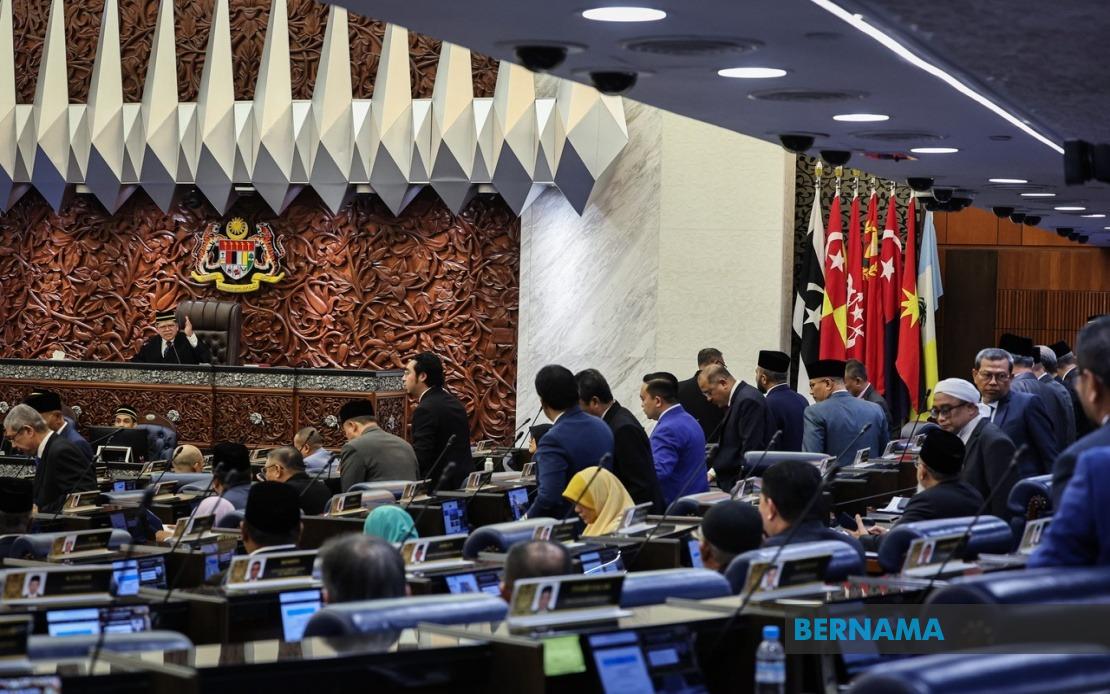
The Prime Minister's non-attendance at yesterday's parliamentary sitting on the Tabung Haji Royal Commission of Inquiry should not serve as justification for lawmakers to abandon their legislative responsibilities, according to Tengku Datuk Seri Zafrul Tengku Abdul Aziz, Senior Political Adviser to the Prime Minister. His remarks come amid criticism of several opposition MPs who staged a walkout during the special Dewan Rakyat session dedicated to examining the comprehensive report on the nation's largest Islamic pilgrimage fund.
Tengku Zafrul's intervention underscores a fundamental principle of parliamentary democracy: that legislative scrutiny transcends the attendance of any single individual, even the head of government. Through social media commentary, he drew a clear distinction between a parliamentary debate centered on the Prime Minister himself and one focused on institutional governance affecting millions of ordinary Malaysians. The Tabung Haji matter, he emphasized, concerns the accumulated savings and financial security of Muslims from diverse socioeconomic backgrounds—a responsibility that supersedes partisan political considerations or symbolic boycotts.
The walkout involved several Perikatan Nasional MPs, including Opposition Leader Datuk Seri Hamzah Zainudin, as well as the coalition's chief whip Datuk Seri Takiyuddin Hassan and chairman Datuk Seri Dr Samsuri Mokhtar. Their departure from the chamber during the presentation by Minister in the Prime Minister's Department (Religious Affairs) Dr Zulkifli Hasan effectively prevented their participation in what parliamentary observers regarded as a historically significant debate on institutional accountability within Malaysia's Islamic financial system.
The 211-page RCI report, made public on July 29, examined the management and operational conduct of Tabung Haji across the critical period from 2014 to 2020. This timeframe encompasses several significant developments in the institution's financial trajectory, and the government's decision to release the full report publicly rather than withhold it represents a commitment to transparency regarding how the fund has been administered. The special parliamentary sitting on August 11 was convened specifically to allow all elected representatives to scrutinize these findings and hold the government accountable for matters revealed in the inquiry.
Tengku Zafrul's criticism touched on broader questions about the nature of constructive opposition in parliamentary democracies. He articulated that legitimate dissent requires substantive engagement rather than symbolic gesture. If MPs genuinely disagreed with government positions or discovered factual inaccuracies in the RCI findings or official responses, they possessed the forum and authority to raise these concerns directly. The appropriate mechanism for such disagreement involves standing in the chamber, presenting counter-evidence, and articulating reasoned critiques—not vacating the legislative space entirely.
The characterization of Tabung Haji as among the most consequential issues affecting the Muslim and Malay economy in Malaysian history provides essential context for understanding the stakes involved. The fund manages retirement and pilgrimage savings for over a million Muslims, making it substantially more than a narrow religious affairs matter. It represents a critical economic institution whose governance directly impacts household financial security, generational wealth accumulation, and confidence in state-administered Islamic financial systems. When such an institution becomes the subject of an RCI—itself a rare and serious investigative mechanism—the implications extend far beyond normal political competition.
The opposition's absence from the debate also warrants examination through the lens of parliamentary effectiveness. In Westminster-derived systems like Malaysia's, opposition scrutiny serves as a crucial check on executive power. When opposition members absent themselves during substantive policy debates, they forfeit the opportunity to represent their constituents' concerns, to extract detailed answers from ministers, and to create a public record of governmental accountability. For constituents who may have legitimate questions about how Tabung Haji funds were managed, the absence of their elected representatives during the formal parliamentary examination represents a form of abandonment.
The broader political context cannot be ignored entirely. Perikatan Nasional has positioned itself as an alternative political force, and parliamentary walkouts sometimes serve strategic purposes in such positioning. However, Tengku Zafrul's intervention suggests that within the coalition supporting the current government, there is concern that such tactics risk being perceived as putting political theater ahead of substantive legislative duty. The framing—that disagreement is acceptable but disengagement is not—attempts to recalibrate the terms of political debate toward issues rather than symbols.
For Malaysian readers and regional observers, this episode illuminates persistent tensions within Southeast Asian democracies between procedural legitimacy and substantive opposition. As Islamic financial institutions grow in importance across the region, questions about their governance and transparency become increasingly significant. The Tabung Haji RCI represents an attempt to ensure public confidence in such institutions through formal investigation and parliamentary review. Opposition participation in these processes, even when contentious, strengthens the legitimacy of eventual findings and policy reforms.
Looking forward, the question remains whether the parliamentary record generated during this sitting will capture sufficient detail about the RCI findings and government responses to fulfill the public accountability function. The 2014-2020 period under review encompasses significant macroeconomic changes, shifts in investment markets, and evolving regulatory frameworks that would have affected fund performance. Comprehensive parliamentary examination requires both government explanation and informed opposition questioning—a dialogue that cannot occur if one party withdraws from the forum.
Tengku Zafrul's remarks also reflect a distinction gaining currency in Malaysian political circles between opposition as principle and opposition as performance. The former involves systematic scrutiny, alternative policy proposals, and public accountability mechanisms. The latter involves dramatic gestures that signal disagreement but contribute little substantive value to legislative deliberation. His intervention suggests that elements within the government coalition view the Tabung Haji matter as sufficiently important to transcend such performative politics, and that MPs—regardless of their political affiliation—bear a duty to their constituents to engage seriously with such consequential institutional questions.

