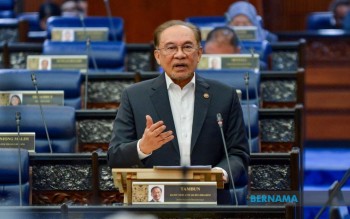
Prime Minister Datuk Seri Anwar Ibrahim has made clear that the government will adopt an uncompromising stance toward any potential corruption or fraudulent activity connected to the Retirement Fund (Incorporated) (KWAP) investment in eFishery, an aquaculture technology company. Speaking during the Oral Answers session at the Dewan Negara, Anwar, who also holds the Finance Minister portfolio, emphasised that despite preliminary indications suggesting no impropriety has taken place, a thorough investigation by the Malaysian Anti-Corruption Commission (MACC) remains essential to examine every aspect of how the funds were deployed.
The government's position reflects growing scrutiny surrounding how Malaysia's sovereign retirement funds deploy capital, particularly when investments enter new and emerging technology sectors. KWAP, which manages retirement contributions across various government-linked entities and public sector workers, has become a focal point for questions about investment governance and fiduciary responsibility. The eFishery deal exemplifies the tension between pursuing innovative economic opportunities and maintaining rigorous oversight of public money, an issue that resonates deeply with Malaysian workers whose retirement security depends on prudent fund management.
Anwar revealed that he has personally engaged with KWAP's leadership to underscore the imperative for complete transparency and full cooperation throughout the MACC investigation. While the initial findings do not appear to indicate evidence of fraudulent conduct, the Prime Minister stressed that this preliminary assessment does not absolve anyone involved from accountability. Instead, it reinforces the need for the anti-corruption body to meticulously review the investment decision-making process from inception to finalisation, including scrutinising the work of the investment panel and the board's ultimate approval of the transaction.
The investigation will likely examine several critical junctures in the investment process. These may include how eFishery was initially identified and evaluated as a candidate for KWAP funds, what due diligence procedures were conducted, how the investment thesis was presented to decision-makers, and whether any conflicts of interest existed among those responsible for approving the deployment of retirement monies. Such comprehensive investigation reflects international best practices in institutional fund management, where pension funds have fiduciary duties to their contributors.
For Malaysian workers whose retirement savings are held within KWAP, Anwar's statement offers assurance that even passive investments receive active oversight. KWAP manages funds for millions of contributors who depend on these savings for post-employment income security. The government's willingness to invite external investigation suggests confidence in the integrity of those involved while simultaneously demonstrating commitment to accountability mechanisms that protect the public interest.
The investment saga also highlights the challenge facing Malaysia's retirement funds in an era of low global interest rates and economic uncertainty. Both KWAP and the Employees Provident Fund (KWSP), Malaysia's largest pension fund, are under pressure to generate competitive returns for their contributors. This pressure can incentivise allocation toward higher-yielding but potentially riskier asset classes, including venture capital and emerging technology companies. Balancing the pursuit of attractive investment returns against the imperative to protect capital becomes increasingly difficult when navigating geopolitical volatility and economic headwinds affecting global markets.
The eFishery investment itself represents the type of forward-looking deployment that characterises modern pension fund strategies worldwide. Aquaculture technology addresses both food security and sustainability imperatives across Southeast Asia, making it strategically relevant to Malaysia's economic development. However, the size and nature of KWAP's commitment to the venture—and whether adequate risk assessment was performed—remain subjects of legitimate public interest, particularly when retirement security is at stake.
Senator Mohd Hasbie Muda's original question to the Prime Minister centred on broader government strategy for ensuring that national retirement funds can deliver competitive dividends amid geopolitical uncertainty. This reflects widespread concern among Malaysian savers about whether their retirement accumulations will maintain purchasing power and real value over decades of inflation and economic change. The government's response must address both immediate governance concerns surrounding specific investments and the longer-term framework governing how retirement funds navigate complex investment landscapes.
Senator Wan Martina Wan Yusoff's supplementary question elevated the inquiry to fundamental issues of transformation and investment strategy. Her query about which companies warrant retirement fund capital and what safeguards protect workers' money underscores a crucial governance question: who decides how public retirement savings are deployed, and what mechanisms exist to prevent capture by special interests? These questions become increasingly pressing as Malaysia seeks to develop investment capabilities that can compete globally while maintaining ethical standards and fiduciary responsibility.
The MACC investigation now becomes the definitive test of whether Malaysia's governance institutions can address such concerns transparently. The commission's findings will either reinforce confidence in KWAP's investment processes or identify systemic weaknesses requiring reform. Either outcome will carry implications extending beyond this single transaction, potentially shaping how Malaysian retirement funds approach future investments and which governance reforms might be necessary to strengthen institutional integrity.
For Malaysia's retirement savers and the broader economy, this episode demonstrates that public accountability mechanisms remain engaged even when preliminary assessments suggest no wrongdoing. The government's insistence on thorough investigation, despite the absence of immediate red flags, signals that protecting retirement security transcends partisan considerations and demands institutional commitment. As KWAP continues managing diversified portfolios across domestic and international markets, such vigilance becomes essential to maintaining the confidence that retirement fund contributors place in these institutions managing their financial futures.

