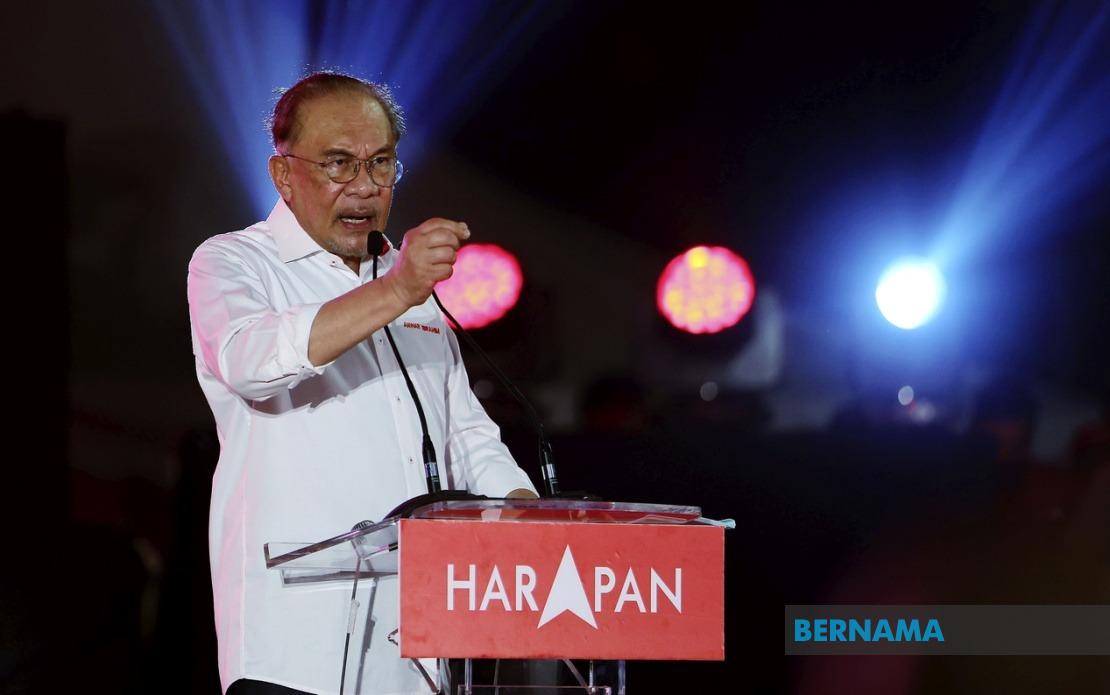
Prime Minister Datuk Seri Anwar Ibrahim has issued a pointed reminder to all political contestants in the forthcoming Negeri Sembilan state election to avoid weaponizing issues related to the monarchy and the Federal Constitution, signalling his determination to maintain constitutional boundaries during the electoral process. Speaking at the Pakatan Harapan candidate announcement ceremony in Kuala Pilah on July 14, Anwar underscored that while robust political competition is inherent to democracy, such contests must be conducted with integrity and restraint rather than descent into inflammatory rhetoric.
The warning reflects growing concerns within Malaysia's political establishment about the potential for state-level campaigns to veer into sensitive constitutional and institutional territory. Anwar's intervention as both PM and PH chairman represents a dual-track effort to police party discipline while setting broader expectations for the electoral environment. His explicit caution against slander and community-divisive tactics suggests an awareness that contentious issues around constitutional protections for the monarchy—matters that carry deep cultural significance in Negeri Sembilan particularly—could become flashpoints during campaigning if left unaddressed.
Anwar framed political competition as compatible with institutional respect, drawing a distinction between legitimate electoral contestation and conduct that erodes foundational pillars of governance. The emphasis on protecting "institutions that form the foundation of the country" carries multiple implications: it safeguards the monarchy against becoming a partisan football, protects the Constitution's authority from erosion through casual politicization, and establishes parameters for how future state elections might be conducted across Malaysia. For Negeri Sembilan specifically, where the Duli Yang Maha Mulia Raja holds constitutional significance, such boundaries help prevent campaigns from targeting customary institutions.
The candidate slate unveiled by Anwar demonstrates PH's strategy for the election, combining 36 contenders drawn from the three-party coalition of PKR, DAP, and Amanah. The selection balances experienced administrators with new faces, signalling both continuity and renewal. Anwar's public backing for current Menteri Besar Datuk Seri Aminuddin Harun, whom he characterized as cooperative and collaborative, indicates confidence in the incumbent administration's performance. Aminuddin's renomination for the Linggi state seat reinforces this endorsement, as does the candidacy of DAP secretary-general Anthony Loke for Chennah, bringing national-level party leadership into state-level contests.
The presence of senior figures including Amanah president Datuk Seri Mohamad Sabu, PH Communications Director Datuk Seri Fahmi Fadzil, and PH Election Director Datuk Seri Amirudin Shari at the announcement underscores the coalition's commitment of institutional resources to the campaign. This concentration of top-tier political machinery reflects PH's assessment of Negeri Sembilan's electoral importance—it is a state where PH's federal mandate must be translated into sustained state-level control to demonstrate governance capability beyond Putrajaya.
Anwar's call for clean leadership emphasizing integrity and development capacity sets the substantive agenda PH wishes to contest on during the campaign period. By pivoting toward development delivery and administrative competence, PH attempts to position itself as forward-looking and results-oriented, potentially contrasting itself with opposition alternatives framed as distraction-prone or institutionally disruptive. The assertion that "Negeri Sembilan must not be left behind" carries implicit criticism of alternative governance propositions and stakes PH's claim to superior stewardship of the state's economic and social advancement.
The emphasis on synchronization between state and federal governments carries particular weight in Malaysia's federal context, where coordination between different political administrations can create friction or inefficiency. Anwar's confidence that Negeri Sembilan will "move forward in tandem with the federal government" signals to voters that electing PH state representatives ensures alignment with federal resources, development priorities, and policy frameworks. This argument has genuine force for voters concerned about service delivery, infrastructure projects, and fund allocation—practical considerations that often outweigh partisan ideology in state elections.
For Southeast Asian observers and international analysts monitoring Malaysian political developments, Anwar's intervention carries significance beyond Negeri Sembilan specifically. The Prime Minister's explicit boundary-drawing around constitutional and institutional matters suggests institutional maturity and self-restraint within Malaysia's political class. In a region where democratic standards sometimes erode through creeping normalization of institutional politicization, Malaysia's major political players maintaining certain red lines—even during heated electoral competition—reflects a form of constitutional conservatism that reinforces system stability.
The Negeri Sembilan election itself represents a mid-term test of public support for the PH-led government that came to power in late 2022. Voter sentiment in the state will provide signals about whether PH can sustain its national coalition and whether specific grievances or advantages have emerged since the federal election. A strong showing strengthens Anwar's position within PH and validates his centrist, institution-respecting political approach, while any setback would invite pressure from coalition partners or within PKR to adjust strategy. The state therefore functions as a political barometer for the broader federal government's trajectory.
Looking ahead, Anwar's framing of the election as a choice between clean, competent, development-focused leadership and alternative options positions the campaign around administrative performance and forward momentum rather than constitutional grievances or institutional positioning. This focus may serve PH's strategic interests, particularly if opposition competitors attempt to mobilize voters around identity-based or institutional concerns. By establishing that such issues lie outside acceptable electoral discourse, Anwar narrows the campaign space to terrain where PH believes it competes effectively.
The practical enforcement of Anwar's standards will test PH's internal discipline and opposition parties' willingness to accept electoral boundaries. Political campaigns generate heated rhetoric and opportunistic positioning; whether all contestants genuinely adhere to the Prime Minister's framework remains uncertain. Nevertheless, his public articulation of constitutional and institutional red lines establishes a benchmark against which future conduct can be measured and potentially criticized, creating reputational incentives for compliance even among parties not directly under PH's organizational control.

