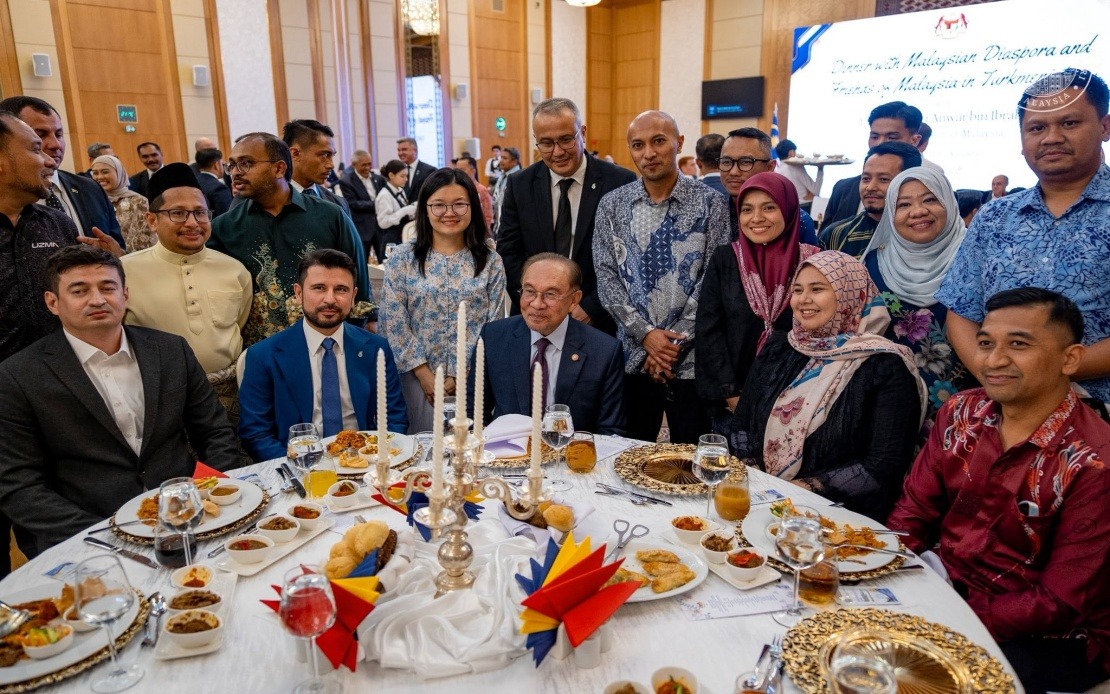
Prime Minister Datuk Seri Anwar Ibrahim has used his historic first official visit to Turkmenistan to meet with members of the Malaysian diaspora based in Ashgabat, reinforcing the government's commitment to maintaining strong bonds with citizens and professionals living abroad. The engagement underscored the administration's belief that Malaysians overseas represent a valuable resource in advancing the nation's interests globally, serving as informal representatives who contribute to building the country's international standing through their professional and personal networks.
During the visit, Anwar highlighted how the MADANI Government remains dedicated to fostering deeper connections with Malaysians scattered across the world. He encouraged community members to stay informed about developments back home and to preserve their links to Malaysia, recognising that distance need not diminish a sense of belonging or commitment to the nation's progress. The Prime Minister's remarks reflected an understanding that diaspora engagement has become increasingly important for countries seeking to leverage global talent and maintain cultural continuity across borders.
In his social media address, Anwar remarked on the warmth and enthusiasm displayed by the Malaysian community in Ashgabat, describing the encounter as though the group had gathered in Kuala Lumpur itself. This characterisation suggests that despite geographical separation, shared identity and common purpose can create meaningful moments of connection. The Prime Minister explicitly termed members of the diaspora as "unofficial ambassadors," acknowledging their daily work in foreign lands contributes to Malaysia's reputation and helps expand the nation's diplomatic reach beyond formal government channels.
The visit itself carries broader strategic significance, marking Anwar's first official engagement with Turkmenistan as Prime Minister. This trip was extended at the invitation of Turkmenistan President Serdar Berdimuhamedov, reciprocating a state visit the president made to Malaysia in December 2024. The exchange of high-level visits signals growing diplomatic interest between the two nations and reflects a deliberate effort to deepen bilateral relations.
Beyond the ceremonial aspects of state visits, Anwar clarified that Malaysia's engagement with Turkmenistan encompasses objectives far wider than immediate commercial transactions. While trade and investment certainly feature in bilateral discussions, the Prime Minister indicated that the visit equally prioritises expanding mutual friendship, enhancing mutual understanding between peoples, and identifying cooperation avenues that could benefit both countries in the medium to long term. This holistic approach suggests Malaysia views Turkmenistan not merely as a trading partner but as a potential ally in broader regional and international frameworks.
Turkmenistan's strategic location along Central Asia's crossroads makes it a potentially valuable connection point for Malaysia, particularly regarding energy security and trade route diversification. As a nation with significant natural gas reserves and established relationships with multiple regional powers, Turkmenistan could serve Malaysian interests in accessing new markets and securing alternative energy supplies. Enhanced bilateral cooperation might also position Malaysia more favourably in Central Asian diplomatic circles, an area where Malaysian influence has historically been limited.
The Prime Minister's emphasis on the diaspora's role as reputation builders and network extenders touches on a reality that many Southeast Asian nations are increasingly recognising. Malaysians working in professional capacities across Central Asia, whether in energy, finance, education, or business, create informal channels of goodwill and understanding that complement formal diplomatic efforts. Their success abroad reflects positively on Malaysia's brand globally, demonstrating the quality of education and skills training available to Malaysian citizens.
This initiative also reflects practical recognition that global migration has become permanent rather than temporary for many professionals. Rather than viewing diaspora communities as lost citizens, modern governments increasingly see them as permanent stakeholders with dual interests in both their adopted countries and their homelands. By maintaining active engagement with these communities, Malaysia ensures that first-generation migrants and their descendants remain invested in Malaysia's future, potentially facilitating knowledge transfer, investment flows, and cultural exchange.
The two-day visit to Ashgabat represents more than ceremonial diplomacy. It demonstrates Malaysia's willingness to expand its diplomatic footprint beyond traditional partners in Southeast Asia and the broader Muslim world, venturing into Central Asian engagement at a time when global powers are competing for influence in the region. Turkmenistan, despite its authoritarian governance model, offers Malaysia potential partnerships in energy cooperation and membership in regional economic frameworks that could enhance Malaysia's strategic autonomy.
For Malaysians living in Turkmenistan and surrounding Central Asian countries, the Prime Minister's visit carries symbolic value extending beyond the immediate gathering. It signals that the government recognises their presence and contributions, validating their choice to pursue opportunities abroad while maintaining Malaysian identity. Such recognition can strengthen emotional bonds with the homeland and encourage long-term engagement with Malaysia's development agenda, whether through investment, knowledge sharing, or advocacy.
The visit also sets a precedent for future Prime Ministers to prioritise engagement with diaspora communities during international travels. As Malaysia seeks to position itself as a developed nation capable of competing globally, nurturing relationships with talented citizens living abroad becomes increasingly important. These communities often possess insider perspectives on foreign markets, understanding of local business practices, and established networks that could accelerate Malaysia's economic diversification efforts.
Looking forward, the Turkmenistan visit suggests Malaysia is consciously building deeper engagement with Central Asian countries, a region often overlooked by Southeast Asian nations despite its strategic importance. By combining formal diplomatic visits with genuine engagement with diaspora communities, Anwar's administration demonstrates a more comprehensive approach to international relations that recognises both formal and informal channels of influence. This multifaceted strategy acknowledges that lasting international relationships are built not merely through government-to-government transactions but through sustained people-to-people connections and mutual respect.
The Prime Minister's remarks ultimately reflect a modern understanding of national interest that extends beyond traditional borders. As Malaysia navigates an increasingly complex geopolitical landscape, maintaining strong ties with diaspora communities in emerging strategic regions like Central Asia becomes part of a broader strategy to expand Malaysia's global influence and secure its long-term development interests.

