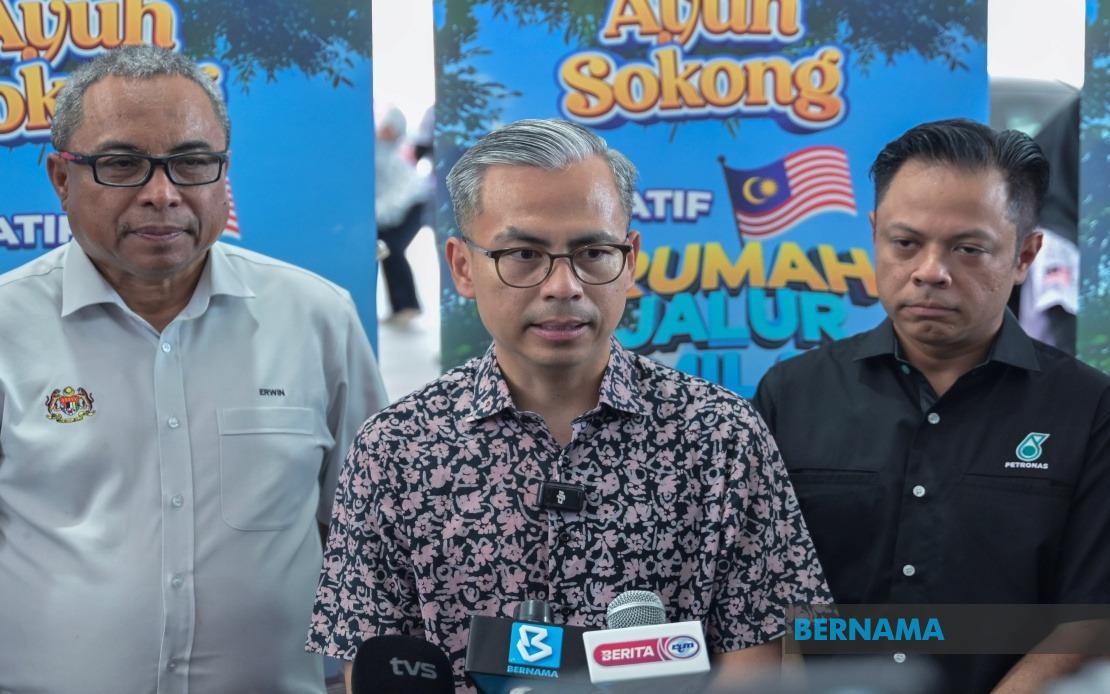
Prime Minister Datuk Seri Anwar Ibrahim has personally directed the Election Commission to deliver an updated report on the proposed redelineation of Sarawak State Legislative Assembly seats, according to government spokesman Datuk Seri Fahmi Fadzil. The initiative, which was discussed at a recent Cabinet meeting, aims to expand the assembly by adding 17 new legislative seats and underscores the federal government's determination to proceed with the constituency reform despite the procedural complexities involved.
The Sarawak State Legislative Assembly (Composition of Membership) Bill 2025, which contains provisions to increase the total number of seats to 99, represents a significant expansion of the state's lower house. This redelineation process touches on constitutional matters and requires careful coordination between federal and state authorities as well as the autonomous election body. Fahmi clarified that while the Prime Minister has pledged to implement the changes, no specific timeline has been communicated to Cabinet members at this stage because several prerequisite steps remain pending from the Election Commission's end.
The redelineation effort emerged from discussions raised by Minister of Women, Family and Community Development Datuk Seri Nancy Shukri and Minister of Works Datuk Seri Alexander Nanta Linggi during Cabinet proceedings. Both ministers advocated for the Sarawak measure, highlighting its importance to the state's political architecture and governance capacity. For the Pakatan Harapan-led Madani government, the commitment reflects broader efforts to address representation and electoral fairness across Malaysia's constituent states, particularly in resource-rich Sarawak where the state government holds considerable autonomy.
The timing of this redelineation initiative carries political significance for Sarawak, historically a stronghold of the Gabungan Parti Sarawak coalition. Any alteration to the electoral landscape potentially reshapes the competitive dynamics within the state, and federal backing for the proposal signals Kuala Lumpur's interest in strengthening ties with the state government and demonstrating responsiveness to Sarawak-specific concerns. For Malaysian observers, this move exemplifies how redelineation exercises serve not merely technical functions but constitute strategic political moments that require careful management.
Fahmi's statement that the Election Commission must complete certain procedural groundwork before implementation can proceed highlights the meticulous nature of electoral boundary reform. The Commission must verify that any proposed boundaries comply with constitutional criteria regarding population distribution, administrative coherence, and equal weighting of voter strength across constituencies. These technical considerations, though dry on the surface, directly impact political competition and representation quality, making the Election Commission's role crucial to ensuring the legitimacy of the eventual arrangement.
The Prime Minister's personal involvement in requesting an updated report underscores this proposal's priority status within the Madani administration. Rather than relegating redelineation matters to routine bureaucratic channels, Anwar Ibrahim has inserted executive pressure into the process, signalling that the Cabinet expects forward momentum on this initiative. Such intervention reflects the political capital the government appears willing to invest in delivering reform that affects state-level politics in one of Malaysia's most significant territories.
Beyond Sarawak, Fahmi also addressed preparations for the upcoming Melaka state election, revealing that the government is implementing lessons learned from recent elections in Johor and Negeri Sembilan. Specifically, his ministry, in collaboration with the Malaysian Communications and Multimedia Commission, is coordinating with the Election Commission to ensure robust internet infrastructure at all polling centres. This parallel initiative demonstrates the Madani government's commitment to modernising electoral operations and ensuring that connectivity—increasingly essential for election administration and observer activities—does not become a bottleneck in Melaka's electoral process.
The attention to internet access at polling stations reflects contemporary electoral realities, where digital connectivity supports not only administrative functions but also observer oversight, result verification, and public confidence in the electoral process. By addressing this infrastructure gap proactively in Melaka, building on experience from the previous two state elections, the government positions itself as technically competent and detail-oriented in election management, qualities that carry broader political messaging value.
For Malaysian observers and Sarawak stakeholders, the Prime Minister's directive to the Election Commission represents a genuine commitment to the redelineation project rather than mere rhetorical flourish. The explicit request for an updated report, coupled with public reaffirmation in a Cabinet setting, creates accountability for follow-through. Nevertheless, the absence of a concrete implementation timeline suggests that significant technical and possibly political groundwork remains before the 17 additional seats can materialise and alter Sarawak's electoral landscape.
The redelineation initiative also contextualises broader questions about Malaysian federalism and the respective roles of federal and state authorities in electoral administration. Sarawak, as a state with constitutionally protected autonomy in certain domains, presents a more complex redelineation scenario than wholly federally-controlled territories. The coordination required between Kuala Lumpur and Kuching, channelled through the Election Commission, thus serves as a case study in collaborative governance across Malaysia's federal system.
Looking ahead, the Election Commission's updated report will likely determine the realistic timeline for implementation. Any delay or complication in producing this report could affect the government's ability to deliver on its commitment before the next scheduled state election in Sarawak, placing time pressure on both the Commission and the state administration. For political observers across Southeast Asia watching Malaysia's electoral evolution, the Sarawak redelineation represents an interesting test of how federal governments navigate state-level redistricting in genuinely federal systems.

