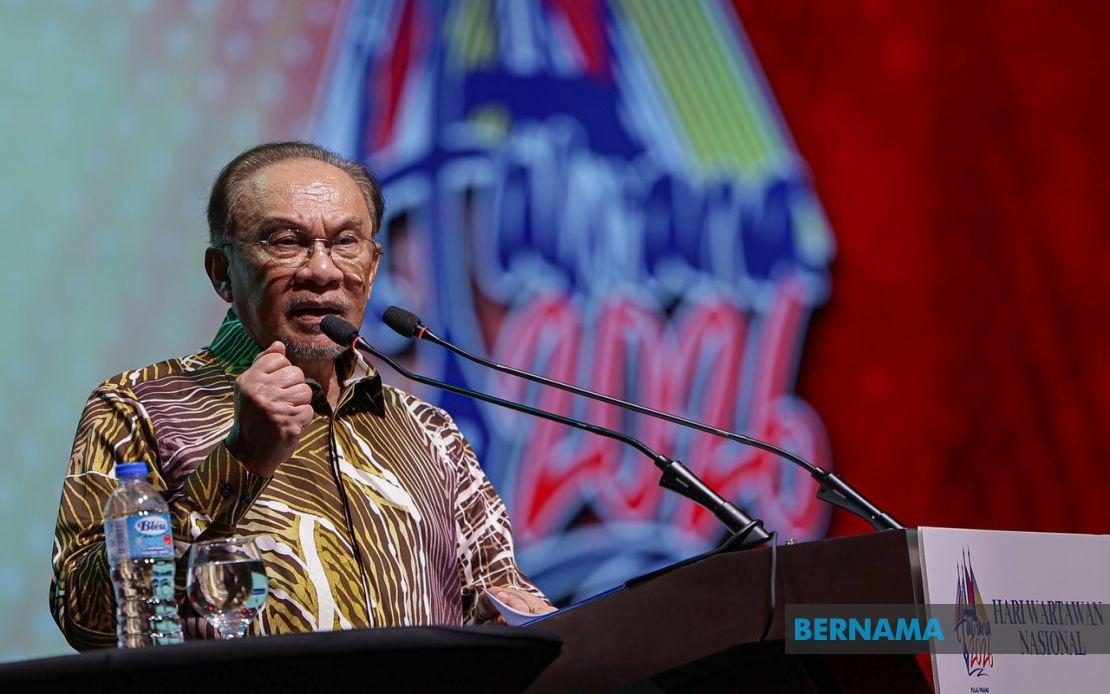
Prime Minister Datuk Seri Anwar Ibrahim has thrown his weight behind the appointment of retired Federal Court judge Tan Sri Nallini Pathmanathan as the inaugural chairman of the Malaysian Media Council, believing her judicial pedigree will restore public faith in an institution tasked with policing media ethics. Speaking at the National Journalists' Day celebration in Butterworth on June 20, Anwar characterised the selection as deliberate and strategic, designed to furnish the newly created regulatory body with the gravitas it requires as it embarks on its mandate. The Prime Minister's vocal support signals the government's determination to establish the MMC as a credible arbiter rather than a politically compromised watchdog, a concern that has periodically haunted media regulation in the region.
The Malaysian Media Council was formally established under the Malaysian Media Council Act 2025, positioning itself as a self-regulatory mechanism distinct from direct state control. This structural independence is particularly significant in the Southeast Asian context, where media freedom remains contested terrain and public scepticism towards regulatory bodies runs deep. By anchoring the leadership to someone with Nallini's background—a respected jurist whose career spanned the federal judiciary—the government appears to be signalling that the council will operate according to principle rather than political expediency. Anwar emphasised that Nallini's appointment hinged on careful deliberation regarding her "distinguished judicial background, track record and integrity," language designed to project impartiality and professional rigour to both the media industry and the broader public.
Nallini's credentials carry substantial weight beyond symbolic value. A former Federal Court judge represents the apex of Malaysia's judicial hierarchy, and individuals who reach that rank typically command respect across professional and civil society circles. Her elevation to the MMC chairmanship therefore represents a form of institutional cross-pollination, bringing judicial discipline and constitutional sensibility to media regulation. The board's unanimous endorsement during its May 26 meeting suggests internal consensus around her suitability, though this level of unanimity at a government-related institution can occasionally mask political consensus rather than genuine conviction. Nevertheless, Nallini's appointment addresses a recurring tension in media governance: the need for regulatory bodies to possess sufficient independence and credibility to mediate disputes between powerful state and commercial interests without capitulating to either.
The MMC's mandate encompasses multiple responsibilities that will test whether credibility can translate into effective governance. The council must strengthen journalistic standards across a diverse media landscape characterised by traditional outlets, online platforms, and hybrid models operating under vastly different editorial philosophies. Managing public complaints related to media conduct requires developing transparent procedures and frameworks that can accommodate legitimate grievances without becoming a mechanism for silencing critical reporting. Promoting ethical practices demands that the MMC function as educator and convener, not merely enforcer, cultivating a professional culture where journalists internalise standards rather than comply reluctantly. The explicit commitment to safeguarding media freedom as a democratic pillar represents a delicate balancing act, since credible regulation can either strengthen public trust in journalism or, if misapplied, become an instrument of suppression.
The attendance of senior government figures at the National Journalists' Day event underscored official investment in this initiative. Communications Minister Datuk Fahmi Fadzil and Penang Chief Minister Chow Kon Yeow joined Anwar in legitimating the occasion, flanked by bureaucratic representatives from the Communications Ministry. This governmental show of support carries mixed implications: it demonstrates political commitment to media regulation but also invites questions about whether the MMC can maintain genuine distance from ministerial influence. The presence of Malaysian National News Agency leadership, including Bernama chairman Datuk Seri Wong Chun Wai, highlighted the interplay between the state news agency and the broader media ecosystem that the MMC will now oversee.
For Malaysian readers and the regional media landscape, Nallini's appointment arrives at a consequential moment. Digital disruption has fragmented audiences and revenue streams, leaving many newsrooms financially precarious and vulnerable to commercial or political pressure. A credible self-regulatory council theoretically offers an alternative to fragmented government intervention on one hand or a completely laissez-faire environment on the other. If the MMC under Nallini's leadership can establish clear standards, resolve disputes fairly, and defend media freedom without descending into partisan territory, it could become a model for other Southeast Asian democracies grappling with similar challenges. Conversely, if the council becomes perceived as merely granting legitimacy to state priorities under a judicial veneer, it would undermine whatever gains accrue from Nallini's appointment.
Anwar's endorsement also reflects his positioning as a leader invested in institutional renovation and democratic rehabilitation. His public backing of Nallini's appointment frames media regulation not as a limiting constraint but as infrastructure supporting democratic practice. This framing aligns with broader governmental messaging about strengthening institutional checks and balances, though sceptics will note that executive enthusiasm for any regulatory body requires ongoing scrutiny. The Prime Minister's appeal to "impeccable credentials" and the promise of a "new image and confidence" suggests government recognition that the MMC's legitimacy rests fundamentally on whether industry participants and the public perceive it as genuinely independent.
The establishment of the MMC under statutory authority represents evolution from Malaysia's previous regulatory approach, which relied more heavily on press self-regulation frameworks and ad-hoc government interventions. The shift towards a formalised, legislated body with dedicated leadership reflects growing recognition that media regulation requires transparent institutional architecture, though debate persists regarding whether statutory mechanisms enhance or constrain editorial freedom. Nallini's judicial background implies she will likely favour procedural rigour, public accountability, and interpretations rooted in constitutional principles rather than political convenience, though her actual performance in office will ultimately determine the council's credibility.
Looking forward, several dimensions will determine whether the MMC becomes an effective regulatory institution or gradually loses public confidence. The council must develop complaint-handling mechanisms that operate transparently and protect complainants and respondents alike from unfair treatment. Its guidance on journalistic standards must balance professional autonomy with legitimate public interest in ethical conduct, avoiding prescriptiveness that might chill legitimate reporting. The MMC's relationship with other regulatory agencies—particularly the Communications and Multimedia Content Forum and government media regulators—requires careful calibration to prevent overlapping jurisdiction or regulatory arbitrage. Most fundamentally, the council must demonstrate that decisions reflect principles articulated in advance rather than case-by-case political judgement, building a jurisprudence that industry players can reference and anticipate.
Anwar's public backing of Nallini, while politically strategic, reflects genuine stakes in whether Malaysia can establish institutions that simultaneously protect media freedom and enforce professional accountability. The Prime Minister's emphasis on her credentials, integrity, and capacity to enhance public confidence acknowledges that regulatory legitimacy cannot be decreed from above but must be earned through consistent, fair-minded operation. Whether Nallini and the MMC can meet these expectations remains to be demonstrated through their inaugural years of operation, but the appointment itself signals official recognition that media regulation requires credible stewardship rather than administrative convenience.

