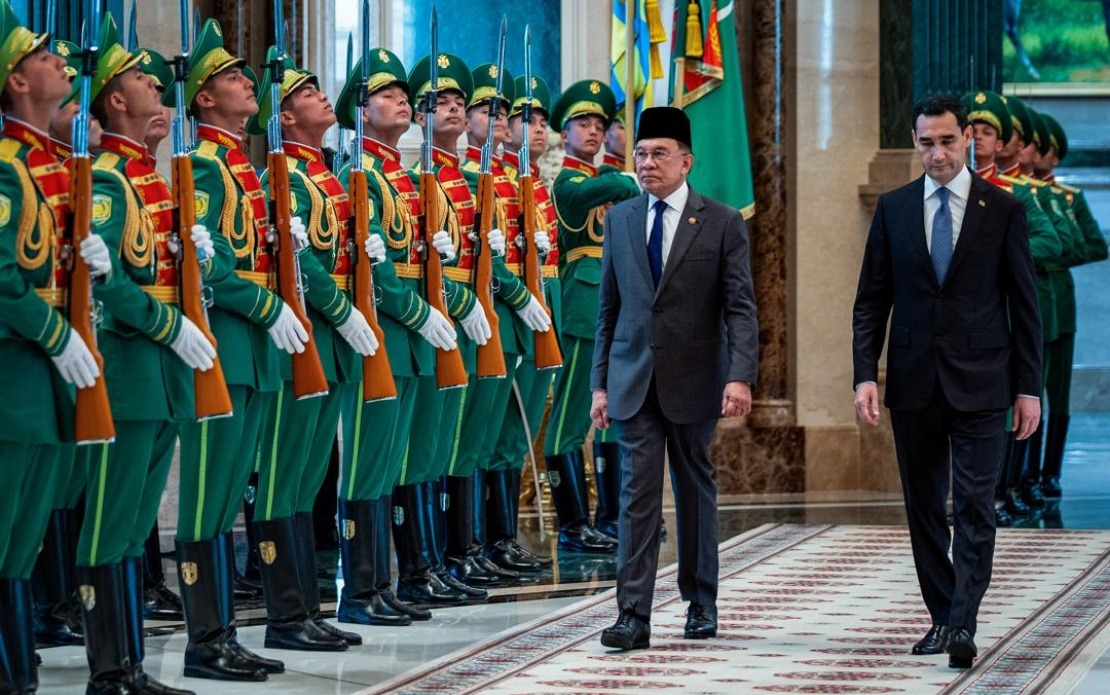
Prime Minister Datuk Seri Anwar Ibrahim has been accorded a full state reception at the Turkmenistan Presidential Palace in Ashgabat, underscoring the diplomatic importance Malaysia places on its growing relationships across Central Asia. The ceremonial welcome on June 19 marked a significant milestone in bilateral ties, representing Anwar's first official journey to the resource-rich nation since he assumed office as Malaysia's 10th Prime Minister in November 2022.
President Serdar Berdimuhamedov personally received the Malaysian leader, with the meeting conducted according to full diplomatic protocol. A guard of honour was assembled for the occasion, while the national anthems of both countries were performed as a formal tribute to the visiting delegation. This ceremonial treatment reflects the strategic value both nations see in strengthening their partnership amid shifting geopolitical dynamics in Asia.
The itinerary progressed with formal introductions between Anwar and Turkmenistan's Cabinet ministers and other high-ranking government officials. The Malaysian Prime Minister subsequently presented members of his accompanying delegation to President Berdimuhamedov, facilitating personal connections that often prove valuable in future diplomatic engagements and cooperation initiatives. Such introductions serve as an important foundation for deeper institutional relationships between the two governments.
Following the formal ceremonies, both leaders engaged in a private bilateral discussion before convening a broader meeting with their respective delegations. These sessions, structured to allow for both candid exchanges and official negotiations, typically address priority areas including trade expansion, investment opportunities, infrastructure development, and regional security matters. The dual-format engagement gives leaders space to discuss sensitive topics privately before formalising agreements with their teams present.
Turkmenistan's strategic location along ancient Silk Road trade corridors and its significant natural gas reserves make it an increasingly important partner for Malaysia's broader regional diplomacy. For a Southeast Asian nation seeking to diversify its international partnerships beyond traditional partners, Central Asia represents a relatively untapped market with considerable growth potential. Malaysia has been gradually expanding its footprint in this region through similar high-level visits and institutional partnerships.
Anwar's two-day visit, which commenced on June 18, comes at a time when Malaysia is recalibrating its foreign policy to strengthen ties across multiple regions. The Central Asian republics, often overshadowed in international coverage by larger powers, offer distinct opportunities for smaller to medium-sized nations like Malaysia to build mutually beneficial relationships. Turkmenistan, in particular, has been seeking to enhance its diplomatic engagement with Southeast Asian countries as part of a broader strategy to reduce regional isolation.
The invitation from President Berdimuhamedov carries significance beyond routine diplomatic courtesy, suggesting that both capitals view this engagement as part of a deliberate strategy to elevate bilateral relations. For Malaysia, establishing stronger ties with Turkmenistan could open pathways for trade diversification, access to Central Asian markets, and potential cooperation in energy and infrastructure sectors. Conversely, Turkmenistan may view closer relations with Southeast Asia as a means of strengthening its international standing and accessing new trading partnerships.
Bilateral cooperation frameworks discussed during such visits typically encompass multiple sectors. Trade relations, consular services, cultural exchanges, and educational opportunities frequently feature in bilateral agendas. Malaysia's growing economic presence in various sectors may intersect with Turkmenistan's development priorities, creating genuine opportunities for joint ventures and mutual benefit. The discussions during this visit will likely establish the foundation for more concrete cooperation mechanisms in coming months.
From a broader regional perspective, Anwar's visit reflects Malaysia's strategic interest in cultivating relationships across Asia's diverse geopolitical landscape. In an era where regional powers vie for influence and alignment, Malaysia's position as a non-aligned voice seeking partnerships based on mutual interest rather than ideological grounds becomes increasingly valuable. Such visits demonstrate Malaysia's commitment to being a bridge-builder across different regions and civilisations.
The timing of this inaugural visit also carries geopolitical undertones. Malaysia's engagement with Central Asia signals its intention to remain an active player in shaping regional narratives rather than being confined to Southeast Asian affairs. As global supply chains reconfigure and new economic corridors emerge, countries like Turkmenistan with control over critical resources and strategic corridors gain heightened importance in international relations. Malaysia's diplomatic overtures reflect an awareness of these shifting dynamics.

