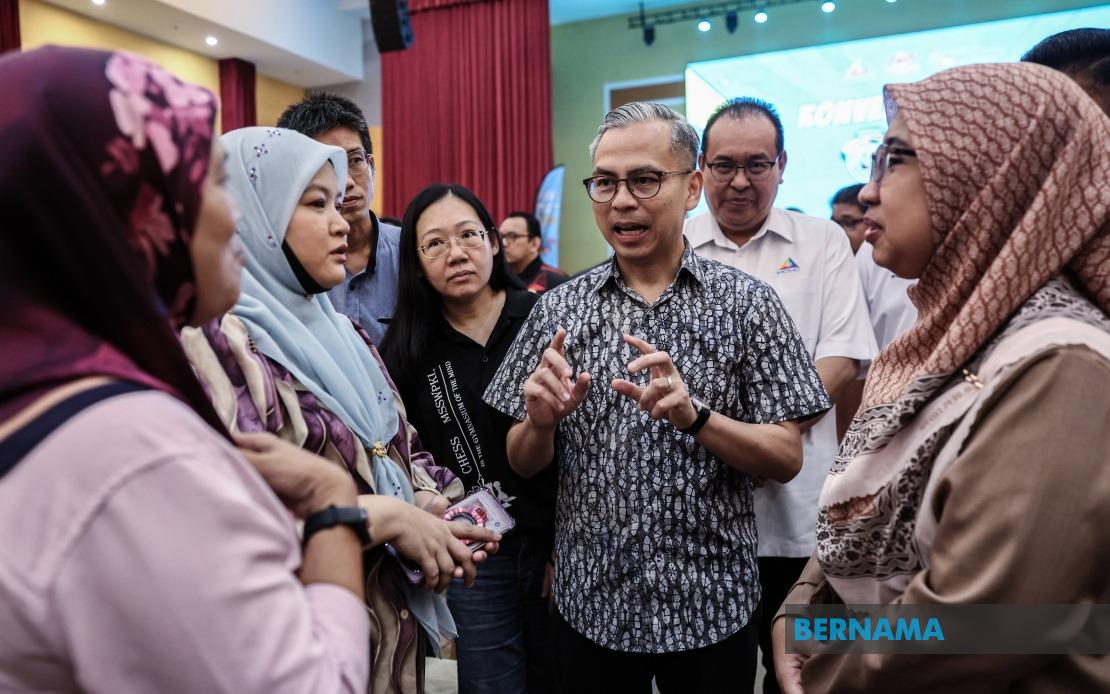
The leadership of Pakatan Keadilan Rakyat has moved to reassure members and supporters that routine party operations will proceed without interruption following Nurul Izzah Anwar's decision to step back from her duties as deputy president. Speaking at a press conference in Kuala Lumpur on Thursday, PKR Information Chief Datuk Seri Fahmi Fadzil explained that the party's Central Leadership Council has approved a leave arrangement for the high-ranking party member, who is seeking to focus on personal commitments and advance her doctoral research.
Fahmi underscored that the transition has been carefully managed within the party hierarchy. Vice-president Datuk Seri Saifuddin Nasution Ismail has been formally designated to carry out the duties and responsibilities associated with the deputy president position during the temporary absence. This arrangement preserves institutional continuity and ensures that critical party functions continue without gaps or delays that might otherwise undermine operational efficiency across PKR's structure.
The decision reflects a deliberate choice by PKR's top decision-making body to accommodate Nurul Izzah's personal and academic aspirations while maintaining party stability. Rather than accepting her resignation outright—a step that could have triggered wider discussions about succession and internal restructuring—the council opted for a leave framework that acknowledges her ongoing commitment to PKR as a member and activist. Fahmi made clear that her absence from the deputy president's office does not constitute a withdrawal from party affairs altogether, positioning her future return as an open possibility once her studies are completed.
The Communications Minister's statement serves to counter potential narratives about internal instability or discord within PKR, which remains a crucial component of the Unity Government alliance supporting Prime Minister Datuk Seri Anwar Ibrahim. In Malaysian politics, leadership transitions and high-profile absences often trigger speculation about factional tensions or emerging challenges to top leadership. By framing Nurul Izzah's leave as a mutually agreed, temporary arrangement, PKR's messaging team attempts to prevent such rumours from gaining traction among grassroots members and the broader public.
During the same press briefing, Fahmi also addressed public curiosity about whether Subang Member of Parliament Wong Chen might relinquish his parliamentary seat. He deflected questions on this matter, noting that he had received no official information and that any formal announcements would come through established constitutional channels, specifically the Dewan Rakyat Speaker Tan Sri Johari Abdul. This measured response aligns with parliamentary convention and avoids creating unnecessary uncertainty about parliamentary representation in a constituency that has been closely watched by political observers.
Regarding broader political timing, Fahmi dismissed speculation that the government might accelerate the schedule for the next general election. He affirmed that no plans currently exist to hold elections ahead of the constitutionally permissible window, with the government anticipating that polling will occur before the end of 2026 at the latest. This timeline provides the administration with approximately 18 months to implement its legislative and policy agenda without the distraction of campaign activities, allowing ministers and administrators to focus on substantive governance work.
The PKR spokesperson highlighted that the federal government's immediate priority centres on maintaining steady administrative functioning and consolidating support among the various parties comprising the Unity Government coalition. He specifically noted appreciation for the consistent backing provided by coalition partners to Anwar's leadership, framing this unity as essential to the government's ability to advance its reform programme and address lingering national issues that demand urgent attention.
Among unfinished business requiring follow-up, Fahmi pointed to the implementation of recommendations stemming from the Royal Commission of Inquiry into Tabung Haji's management during the 2014-2020 period. The RCI's findings have generated significant public discussion about governance, financial management, and accountability within one of Malaysia's most important Islamic financial institutions. The slow pace of implementing these recommendations has drawn criticism from civil society and opposition figures, making it a visible measure of the government's commitment to institutional reform.
Fahmi hinted that Prime Minister Anwar would shortly announce several initiatives that officials expect will be well-received by the public and contribute positively to national development. While declining to provide specifics, this suggestion implies that the government has packages or policy announcements in preparation, possibly timed strategically to demonstrate momentum and deliver tangible benefits to citizens. Such announcements frequently feature infrastructure projects, economic stimulus measures, or social programme enhancements designed to generate public goodwill and reinforce the government's narrative of proactive leadership.
The episode involving Nurul Izzah's leave encapsulates several dynamics at play within contemporary Malaysian politics. It demonstrates how coalition governments must balance internal management, public perception, and the personal aspirations of senior figures. PKR's handling of the matter—crafting a leave arrangement rather than forcing an outright resignation—reflects an attempt to retain institutional talent while accommodating individual life circumstances. For observers tracking PKR and the broader Unity Government coalition, the smooth communication of this decision may signal effective internal coordination and conflict-resolution mechanisms, qualities essential to coalition stability.

