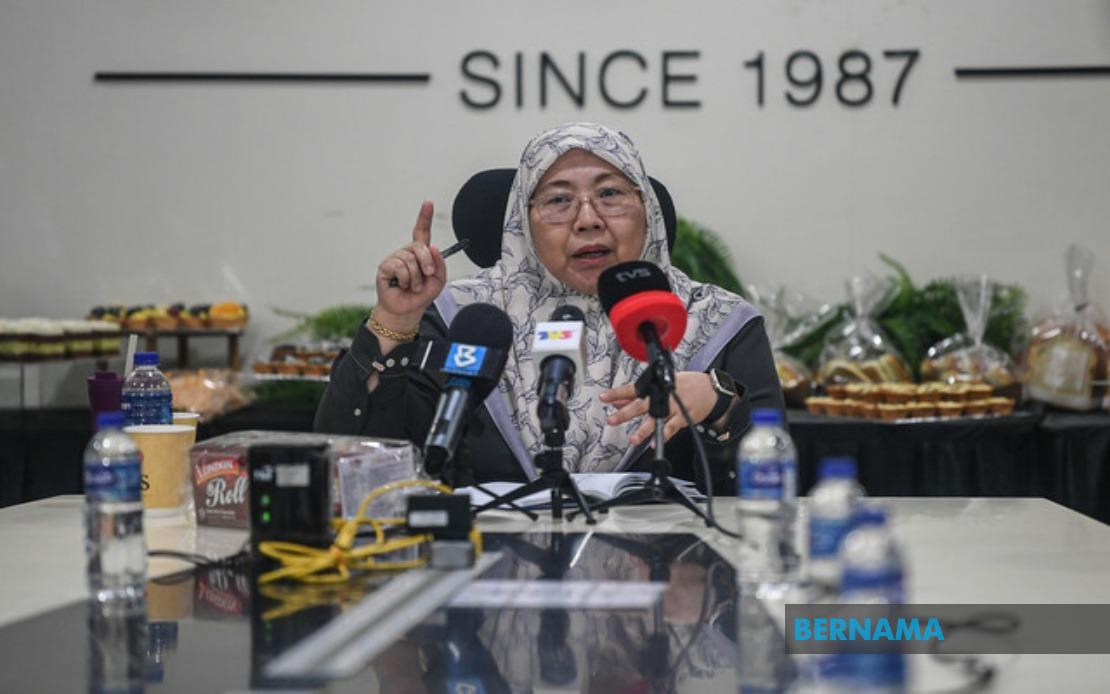
A group of PKR leaders and approximately 200 party members recently crossed over to the Malaysian Indian Congress (MIC), a move that PKR secretary-general Datuk Dr Fuziah Salleh characterised as unexpected and somewhat puzzling. Speaking during a working visit to Johor's Skudai district on June 30, Fuziah disclosed that the party's internal analysis had traced the defections to a single underlying grievance: members' disappointment at being overlooked for leadership roles and formal party positions.
The exodus came to public attention on June 28 when M. Murugan, who previously served as vice-chairman of PKR's Johor State Leadership Council, announced his departure alongside his supporters. Their decision to join MIC's Iskandar Puteri division marks another chapter in the steady churn affecting Malaysia's ruling coalition as the nation approaches regional electoral contests. Fuziah's characterisation of the departures as stemming from position-seeking rather than ideological or policy differences suggests internal management challenges within PKR, which has faced similar departures in other states.
While Fuziah framed the defections as routine disappointments inherent to party politics, the timing and scale warrant closer examination. The movement of 200 members is not trivial in the context of a single state division, and their shift to MIC—a component party within Barisan Nasional—indicates a calculated political choice rather than a spontaneous migration. For PKR, which has built much of its support among urban, younger, and ethnically diverse voters, such defections to a race-based party like MIC could signal deeper cracks in the party's appeal among grassroots members, particularly among the Indian community that MIC traditionally represents.
Fuziah's public remarks at the Skudai event took on broader significance when she addressed statements from PAS president Tan Sri Abdul Hadi Awang. Hadi had recently called on voters to withdraw support from Pakatan Harapan (PH), the governing coalition of which PKR is the largest component. Fuziah interpreted this pronouncement as evidence of renewed coordination between Barisan Nasional and PAS, suggesting that backdoor political manoeuvring was underway ahead of the July 11 Johor state election. Such a realignment would fundamentally reshape the political landscape in one of Malaysia's most strategically important states.
The Johor state election represents a crucial test for PH's electoral standing and internal cohesion. With 172 candidates competing across 56 seats, the contest carries implications well beyond the state itself. Johor's outcome will likely influence voter sentiment heading into future federal elections and will test whether PH can maintain its 2022 momentum or whether the coalition faces erosion through both defections and electoral setbacks. For PKR particularly, retaining ground in Johor is essential to its position within the ruling coalition.
Fuziah urged Johor voters to examine the evolving political situation carefully before casting their ballots, a diplomatic call that nonetheless underscored PKR's concern about the shifting dynamics. Her emphasis on voter deliberation suggested worry that the PAS-BN coordination narrative, if credible, could sway undecided voters by suggesting momentum lay with the opposition. The call also implicitly acknowledged that PH's political narrative was under pressure from multiple directions simultaneously.
On Perikatan Nasional (PN)'s strategy, Fuziah offered a more optimistic assessment for PH's prospects. She characterised PN's apparent attempt to poach Barisan Nasional supporters as a tactic that could ultimately backfire. Rather than strengthening PN's position, Fuziah predicted that such manoeuvrings would expose internal fractures within the coalition—notably between PAS and PN's other allies. The Hadi statement about discouraging support for PH could indeed be read as PAS prioritising its relationship with BN over loyalty to PN partners, creating the kind of internal tension Fuziah described.
Fuziah's contention that internal PN tensions ultimately benefit PH reflects a strategic calculation that opposition unity is fractious enough to hand advantages to the government. However, this argument contains an inherent risk: it assumes that PN's problems translate directly into PH gains, when voters might instead punish both coalitions for perceived instability. In Malaysian electoral politics, voter cynicism about coalition shenanigans can sometimes manifest as anti-incumbency rather than opposition support.
The defection of members over position-seeking raises questions about PKR's internal management and democratic culture. If members feel systematically excluded from leadership opportunities, the party risks developing a demographic cohort of perpetually frustrated activists who lack incentive to mobilise votes during campaigns. This could prove particularly damaging among younger members and those from communities where PKR holds minority status, as these groups may lack alternative avenues for advancement and may therefore prove especially vulnerable to recruitment by rival parties.
Johor's political significance extends beyond state-level outcomes. The state has traditionally been a BN stronghold with deep roots in Malay-Muslim constituencies, yet PH secured surprising inroads during the 2022 federal election. Whether PH can consolidate those gains or whether the state reverts to opposition control will signal broader trends in Malaysian politics. The defections to MIC, while individually explicable through personal grievance, occur against this larger canvas of coalition competition and regional power struggles.
The week before polling on July 11, with early voting scheduled for July 7, the state will experience intensive campaigning. For PKR, the challenge extends beyond countering external opposition attacks; the party must also address internal morale issues that defections of this magnitude suggest. Fuziah's measured public response—wishing the departing members well in their new political home—maintained PKR's public dignity but may have underestimated the deeper organisational problems such exits reveal.
For Southeast Asian observers tracking Malaysia's political evolution, the Johor contest exemplifies the region's fluid coalition politics. Unlike systems with entrenched two-party structures, Malaysian politics permits constant party-switching, coalition rearrangement, and strategic repositioning. This fluidity creates opportunities for political innovation and fresh alignments but also generates instability and uncertainty. The PKR defections, PAS-BN rapprochement signals, and PN's competitive positioning all illustrate how rapidly Malaysia's political landscape can shift, particularly in the crucial months between federal electoral cycles.

