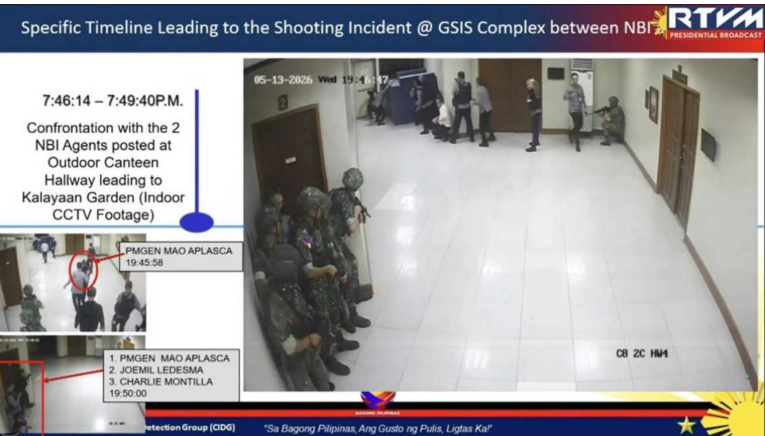
The Philippine Department of Justice has launched an investigation into possible criminal charges against government officials in connection with a shooting incident at the Senate building on May 13 and the subsequent escape of Senator Ronald dela Rosa from protective custody early the following morning. Justice Secretary Fredderick Vida disclosed that a prosecutorial panel is actively examining the circumstances surrounding both events to establish whether they are connected, signalling that the inquiry extends beyond a simple security breach to encompass potential coordinated criminal activity.
Vida revealed that investigators have gathered substantial evidence from multiple sources, including witness statements from National Bureau of Investigation personnel and media representatives who were present at the scene. Critically, CCTV footage recovered from the Senate premises shows that sniper fire was discharged from the fifth floor of the building, with ballistic evidence indicating the shots were directed at an identifiable NBI vehicle positioned at the Government Service Insurance System headquarters nearby. This forensic detail suggests a deliberate targeting rather than random gunfire, raising questions about advance knowledge of NBI movements and coordination among those involved.
The gathering of evidence points to a sophisticated operation rather than an isolated incident. The precision of the sniper shots, combined with the timing of dela Rosa's escape from custody just hours later, has prompted investigators to examine whether multiple public officials may have been involved in orchestrating or facilitating these events. The involvement of NBI personnel in the investigation itself underscores the institutional sensitivity of the inquiry, as questions arise about whether security breaches occurred at multiple levels of government agencies.
When pressed on whether specific individuals have been identified as persons of interest, Vida cautiously indicated that while formal charges have not yet been filed, preliminary findings suggest that numerous personalities involved in the incidents occupy government positions. This measured approach reflects the politically sensitive nature of the investigation, given that dela Rosa himself is a sitting senator and former police chief, making any charges against him or his alleged accomplices potentially controversial. The reluctance to name individuals at this stage also protects the investigation from premature disclosure that could compromise ongoing evidence gathering.
Vida emphasised that the Department of Justice remains committed to conducting a thorough, impartial examination of the facts without allowing personal or political considerations to influence the outcome. His declaration that no person stands above the law addresses public concerns about potential favouritism or cover-ups, particularly given the high-profile status of those potentially implicated. Simultaneously, his insistence that individuals should not be presumed guilty before evidence is fully analysed reflects constitutional safeguards and professional prosecutorial standards that must be maintained even in high-profile cases.
The May 13 shooting at the Senate represents an extraordinary breach of security at one of the nation's most protected institutions. The subsequent escape of dela Rosa from protective custody—ostensibly held for his own security—compounds the security failure and raises urgent questions about gaps in custodial procedures and surveillance protocols. That both incidents occurred within hours of each other strengthens suspicions that they were orchestrated as part of a coordinated plan rather than coincidental occurrences.
For Malaysian observers, this case illustrates the institutional challenges that regional democracies face when senior officials become subjects of criminal investigation. The involvement of security agencies, elected representatives, and questions of custodial integrity reflect systemic vulnerabilities that extend beyond the Philippines. The investigation's potential implications for institutional credibility are substantial, as public confidence in government institutions depends on transparent handling of allegations against powerful figures.
The investigative panel's reliance on documentary evidence such as CCTV footage and forensic analysis provides a foundation for impartial fact-finding that can withstand legal and public scrutiny. However, the challenge remains in ensuring that the investigation proceeds without external pressure or interference from political actors who may have stakes in its outcome. The DOJ's stated commitment to professional and objective conduct will be tested as the investigation advances and the identity of implicated officials becomes clearer.
The case also highlights the complexities surrounding protective custody and why the circumstances of dela Rosa's escape require careful examination. Whether he was released voluntarily, escaped through security lapses, or was facilitated by officers under his protection raises distinct legal and operational questions that the investigation must address. The timeline linking the Senate shooting to his departure suggests these may not be separate incidents but components of a single sequence of events.
As the investigation continues, stakeholders across Southeast Asia will observe how the Philippines handles a case that potentially implicates sitting government officials in serious crimes. The outcome will signal whether institutional accountability mechanisms function effectively when powerful figures are involved, or whether political considerations override prosecutorial independence. For regional rule of law, the handling of this case carries implications that extend well beyond Manila's borders, influencing perceptions of institutional integrity across the Southeast Asian region.