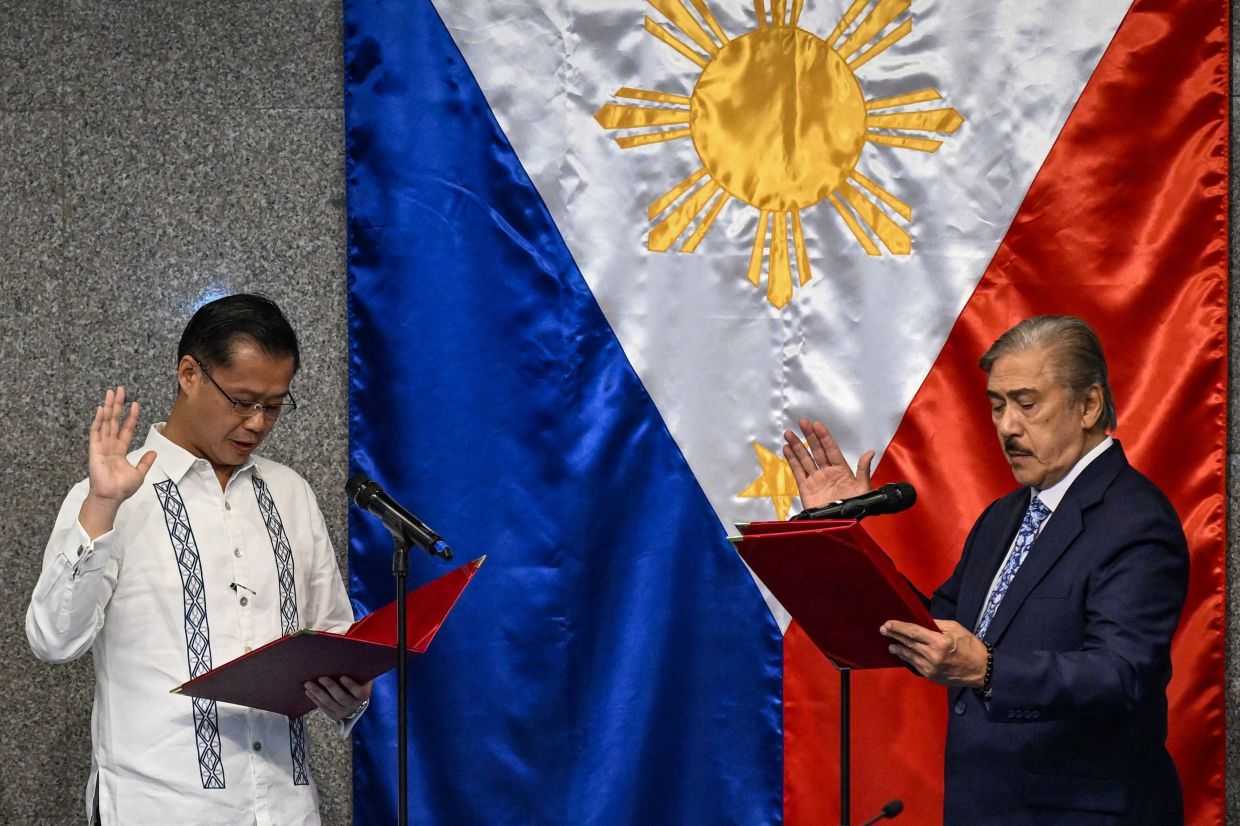
The Philippine Senate installed Senator Sherwin Gatchalian as its new president on Wednesday, June 17, concluding a week of political manoeuvring that exposed deep fissures within the 24-member chamber. The vote took place during a special session attended by thirteen senators—precisely the minimum number required under Senate rules to conduct such elections. Gatchalian's election marks a significant shift in the balance of power within the legislative body and underscores the fluid nature of congressional coalitions in the Philippines.
Gatchalian arrives at the Senate presidency with considerable experience in public service. He previously served as Mayor of Valenzuela City, a densely populated municipality in Metro Manila, where he developed a reputation for infrastructure development and governance initiatives. His legislative career includes a stint as a House Representative, giving him familiarity with both local administration and national policymaking. This background positions him to navigate the complex dynamics of leading the Senate during a period marked by institutional turbulence.
The path to Gatchalian's presidency was neither straightforward nor uncontested. On June 3, just two weeks earlier, a coalition of twelve senators had elected him as Senate president pro tempore—a ceremonial position—while simultaneously declaring that Alan Peter Cayetano, who had assumed the presidency on May 11, had vacated his post. This manoeuvre represented the opening salvo in what would become an intense political battle over control of the chamber. The move was controversial because Cayetano himself disputed the claim that he had relinquished the position.
Cayetano's response to the challenge demonstrated the technical complexity underlying the dispute. He argued that only thirteen senators possessed the authority to conduct the business of electing or removing Senate officers, meaning that the twelve-senator vote on June 3 lacked legal validity. This threshold requirement—a supermajority of more than half the full chamber—created a situation where both sides could claim legitimacy depending on how one interpreted Senate rules and practice. The disagreement reflected not merely personal ambition but fundamental questions about how the Senate should govern itself.
The decisive breakthrough came when Senator Joel Villanueva, who had previously aligned himself with Cayetano's faction, reversed course and threw his support behind Gatchalian's bloc. Villanueva's defection provided Gatchalian's supporters with the critical thirteenth vote needed to reach the supermajority threshold required for a valid election. This shift in allegiance proved to be the turning point in the contest. By Tuesday, Cayetano acknowledged the arithmetic had shifted irrevocably. After conversations with Villanueva, Cayetano recognised that his position had become untenable and signalled his intention to step down.
The timing and nature of Villanueva's realignment illustrate how Philippine Senate politics operates through shifting personal relationships and strategic positioning rather than rigid party structures. Even senators from the same party or coalition frequently manoeuvre independently, seeking to protect their interests or advance their ambitions. The fact that Villanueva could switch sides relatively late in the contest, yet decisively resolve the outcome, demonstrates the concentrated influence wielded by individual senators in a chamber of only twenty-four members.
The Senate's current composition has been complicated by developments affecting its membership. The chamber nominally comprises twenty-four senators, but only twenty-two were present for proceedings at this time. This reduction in functional membership has amplified the importance of each individual senator's vote. Senator Jinggoy Estrada surrendered to authorities earlier in June and faces graft charges, with the anti-graft court, the Sandiganbayan, ordering his suspension from office for ninety days. This suspension further reduces the number of active voting members available to conduct Senate business.
The absence of Senator Ronald Dela Rosa compounds the chamber's difficulties. Dela Rosa is a fugitive wanted by the International Criminal Court, with his location unknown, rendering him unavailable to participate in Senate proceedings. These absences—one voluntary through suspension, the other resulting from flight—have created practical constraints on the Senate's ability to function. When formal proceedings require thirteen votes, the unavailability of two senators substantially alters the dynamics of coalition-building and legislative negotiations.
Gatchalian's election as Senate president carries implications for legislative priorities and the chamber's agenda in coming months. As the leader of the Senate, he will direct the scheduling of bills, chair the powerful Rules Committee, and serve as the chamber's principal public representative. His administration of the chamber will inevitably reflect the political composition and coalitions that elected him. The fact that his election required the minimum supermajority suggests that he may face ongoing resistance on contentious legislative matters, particularly those where the thirteen-vote coalition fractures.
The instability surrounding the Senate presidency also raises questions about institutional governance within the Philippines' legislative branch. That control of the chamber could shift based on a single senator's change of allegiance, and that the election of leadership required multiple rounds of manoeuvring, suggests that Senate rules may benefit from clarification or reform. However, such reforms would themselves require consensus among senators who currently benefit from the existing ambiguities in the rules.
For observers in Southeast Asia, the Philippine Senate's internal dynamics offer a window into how democratic institutions function when power is highly distributed among numerous individual actors without strong centralised party discipline. The region includes several democracies with similar characteristics, where coalition politics and personal networks often matter more than formal party structures. The Gatchalian election illustrates both the flexibility and the fragility that can result from such arrangements, where institutional continuity depends on the goodwill and strategic calculations of key individual actors.