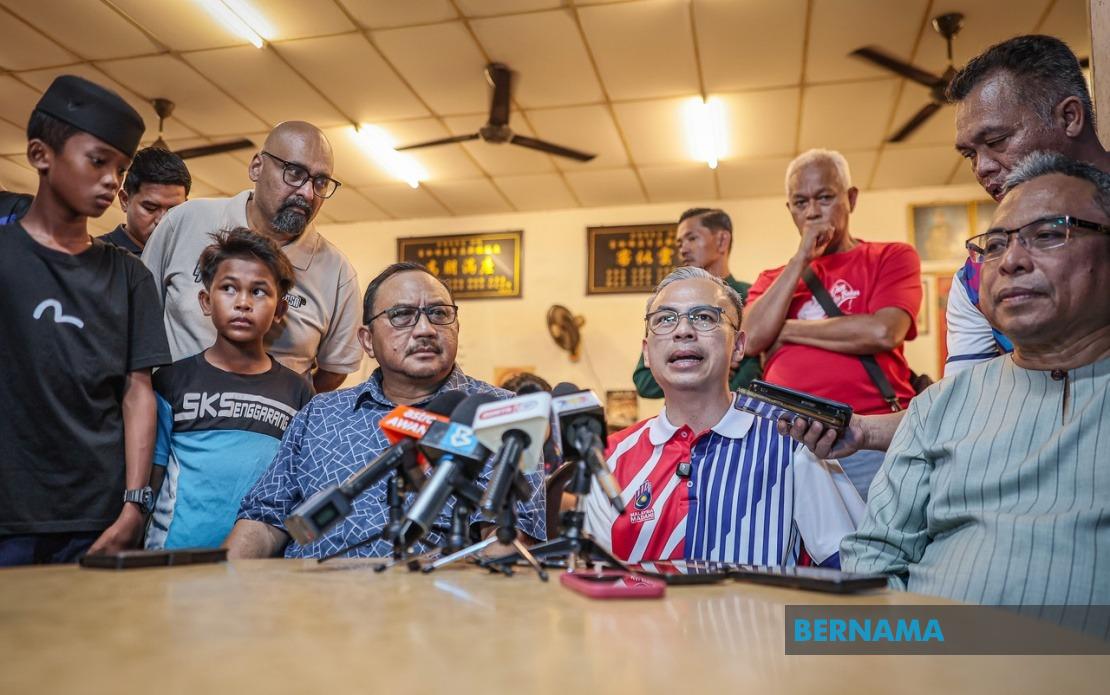
As campaigning commences for the 16th Johor State Election, Pakatan Harapan is deploying a carefully calibrated strategy that fuses traditional community organising with contemporary digital communication tools. The coalition's dual-track approach reflects the evolving nature of electoral campaigns in Malaysia, where reaching voters increasingly requires simultaneous presence across physical and virtual spaces. Speaking at a community engagement programme in Batu Pahat, PH Communications director Datuk Fahmi Fadzil outlined how the coalition intends to ensure that its policy messaging penetrates all demographic groups and geographic pockets within the state.
The integration of ground-level activism with online outreach addresses a fundamental challenge facing political parties across Southeast Asia: the fragmentation of voter attention across multiple media channels. In Johor specifically, where urban centres coexist with semi-rural constituencies, a blended campaign model acknowledges that different population segments consume political information through different mechanisms. Younger voters and urban professionals may primarily encounter campaign messages through social media and messaging applications, while older voters and those in less densely populated areas may depend more heavily on face-to-face interactions and traditional community gatherings. By operating simultaneously on both fronts, PH seeks to minimise the risk of any voter segment remaining disconnected from its electoral proposition.
PKR, the largest component party in the Pakatan Harapan coalition, is contesting twenty seats across the state, positioning itself as a significant force in these elections. Senior party figures including Fahmi himself and deputy president Nurul Izzah Anwar have been assigned to specific constituencies to lead campaign efforts, signalling that the party views this election as strategically important. The appointment of high-profile leaders to particular races underscores the calculation that personal visibility and endorsement from established political figures can mobilise voter support, particularly in constituencies where the outcome appears competitive. This deployment of senior personnel also serves a secondary function: it sends a signal to party activists and supporters that the leadership is genuinely invested in the outcome.
Fahmi's decision to establish a dedicated media group expressly designed to rapidly disseminate information about PH candidates represents an institutional response to the speed at which information—and misinformation—spreads during election periods. In an environment where false claims, doctored images, and misleading narratives can gain traction within hours, having an organised communications infrastructure capable of swift fact-checking and counter-messaging becomes crucial. This media group functions as a rapid-response unit, intended to address false narratives before they can consolidate into broadly accepted claims among the electorate. The emphasis on factual communication and accuracy reflects PH's recognition that electoral legitimacy increasingly depends on maintaining voter trust in the veracity of campaign messaging.
A significant dimension of PH's campaign platform centres on the developmental trajectory that the coalition argues it has enabled in Johor through cooperation between federal and state administrations. The Rapid Transit System Link and the Johor-Singapore Special Economic Zone are presented not as abstract policy achievements but as concrete economic initiatives with tangible implications for employment, commerce, and regional competitiveness. For Malaysian voters assessing which coalition to support, such infrastructure projects carry substantial weight because they directly influence livelihood prospects. The framing of these developments as joint federal-state accomplishments also implicitly argues for continuity: that re-electing PH at the state level will maintain alignment with federal priorities and sustain the institutional coordination necessary to see such projects through to completion.
PH's governance record in other states—specifically Selangor, Negeri Sembilan, and Penang—functions as a performance reference point in the Johor contest. Voters contemplating support for the coalition can examine how PH administrations have managed state finances, implemented development projects, and responded to constituent concerns in these established strongholds. This track record argument is particularly compelling in competitive elections where voters harbour uncertainty about a party's administrative competence. By directing attention to measurable outcomes in other jurisdictions, PH attempts to reduce the perceived risk of voting for the coalition in Johor. Conversely, PH's inability to govern Johor directly since 2018 means the coalition lacks a parallel demonstration of its capabilities within the state itself, making the comparative reference to other states strategically valuable.
The emphasis on particular candidates such as Dr Maszlee Malik and Onn Abu Bakar reflects how Malaysian elections increasingly turn on the personalities and track records of individual candidates alongside broader coalition positioning. Voters often make electoral decisions based on their perception of specific leaders' competence, integrity, and commitment to local interests rather than purely on party affiliation. This candidate-centric element explains why PH invests considerable effort in publicising its nominees and engineering high-profile endorsements from senior party figures. A candidate with strong community roots and a reputation for effective advocacy can overcome broader party weakness in a particular constituency; conversely, a weak candidate can undermine even a popular party's prospects.
PH's commitment to unveiling a dedicated Johor manifesto signals the coalition's intent to tailor its broader policy platform to address state-specific concerns and priorities. Rather than simply importing a national campaign message, state-level manifestos enable parties to engage with local economic conditions, infrastructure gaps, and community preferences that may diverge from national patterns. For Johor specifically, this might involve detailed commitments regarding agricultural support, port development, industrial policy, or flood mitigation—areas where state-level government possesses meaningful decision-making authority. A carefully constructed local manifesto can mobilise voters who feel that national campaigns neglect their particular circumstances.
The establishment of a multi-agency task force comprising the Malaysian Communications and Multimedia Commission, the Election Commission, the Royal Malaysia Police, and the Malaysian Media Council underscores official concern about misinformation during the electoral period. This institutional coordination reflects recognition that combating false narratives requires cooperation across regulatory, security, and media domains. The task force's mandate to monitor and curtail misinformation represents an attempt to preserve electoral integrity by creating consequences for those who disseminate deliberately fabricated claims. However, the effectiveness of such mechanisms remains contested; critics argue that heavy-handed fact-checking can appear partisan and may inadvertently amplify the very narratives authorities attempt to suppress.
The Hasrat MADANI programme during which Fahmi made these announcements represents the grassroots engagement component of PH's campaign infrastructure in practice. By attending community events, screening films, and engaging directly with residents, senior party figures maintain physical presence in constituencies and demonstrate accessibility to voters. Such appearances, while labour-intensive, generate local media coverage and create opportunities for informal conversations that political advertising cannot replicate. The symbolic act of a minister spending time in a community conveys a message about prioritisation and commitment that transcends whatever policy announcements accompany the visit.
For Malaysian voters and regional observers, the Johor election serves as a significant test of coalition stability and electoral momentum heading toward potential federal elections. The outcome will signal whether Pakatan Harapan retains the political capital necessary to maintain its federal governing arrangement and whether the coalition can sustain competitive performance in a state that represents a crucial testing ground for political forces across Malaysia. The campaign strategy outlined by Fahmi—combining grassroots mobilisation with digital reach, emphasising developmental credentials, and coordinating institutional responses to misinformation—reflects a sophisticated understanding of contemporary electoral competition.

