Pakatan Harapan has moved to reassure constitutional observers in Johor by committing itself to respecting the Sultan of Johor's established authority to appoint the next Menteri Besar, should voters grant the coalition control of the state government. The pledge represents a deliberate effort to centre the coalition's electoral messaging on substantive governance issues rather than become embroiled in procedural disputes over candidate selection—a distinction that carries significant weight in Malaysia's constitutional landscape where the Malay Rulers retain defined institutional prerogatives.
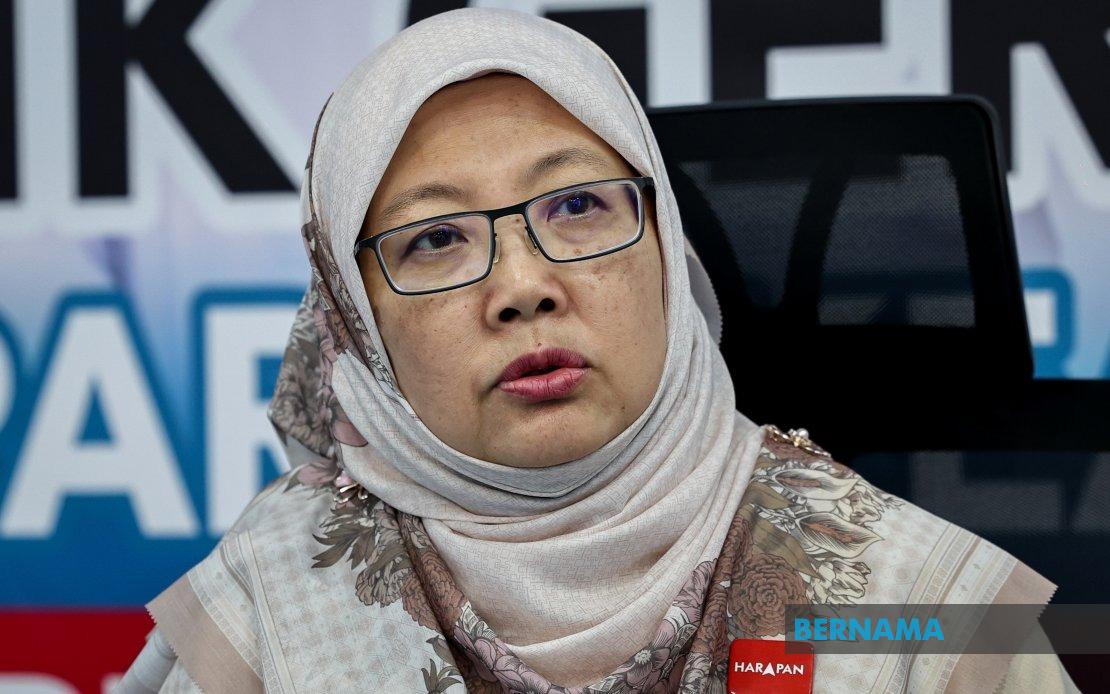
Johor PKR chairman Datuk Seri Dr Zaliha Mustafa articulated PH's position in remarks that directly addressed simmering tension with the incumbent Menteri Besar, Datuk Onn Hafiz Ghazi, who had called upon the opposition coalition to publicly name its preferred candidate before the election. Dr Zaliha's response instead emphasised that Pakatan Harapan would govern within the framework established by the Johor State Constitution of 1895, a foundational document that has long vested appointment powers in the monarch rather than the electorate or legislative assembly.
The timing and substance of this declaration merit examination within the broader context of Malaysian electoral politics. Opposition coalitions in peninsular states have occasionally faced criticism for appearing to diminish royal prerogatives or to pursue an overtly populist agenda that sidelines constitutional niceties. By explicitly affirming the Sultan's role, PH attempts to position itself as a responsible custodian of Malaysia's constitutional order—a positioning particularly valuable in Johor, where the institution of the Sultan commands deep social reverence and where debates over governance structures carry symbolic resonance extending well beyond immediate electoral calculations.
Dr Zaliha further underscored that her coalition possessed multiple qualified and experienced politicians capable of fulfilling the Menteri Besar office with competence and distinction. This framing allows PH to avoid boxing itself into a corner with a single candidate while simultaneously reassuring voters that leadership capacity would not be a constraint. The approach also sidesteps potential internal coalition tensions that might arise if one coalition partner felt sidelined in favour of another's nominee—a perpetual risk in multi-party electoral alliances where different parties claim legitimate stakes in senior portfolios.
The coalition's deliberate pivot away from candidate-centred campaigning reflects a strategic calculation about voter priorities in contemporary Johor politics. Rather than allowing the opposition's narrative to coalesce around a personality, PH has chosen to emphasise substantive policy platforms addressing living standards, employment generation, and economic dynamism. This reframing represents an implicit acknowledgment that Johor voters, particularly in urban and semi-urban constituencies, increasingly evaluate parties based on tangible performance metrics and credible plans for addressing inflation, job creation, and infrastructure development.
For Malaysian political observers, the episode illuminates persistent tensions within the country's constitutional framework. The appointment powers vested in the Malay Rulers represent a defining feature of Malaysia's parliamentary system, yet they occasionally create friction with democratic principles of electoral accountability. When opposition parties must defer to royal prerogative in selecting chief executives, the philosophical tension between popular sovereignty and constitutional monarchy becomes palpable. PH's explicit acceptance of this arrangement signals maturity in engaging with Malaysia's existing institutional order rather than attempting to transform it.
The Johor context carries additional weight given the state's economic significance and its historical role as a crucible of Malaysian politics. As the third-largest economy among Malaysian states and home to critical petrochemical, manufacturing, and maritime sectors, Johor's governance directly affects regional economic performance. Voters evaluating PH's credibility would naturally focus on whether the coalition possesses coherent economic policies, fiscal discipline, and capacity to navigate Johor's complex stakeholder landscape encompassing port authorities, industrial chambers, and multinational corporations.
Dr Zaliha's invocation of listening to voter concerns and presenting solutions reflects a populist rhetoric common across Malaysian politics, yet the substance of such claims requires scrutiny. What concrete proposals does PH offer regarding Johor's infrastructure bottlenecks, its skills development initiatives to compete with neighbouring Singapore, or its strategies for attracting higher-value manufacturing investments? These questions will ultimately determine whether the coalition's policy-focused campaign resonates beyond rhetorical commitment.
The incident also reveals dynamics within Johor's ruling coalition, where Onn Hafiz Ghazi's request for PH to name a candidate may itself reflect internal calculations about differentiating the government's position or attempting to provoke a gaffe from the opposition. By declining to take the bait and instead reaffirming constitutional principle, PH avoids potentially damaging splits within its own ranks—a particular concern given the delicate equilibrium among Pakatan's component parties and their respective claims to leadership positions across Malaysian states.
From a Southeast Asian perspective, Malaysia's approach to balancing monarchy with democracy offers lessons relevant to Thailand, Cambodia, and other regional monarchies grappling with similar tensions. The explicit affirmation by an opposition coalition that it respects a ruler's constitutional powers, even when those powers might limit the coalition's own prerogatives, demonstrates a sophistication in separating partisan electoral competition from fundamental constitutional respect. This distinction may prove increasingly important as Malaysian politics navigates generational transitions and evolving voter expectations.
The road to the Johor election will likely see continued friction over substance rather than procedure. Voters will assess which coalition offers more credible responses to cost-of-living pressures, infrastructure modernisation, and economic inclusivity. The Sultan's eventual appointment of the next Menteri Besar will emerge from legislative arithmetic and constitutional protocol rather than campaign theatre, but the election itself will determine which coalition PH or its rivals can convince to form government. By front-loading constitutional respect, Pakatan Harapan has cleared ground for a substantive policy contest in which voter concerns about livelihood and opportunity take centre stage.

