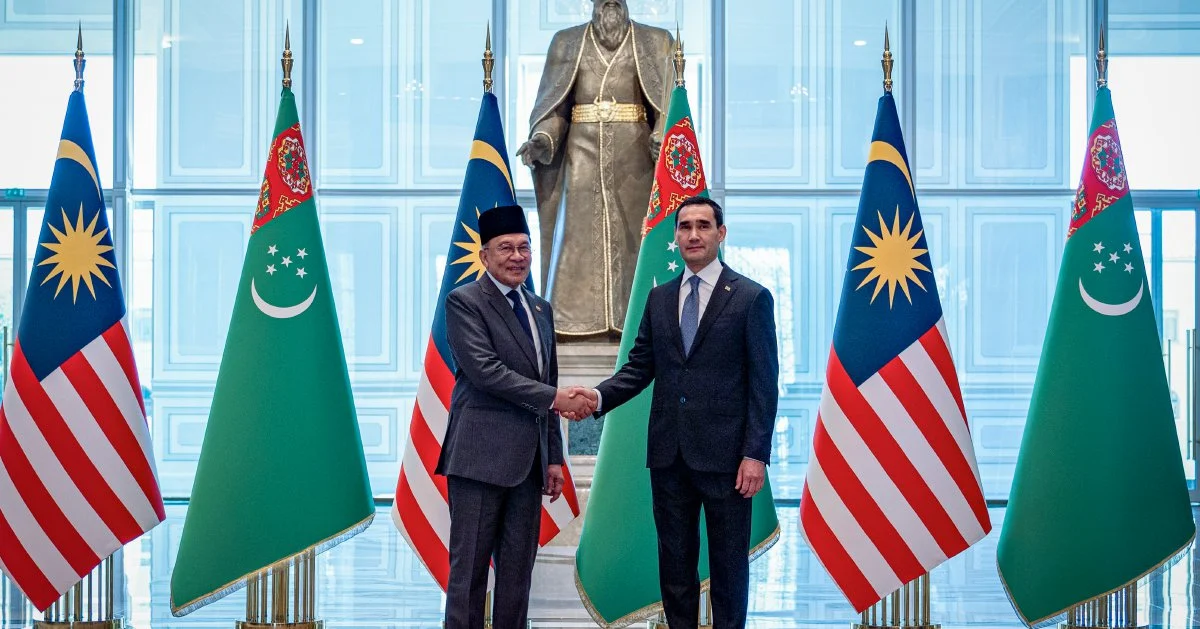
Petronas has emerged as a driving force in revitalising Malaysia-Turkmenistan relations, leveraging its established operations in Central Asia to unlock fresh opportunities for bilateral cooperation. The momentum gained following Prime Minister Datuk Seri Anwar Ibrahim's official visit to Turkmenistan underscores how energy partnerships can serve as a foundation for broader diplomatic engagement between nations separated by geography but united by shared development aspirations.
The national oil and gas company's long-standing presence in Turkmenistan has positioned it uniquely to serve as both a commercial entity and a strategic enabler of state-level relations. Through its operations, Petronas has demonstrated Malaysia's commitment to engaging meaningfully with Central Asian energy markets, a region increasingly vital to global supply chains and geopolitical stability. This involvement goes beyond extracting resources; it represents a deliberate effort to build institutional relationships that endure across political cycles.
Turkmenistan's substantial reserves of natural gas and oil make it an attractive partner for Malaysian energy interests, particularly as global demand for hydrocarbon resources remains robust despite the global energy transition. Petronas brings technical expertise, international standards, and financial capacity that align with Turkmenistan's ambitions to modernise its extraction and export infrastructure. The company's track record in managing complex projects across multiple jurisdictions lends credibility to these partnerships and demonstrates Malaysia's ability to contribute meaningfully to Central Asian development.
Prime Minister Anwar Ibrahim's visit carried significant symbolism, signalling Malaysia's willingness to expand diplomatic footprints beyond traditional Southeast Asian spheres. By accompanying or endorsing Petronas-led initiatives, the government effectively signals to Turkmenistan and the broader region that Malaysia views energy cooperation as integral to its foreign policy framework. This strategic alignment ensures that corporate activities gain governmental support, creating a unified approach that enhances negotiating power and project viability.
The timing of renewed engagement reflects broader shifts in global energy politics. As Western companies face regulatory pressures and geopolitical constraints in certain markets, Asian national oil companies like Petronas have gained relative advantages. Malaysia's neutral diplomatic positioning and non-aligned status make Petronas a particularly appealing partner for Turkmenistan, which navigates its own complex international relationships with Russia, China, and Western nations.
Beyond hydrocarbons, the Petronas presence creates spillover benefits for the Malaysian economy. Energy sector cooperation typically catalyses investments in related industries—engineering, construction, logistics, and financial services. Malaysian firms operating in Turkmenistan gain exposure to Central Asian markets, developing expertise that can be leveraged across Kazakhstan, Uzbekistan, and other resource-rich neighbours. This creates a multiplier effect throughout the Malaysian business ecosystem.
The strategic cooperation model employed by Petronas reflects a broader understanding that modern energy partnerships require transparency, regulatory compliance, and respect for environmental standards. Malaysia's approach contrasts sharply with some competitors who prioritise short-term extraction over sustainable development. By embedding responsible practices into its Turkmenistan operations, Petronas enhances Malaysia's reputation as a reliable, principled partner—an asset increasingly valued by governments concerned about reputational risk and environmental impact.
For Turkmenistan, Petronas represents an alternative to over-reliance on particular energy partners. Diversifying partnerships reduces political vulnerability and opens pathways to Asian markets where demand for natural gas continues rising. Malaysia, through Petronas, offers not just capital and technology but also connections to regional infrastructure and trading networks, particularly valuable as Southeast Asia consolidates its position as a global energy nexus.
The institutional relationships fostered through Petronas operations create durable foundations for broader collaboration. Energy projects span decades, generating sustained interaction between technical teams, government officials, and business leaders. These repeated exchanges build trust, understanding, and personal networks that inevitably facilitate cooperation in other domains—education, infrastructure, agriculture, and cultural exchange.
Looking forward, the Petronas-Turkmenistan partnership faces both opportunities and challenges. Global energy transitions toward renewables may eventually reduce hydrocarbon demand, but this timeline remains decades-long, allowing substantial time for partnership deepening. Geopolitical tensions in Central Asia could affect operating conditions, requiring careful risk management and diplomatic skill. Malaysia's balanced foreign policy provides Petronas with flexibility to navigate such complexities more effectively than Western counterparts facing more rigid strategic alignments.
The broader implication for Malaysia extends beyond bilateral relations with Turkmenistan. Successful energy partnerships in Central Asia enhance Malaysia's credibility as a regional player capable of managing complex international operations. This supports Malaysia's positioning in ASEAN, as peers recognise Malaysia's ability to engage globally while maintaining regional commitments. Petronas, effectively, becomes an instrument of soft power, advancing Malaysian interests while generating commercial returns.
As Petronas continues expanding its Turkmenistan footprint, the partnership exemplifies how national oil companies remain strategically vital even amid global energy transitions. Rather than fade into irrelevance, companies like Petronas are diversifying geographically, adapting operationally, and deepening political relationships. The Malaysia-Turkmenistan energy axis, while not capturing major international headlines, represents precisely the kind of patient, methodical relationship-building that generates lasting strategic advantages for both nations.

