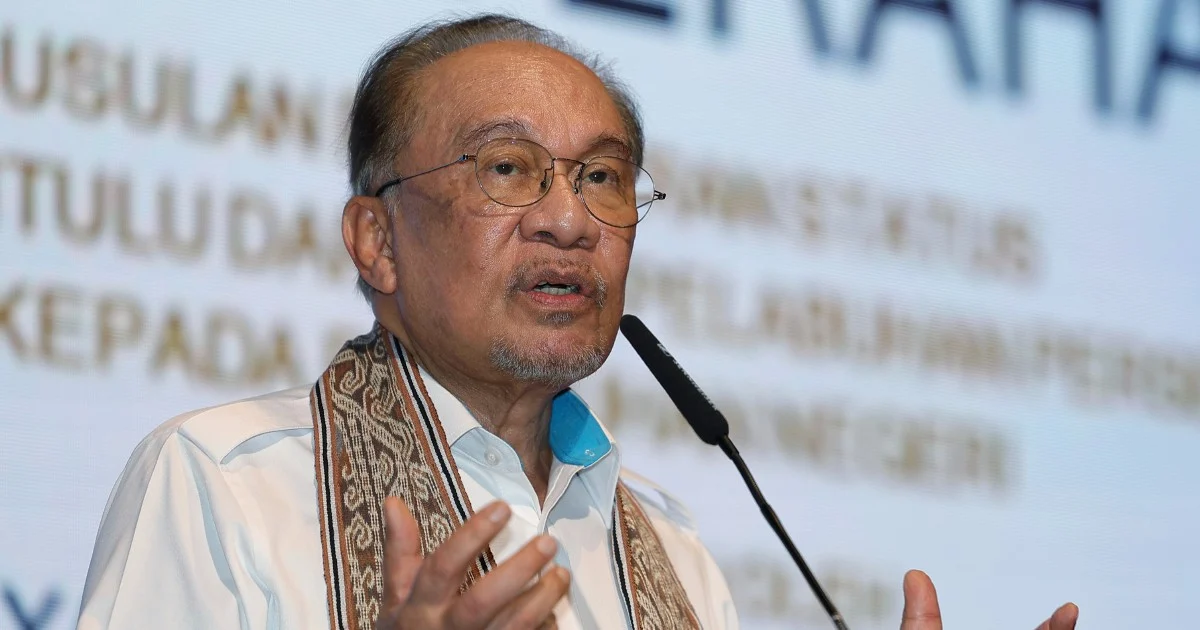
Malaysia's negotiations between Petronas and Petros are moving in a constructive direction, Prime Minister Datuk Seri Anwar Ibrahim announced in Kuching today, offering a measured dose of optimism regarding one of the nation's most sensitive fiscal disputes. The statement comes amid intensifying efforts to reconcile competing claims over petroleum revenues that have simmered for decades between the federal government's flagship energy corporation and Sarawak's quasi-governmental oil entity.
The negotiations carry substantial weight for Malaysia's political stability and federal-state relations. Sarawak, as the country's largest oil-producing state, has long chafed under revenue-sharing arrangements that many state leaders believe inadequately compensate the region for its natural resource wealth. Previous attempts to bridge the gap have foundered on technical disagreements and conflicting interpretations of constitutional rights, making Anwar's optimistic assessment noteworthy for investors and policymakers alike.
Petros was established in 1974 to represent Sarawak's petroleum interests and manage the state's oil and gas assets. The entity operates under a distinct mandate from Petronas, which oversees national hydrocarbon resources and international operations. This dual governance structure has historically created friction, particularly regarding exploration rights, revenue allocation, and the status of offshore fields that straddle state and federal jurisdictions. The dispute has occasionally flared into public controversy, with Sarawak officials contending that the current formula undervalues the state's contribution to Malaysia's energy security and export earnings.
Energy analysts observe that resolving this impasse carries implications extending well beyond balance sheets. A sustained settlement could unlock investment capital for deep-water exploration projects, strengthen Malaysia's negotiating position in regional energy markets, and demonstrate federal-state cooperation at a time when centripetal forces test national cohesion. Conversely, prolonged deadlock risks deterring upstream development spending and complicating Petronas's ability to execute ambitious decarbonisation targets requiring significant capital deployment.
The timing of Anwar's remarks reflects broader economic imperatives. Global energy markets remain volatile, with oil prices affecting government revenues and currency stability across Southeast Asia. Malaysia's fiscal position depends substantially on petroleum income, making timely resolution of internal disputes essential for budget planning and development priorities. Sarawak, in particular, has diversified economic ambitions requiring stable revenue streams—a consideration that may be focusing negotiators' minds on pragmatic compromise.
Sector observers note that successful outcomes hinged on technical committees addressing specific grievances: the scope of Petros's operational authority within state waters, the treatment of historical cost recovery, and mechanisms for equitable profit-sharing on joint ventures. These mechanics typically languish in working groups, with political declarations serving as external pressure to expedite resolution. Anwar's public signal may serve as such leverage, indicating executive commitment to finalisation within a defined timeframe.
The dispute's regional context warrants consideration. Other Southeast Asian nations manage similar federalism-versus-resource-nationalism tensions in their own energy sectors, and Malaysia's handling of the Petronas-Petros matter carries implicit lessons. A collaborative resolution strengthens regional confidence in institutional frameworks governing resource extraction, while protracted conflict risks setting unfavourable precedents. Foreign investors monitoring Malaysia's stability read such negotiations as indicative of governmental competence and predictability.
Historically, progress in these talks has been episodic, with enthusiastic public statements sometimes masking continued substantive disagreements. Previous administrations have announced breakthroughs subsequently delayed or undermined by implementing agencies' conflicting interpretations. Sceptics thus view Anwar's optimism cautiously, awaiting concrete deliverables—formal agreements signed and operating adjustments implemented—before declaring genuine advancement. The devil, as negotiators know, resides in execution.
Looking forward, the stakes justify sustained attention. Sarawak's petroleum reserves remain strategically valuable, particularly as Asian economies pursue energy transition while maintaining hydrocarbon baseload capacity. Petros's enhanced operational role could stimulate exploration innovation and competitive efficiency, benefiting both entities. Conversely, maximised revenue accrual in Sarawak could fund state-level infrastructure and social programmes, indirectly strengthening national development. These mutual interests, if properly leveraged, offer negotiators common ground absent in purely distributional disputes.
Anwar's Kuching announcement thus represents more than diplomatic boilerplate. It signals that both parties perceive mutual benefit in finalisation, that senior political will exists to overcome technical obstacles, and that the malaysian government recognises the broader implications of resolution for economic management and federal cohesion. Whether these positive signals translate into binding agreements remains to be determined, but the trajectory itself represents meaningful progress in a chronically fractious relationship requiring patient, skilled negotiation to reach durable equilibrium.
The coming weeks will test whether this optimism proves warranted through tangible progress in working-level discussions and movement toward formal documentation of revised arrangements.

