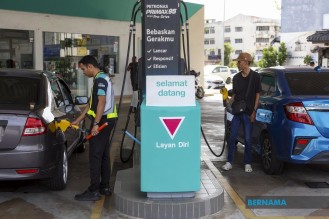
Malaysia's fuel supply remains on a stable footing through August, according to assurances from the government following a comprehensive review by state oil company Petronas. Datuk Seri Azalina Othman Said, Minister in the Prime Minister's Department (Law and Institutional Reform), conveyed the reassurance during meetings of the National Economic Action Council (MTEN) this week, citing direct feedback from Petronas management on the adequacy of fuel stocks across the nation's petrol stations.
The Petronas Dagangan Bhd network represents a critical artery in Malaysia's energy infrastructure, controlling roughly half of the country's domestic fuel distribution. The stability outlook provided by the national oil company offers relative comfort in an environment of geopolitical tension, particularly following disruptions tied to regional conflicts. The explicit timeframe extending through August provides businesses, transport operators, and consumers with a concrete planning horizon, though the government has also acknowledged the fluid nature of global energy markets.
Responding to parliamentary questions from Khairil Nizam Khirudin, the PN-Jerantut representative, regarding earlier statements suggesting guarantees only through June 2026, the government clarified its broader position on fuel security. This distinction matters because earlier messaging had created uncertainty about the sustainability of supplies beyond mid-year, prompting concerns about potential shortages or price volatility in the second half of 2026. The extended timeline reflects both improved inventory positions and successful negotiations with suppliers.
To navigate the complexities of global energy markets and potential supply disruptions, the Malaysian government has activated a dedicated Crisis Management Task Force (PPPK) operating under MTEN's oversight. This body functions as a real-time monitoring apparatus, continuously assessing the nation's fuel, petroleum, and energy supply landscape while implementing protective measures against price shocks and market instability. The task force's mandate extends beyond mere supply tracking to encompassing strategic procurement decisions and domestic market protection.
Part of the task force's operational framework involves controlling domestic fuel pricing to shield Malaysian consumers and businesses from volatile international markets. Equally important is combating fuel smuggling and irregular trading activities, which drain legitimate supplies and undermine pricing discipline. The government views these enforcement mechanisms as integral to maintaining an orderly, stable market even amid external pressures. Recent incidents of fuel trafficking across Malaysia's borders have demonstrated the ongoing threat to supply security.
Malaysia's energy security strategy has evolved to reduce dependence on traditional suppliers in the volatile West Asian region. The government is actively cultivating alternative crude oil sources from West African producers and suppliers across the Americas, provided that crude grades meet Petronas' technical specifications and commercial terms remain competitive. This geographic diversification reflects lessons learned from previous supply disruptions tied to Middle Eastern tensions and represents a longer-term hedge against regional geopolitical risks.
The West Asian conflict referenced by the government encompasses multiple dimensions affecting energy markets globally. Shipping disruptions, production uncertainties, and geopolitical risk premiums have all contributed to price volatility and supply concerns. Malaysia, as an energy-importing nation dependent on Petronas' production and the global market, remains exposed to these external shocks, making proactive supply diversification a critical policy priority.
Petroleums Dagangan's role as the publicly listed conduit for Petronas' retail fuel distribution gives the company significant visibility in Malaysian markets. As a listed entity, it also faces scrutiny from investors and analysts regarding supply security and demand trends. The company's operational performance and inventory management directly influence consumer perceptions of fuel availability and the government's credibility in managing energy security.
For Malaysian businesses reliant on fuel costs—from logistics operators to agricultural producers—the August timeline provides a window for planning and negotiating contracts. However, the provisional nature of global energy guarantees means contingency planning remains prudent. Rising import-dependent production sectors will be monitoring government actions closely, particularly any announcements regarding additional supply partnerships or strategic reserve deployments.
The activation of formal task force structures signals that government takes energy security seriously as a macroeconomic and social priority. Beyond Petronas' commercial operations, this institutional framework allows coordination across multiple agencies responsible for pricing regulation, border security, transportation logistics, and strategic reserves. Such coordination becomes essential when external shocks require rapid policy adjustments.
Looking ahead, Malaysia's energy security posture hinges on sustained diplomatic engagement with alternative suppliers, maintenance of adequate strategic reserves, and continued investment in refining capacity and downstream infrastructure. The August timeframe represents a near-term confidence marker, but deeper resilience requires the structural reforms and diversification initiatives the government has outlined. Regional peers across Southeast Asia watching Malaysia's approach may find instructive lessons in balancing market-friendly operations with strategic energy independence.

