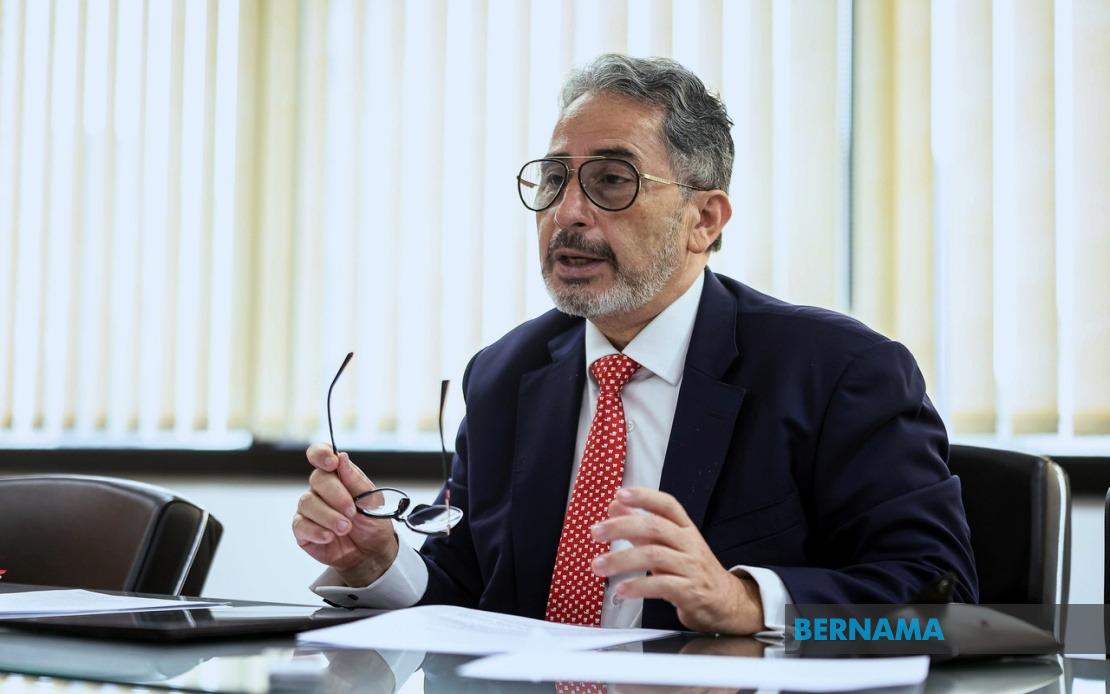
Marking four decades of diplomatic engagement, Peru is positioning itself to substantially broaden its partnership with Malaysia by targeting strategic sectors where both nations can generate mutual economic and social benefits. The milestone arrives at a particularly opportune moment, as high-level political exchanges have recently reinvigorated commitment from both governments to translate goodwill into concrete commercial and technical collaboration. Peruvian Ambassador to Malaysia Ricardo Estanislao Morote Canales emphasised during an interview that despite steady progress over the past 40 years, significant untapped potential remains for both countries to develop deeper ties across multiple domains that align with their respective development priorities.
The landscape for bilateral cooperation has expanded considerably since formal diplomatic recognition on April 24, 1986. What began as a tentative relationship has evolved through purposeful institutional development, with Peru establishing its embassy in Kuala Lumpur in 1992 and Malaysia reciprocating by opening diplomatic representation in Lima in 1996. The turning point in cementing this foundation came through President Alberto Fujimori's visit to Malaysia in 1996, where his interactions with then Prime Minister Tun Dr Mahathir Mohamad created the confidence necessary for substantive engagement. Malaysia's instrumental support for Peru's accession to the Asia-Pacific Economic Cooperation forum in 1998 demonstrated early commitment to facilitating Peru's integration into regional architecture, an act of diplomatic generosity that established lasting goodwill between the capitals.
The trajectory of Peru-Malaysia relations has accelerated notably under Prime Minister Datuk Seri Anwar Ibrahim's stewardship. His attendance at the APEC Leaders' Meeting in Peru during 2024 served as catalyst for elevated dialogue, culminating in an official visit to Lima in November that same year. This high-profile engagement produced tangible outcomes, most significantly the adoption of a Joint Declaration that functions as a strategic blueprint for future cooperation. The declaration articulates a unified vision encompassing expanded trade and investment flows, strengthened economic and technical cooperation, and collaborative initiatives across sectors deemed mutually beneficial. The framework reflects both governments' recognition that partnerships capable of addressing contemporary challenges require institutionalised mechanisms for coordination and dispute resolution, positioning the bilateral relationship within a broader context of resilient, adaptive international engagement.
Beyond diplomatic declarations, Peru and Malaysia have operationalised their commitment through sectoral agreements. Memoranda of Understanding signed during the November 2024 visit established cooperative frameworks in halal commerce, agricultural development, and the hospitality and gastronomy sectors. The agricultural MoU has already translated into practical joint ventures, including collaborative cultivation of chilli and tomato varieties incorporating both local Malaysian and Peruvian genetic stocks, as well as cattle crossbreeding programmes designed to enhance livestock productivity in Malaysia. These initiatives demonstrate that bilateral engagement extends beyond rhetoric into the agricultural and agro-industrial sphere, where knowledge transfer and genetic resource-sharing can generate tangible improvements in food production and security.
Trade statistics underscore the commercial vitality of the partnership. During 2025, bilateral commerce reached US$526 million, positioning Malaysia as Peru's ninth-largest trading partner within Asia. Peruvian exports to Malaysia totalled US$357.15 million, a remarkable 32.84 per cent increase from the previous year, reflecting expanding market access and growing Malaysian consumer interest in Peruvian products. Malaysian exports to Malaysia amounted to approximately US$168.85 million, predominantly comprising manufactured goods and technology-intensive products that complement Peru's natural resource-based export profile. This asymmetry in trade composition actually presents opportunity, as Peruvian agricultural and mineral exports address Malaysian import requirements whilst Malaysian industrial and technological products support Peru's development objectives. The trajectory suggests that both nations perceive sustained economic benefit from deepening commercial ties.
The Comprehensive and Progressive Agreement for Trans-Pacific Partnership (CPTPP) has provided the institutional framework enabling this trade acceleration. Peru's accession to the CPTPP in September 2021 and Malaysia's entry in November 2022 created reciprocal tariff reductions and regulatory harmonisation measures that facilitate bilateral commerce. The agreement's emphasis on intellectual property protection, labour standards, and environmental safeguards creates conditions for higher-value trade partnerships less vulnerable to price volatility affecting commodity exchanges. Both nations have signalled intent to leverage CPTPP provisions to develop sectors beyond traditional primary commodities, particularly in value-added agricultural products and services sectors where technical sophistication commands premium pricing.
Emerging opportunities in diversified agricultural exports exemplify this shift toward higher-value commerce. Ambassador Morote specifically highlighted avocados, mangoes, and pomegranates as potential growth categories for Peruvian exports to Malaysia, reflecting deliberate diversification beyond historical reliance on traditional exports. Malaysian market demand for premium fruit products, driven by rising incomes and evolving consumer preferences toward healthy foods, aligns well with Peru's capacity to supply year-round due to hemispheric climate advantages. This alignment of supply capability with demand dynamics positions agricultural trade as a sustained growth engine capable of generating employment in both nations and improving farmers' incomes across rural regions in both countries.
Proposed infrastructure development initiatives signal ambitions to expand the partnership's geographic scope beyond bilateral exchanges. Malaysia has expressed interest in establishing a Malaysia-Peru Specialised Halal Economic Zone at the Port of Chancay near Lima. This strategic development would serve multiple purposes: certifying Peruvian products through Malaysia's internationally recognised halal standards whilst simultaneously positioning the port as a commercial gateway for Malaysian enterprises seeking to penetrate Latin American markets. By leveraging Malaysia's institutional expertise in halal certification and commerce—accumulated through decades of development in Islamic finance and halal trade—both nations can create competitive advantages in serving the global halal market, estimated at over US$2 trillion and expanding rapidly in regions from South Asia to the Middle East.
Clean energy and environmental conservation represent additional domains where both nations perceive mutual interest. Ambassador Morote identified hydrogen, renewable energy, and tropical forest conservation as priority collaboration areas. Peru's hydroelectric generation capacity and vast Amazon rainforest resources complement Malaysia's technological expertise in renewable energy deployment and environmental monitoring systems. Climate change mitigation increasingly requires international cooperation, particularly between nations possessing significant tropical forests whose preservation generates global carbon sequestration benefits. Collaborative research and technology transfer arrangements in these domains could position both countries as leaders in sustainable development whilst generating intellectual property and commercial opportunities in emerging green sectors.
The tourism and education sectors offer complementary expansion opportunities. Peru's archaeological heritage, biodiversity, and cultural attractions appeal to Malaysian tourists, whilst Malaysia's higher education institutions and tourism infrastructure experience could support Peru's sectoral development. Educational exchange programmes strengthening student mobility and academic partnerships would deepen cultural familiarity and create networks of professionals maintaining lifelong connections between the nations. Tourism development, when managed sustainably, generates foreign exchange whilst supporting local communities in both nations, making it particularly valuable for achieving inclusive economic growth objectives.
Ambassador Morote expressed optimism regarding an imminent official visit to Malaysia by Peru's president, positioning such engagement as critical opportunity for sustaining political momentum and expanding cooperation scope. High-level bilateral visits maintain diplomatic relationships at maximum visibility and political salience, signalling to both governments' electorates and international observers the importance placed on mutual partnership. Such visits typically generate formal announcements of new initiatives, expanded budgets for collaborative programmes, and commitments to strengthen institutional mechanisms for ongoing coordination.
Looking forward, the Peru-Malaysia partnership appears positioned for substantive deepening across multiple dimensions. The combination of political will from both leaderships, institutional frameworks established through trade agreements and bilateral declarations, and identified sectors offering genuine mutual benefit creates conditions for sustained engagement. For Malaysia, Peru represents an additional Latin American partner diversifying geopolitical relationships and providing alternative suppliers for agricultural and mineral commodities. For Peru, Malaysia offers technology transfer, market access through Southeast Asian networks, and institutional expertise in halal commerce and Islamic finance. The 40-year anniversary marks not culmination of partnership development but rather inflection point toward more ambitious collaborative ambitions reflecting both nations' mature recognition of interdependent interests in an increasingly multipolar world.

