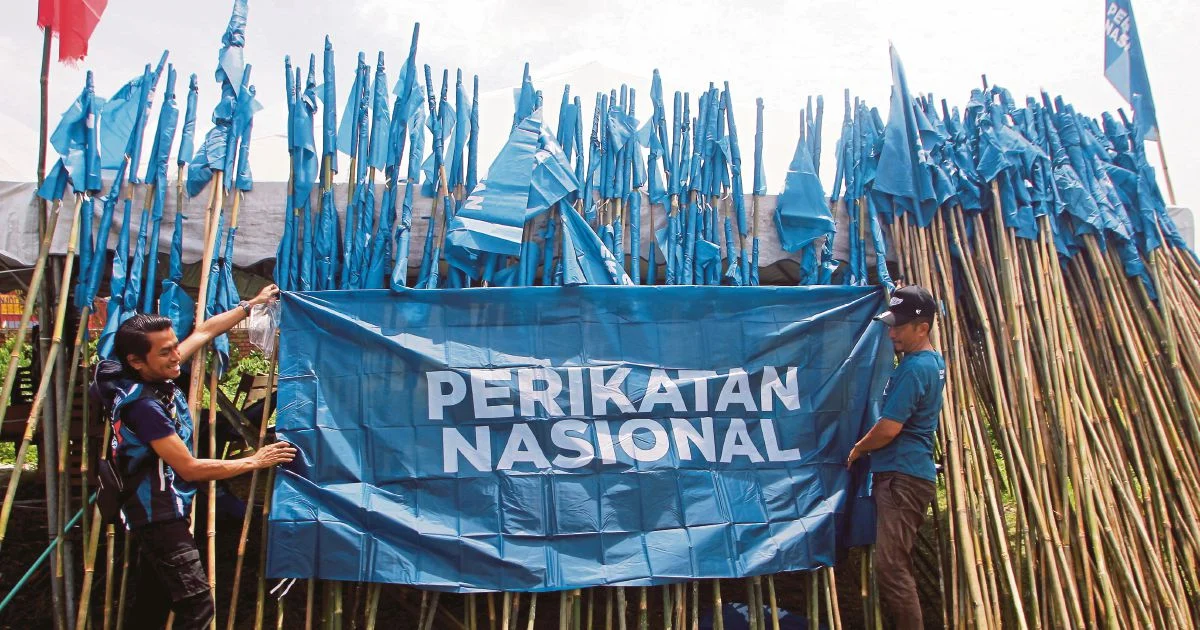
Malaysia's Perikatan Nasional coalition faces a critical juncture as its Supreme Council prepares to gather in Kota Baru on June 22, signalling that internal disagreements on fundamental operational matters require urgent high-level resolution. The scheduled session represents a crucial opportunity for the opposition bloc's senior leadership to iron out friction points that have simmered within the alliance, particularly regarding the authority to use the coalition's brand identity and the mechanisms for vetting and endorsing electoral candidates.
The two primary issues dominating the agenda—logo usage and candidate endorsement protocols—reflect deeper structural tensions within Perikatan Nasional that have become more pronounced as the coalition prepares for electoral contests. These matters are not merely administrative technicalities; they strike at the heart of how the alliance functions as a unified political force. The logo, in particular, serves as a critical symbol of collective identity and legitimacy, while candidate endorsement procedures determine which aspirants can legitimately claim the coalition's backing and resources.
Logo usage disputes within political coalitions typically emerge when member parties disagree over who retains control over the symbol and under what circumstances it can be deployed. For Perikatan Nasional, which comprises several component parties with distinct regional and ideological bases, establishing clear protocols around logo usage is essential for maintaining organisational coherence. Without settled guidelines, individual parties might claim ownership rights or use the symbol selectively in ways that undermine the coalition's unified public messaging and electoral strategy.
The candidate endorsement question carries equally significant implications. In Malaysian electoral politics, coalition backing can determine a candidate's viability, providing access to party machinery, financial resources, and voter confidence that independent or less-endorsed candidates cannot easily obtain. When coalition partners disagree over which candidates should receive formal endorsement, it signals either fundamental differences in political vision or concerns that the endorsement process lacks transparency and fairness across member parties.
For Malaysian voters and observers monitoring opposition politics, these internal disputes hint at the coalition's vulnerability as an alternative governing force. A coalition that struggles to agree on basic operational procedures may struggle equally to present coherent policy platforms or unified decision-making in parliament. The June 22 meeting will therefore be scrutinised not only for its immediate outcomes but as an indicator of whether Perikatan Nasional possesses the organisational maturity and consensus mechanisms required to function effectively as a serious challenger to the ruling Barisan Nasional.
Regional considerations add another layer to these discussions. The meeting's location in Kota Baru, Kelantan, underscores the importance of maintaining harmony with PAS, which governs the northern state and forms a crucial pillar of the coalition's electoral strategy in the Malaysian heartland. How decisions regarding logo and candidate matters are navigated will inevitably affect PAS's confidence in the coalition arrangement and its willingness to commit resources and support to joint electoral campaigns.
The timing of this gathering suggests that outstanding disputes have reached a threshold requiring formal Supreme Council intervention, likely meaning that bilateral negotiations between affected parties have stalled. This pattern is common in multi-party coalitions where foundational questions about governance architecture remain unresolved from previous agreements or where circumstances have changed in ways that render earlier understandings obsolete or inadequate.
Economic and strategic considerations within Perikatan Nasional likely influence these debates as well. Candidate endorsements ultimately determine resource allocation and campaign support, with implications for which aspirants can realistically compete in winnable seats. Parties naturally seek favourable terms that maximise their representation in any potential future government, making endorsement procedures inherently contentious.
The Supreme Council's task will involve crafting resolutions that provide sufficient clarity and fairness to satisfy all major coalition partners while preserving the alliance's unity. This requires balancing competing interests: protecting each party's legitimate desire for representation and autonomy while establishing protocols that serve the coalition's collective electoral interests. Finding this balance is especially challenging when component parties hold vastly different sizes, resources, and regional support bases.
For Southeast Asia's broader political landscape, Malaysian coalition dynamics carry significance beyond domestic borders. Successful multi-party alliances that manage internal disagreements constructively while maintaining unity can serve as models for regional democratic stability. Conversely, coalitions that fracture under pressure demonstrate the fragility of opposition alternatives in systems where power concentration remains a persistent challenge.
As the June 22 meeting approaches, attention will focus on whether Perikatan Nasional's leadership can demonstrate decisive problem-solving capacity and commitment to rules-based decision-making. The outcomes may reveal whether the coalition possesses sufficient institutional strength to weather disagreements and function as a credible alternative, or whether fundamental divisions will continue to undermine its coherence and electoral prospects. The decisions reached will send important signals about the coalition's readiness for potential electoral and governing responsibilities.

