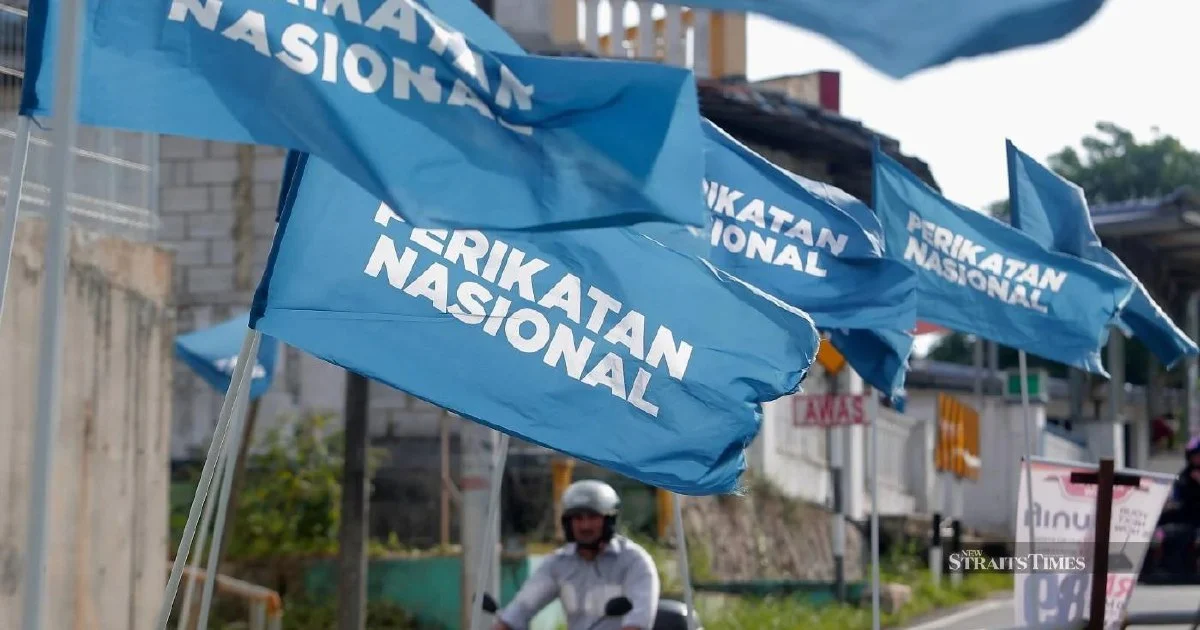
Perikatan Nasional appears committed to holding together its coalition partnership with Bersatu in the lead-up to state elections in Johor and Negri Sembilan, despite internal tensions that have periodically strained the relationship between the two political blocs. Political observers and analysts monitoring developments within the opposition coalition believe the timing of upcoming electoral contests has created a practical incentive for the parties to suppress disagreements and present a unified front to voters.
The rationale underpinning this assessment centres on the electoral mathematics of Malaysian politics. A collapse in the PN-Bersatu partnership during the critical period before state polls would fragment the opposition vote and significantly diminish both parties' capacity to contest seats effectively. In state-level elections where margins often prove razor-thin and local dynamics dominate campaign strategies, unity among coalition members typically translates into tangible advantages in vote distribution, candidate selection, and resource allocation.
Bersatu, as the newer and smaller component of the alliance compared to PN's anchoring parties, has particular incentives to avoid rupture. The party derives much of its political leverage and electoral competitiveness from its association with the broader opposition coalition. Separation or weakening of ties could expose Bersatu to electoral vulnerability, particularly in constituencies where party strength remains underdeveloped or where rival camps maintain organisational superiority. Conversely, PN's established partners benefit from Bersatu's participation in preserving their collective parliamentary and state assembly presence.
Analysts point to the historical pattern of coalition management in Malaysian politics, where parties frequently suppress internal grievances or policy disagreements when electoral contests approach. This pragmatic approach reflects the reality that electoral performance in state contests directly influences national political standing and determines the distribution of ministerial positions, committee appointments, and party development resources at both state and federal levels. For opposition coalitions especially, state victories serve as platforms for demonstrating governance competence and building momentum toward national relevance.
The Johor and Negri Sembilan elections carry particular significance within this context. Johor, as the nation's second-largest state by population and economic output, represents a crucial electoral battleground where performance carries implications far beyond immediate local consequences. Negri Sembilan, while smaller, sits strategically in the central corridor and influences broader peninsular political configurations. Success or failure in these contests will shape perceptions of opposition viability heading into potential federal elections.
Internal strains within the PN-Bersatu framework have occasionally surfaced publicly through statements by party leaders, disagreements over candidate selection in certain constituencies, and differing positions on specific policy matters. However, these tensions have consistently been managed or compartmentalised rather than escalating into formal alliance-breaking incidents. The pattern suggests that leadership within both groupings recognises the mutual benefits of maintaining formal coalition status, even when substantive cooperation becomes complicated or when party interests diverge.
For Malaysian voters and observers assessing opposition credibility, the stability of the PN-Bersatu alliance carries implications for how effectively alternative governance models might function if opposition parties achieved power at state or national levels. Coalition discipline, the capacity to manage internal differences, and the willingness to prioritise collective electoral success over individual party advantage all serve as indirect indicators of likely governance performance. Elections that occur amid coalition fragmentation or public recrimination among alliance partners can shift voter perceptions regarding the competence and cohesiveness of opposition administrations.
The Southeast Asian context also influences these dynamics, as Malaysia's major states serve as proving grounds for different political configurations and governance approaches. Stability within opposition coalitions demonstrates to regional observers that Malaysian democratic institutions can accommodate multiple parties operating within unified structures, even across ideological and organisational differences. Electoral success by coherent opposition coalitions strengthens the broader democratic ecosystem by preventing excessive concentration of power and ensuring that governing parties remain responsive to electoral pressures.
Looking ahead, the period immediately following the Johor and Negri Sembilan elections will likely prove crucial in determining whether the PN-Bersatu partnership either consolidates into a more stable long-term structure or begins fragmenting as parties reassess costs and benefits of continued formal association. Electoral performance in these contests will substantially influence whether coalition members perceive continued partnership as advantageous or whether disappointed parties begin exploring alternative political configurations. For now, however, the shared interest in avoiding pre-election rupture appears sufficiently powerful to maintain formal unity through the polling period.

