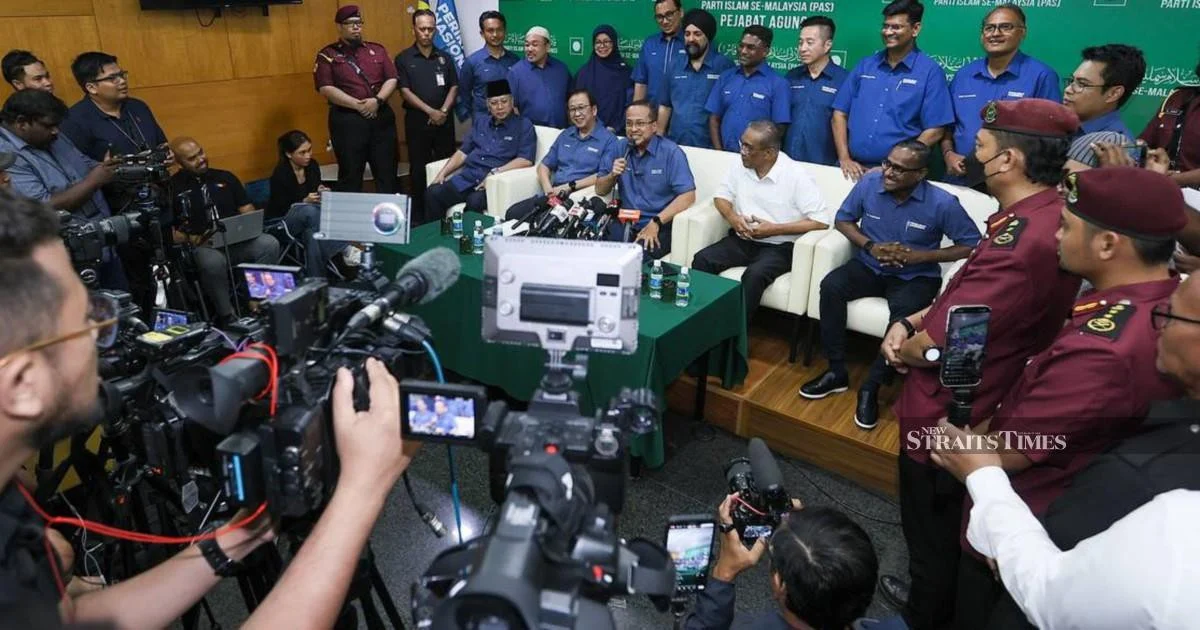
Perikatan Nasional's coordinating bodies are gathering for a decisive session to resolve the distribution of state assembly seats across Johor, bringing months of delicate negotiations between the coalition's constituent parties to a conclusion. The special meeting represents the culmination of detailed deliberations among the bloc's leadership as the coalition prepares for what could reshape the political landscape in one of Malaysia's most economically significant states.
The seat allocation process has been a major undertaking for PN, which comprises several parties with competing interests and regional strongholds. Each component party has sought to secure constituencies where it maintains voter support and organisational strength, making the final agreement a carefully balanced outcome that attempts to maximise the coalition's overall electoral prospects while maintaining internal cohesion. The mechanics of apportioning seats fairly without igniting grassroots discontent among party members remains one of the coalition's primary challenges as it seeks unified front against rival electoral blocs.
Johor holds particular strategic importance for PN's national political trajectory. The state has traditionally served as a proving ground for electoral viability, and performance here will signal whether the relatively newer coalition can sustain momentum across different voter demographics and geographic regions. The economic weight of Johor, encompassing major urban centres and agricultural constituencies, means any election result will carry implications beyond state-level politics.
The coalition's internal dynamics have shifted considerably since PN's formation, with shifting alliances and changing party fortunes creating pressure around seat negotiations. Smaller parties within the coalition have pressed for meaningful representation, while larger components have sought to defend their traditional constituencies. The meeting scheduled for today will determine whether these competing pressures can be reconciled into a final agreement that all parties can present to their respective membership with credibility.
For Malaysian voters, particularly those in Johor, the seat allocation outcome carries immediate relevance to electoral choices. The specific distribution reflects strategic assumptions about which parties can win which areas, effectively determining the voters' choices on polling day. Should the allocation fail to align with actual voter preferences and campaign dynamics, it could expose underlying weaknesses in PN's strategic thinking or organisational capacity.
The timing of finalising seats today sets a critical calendar for the election campaign itself. Once allocations are confirmed, parties can officially announce candidates, initiate grassroots campaigning, and mobilise volunteer networks. The delay in locking down seat agreements means the campaign proper may begin later than rivals, potentially compressing the timeframe PN has to consolidate support and counter opposition narratives. This compressed timeline could advantage or disadvantage the coalition depending on campaign execution.
For Southeast Asian observers, the Johor election presents a window into how opposition coalitions in established democracies manage internal disagreements while maintaining electoral competitiveness. PN's ability to navigate seat distribution without fracturing into public disputes will signal whether the coalition structure itself possesses sufficient institutional resilience for sustained political competition. The region has witnessed various opposition alliances rise and collapse based on such foundational decisions.
The backdrop of Johor state politics adds additional texture to today's negotiations. Incumbent parties have established administrative machinery and voter relationships built over years of governance. PN's entry into the state election represents a challenge to these established structures, requiring particularly strategic seat selection to target vulnerable incumbent seats while defending any existing PN strongholds. The allocation decision therefore reflects sophisticated electoral mathematics rather than merely dividing seats proportionally among component parties.
Beyond the immediate election, the seat allocation outcome will influence PN's broader positioning in Malaysian politics. A successful coordinated campaign in Johor, facilitated by a seat agreement perceived as fair and strategic, would strengthen claims that PN represents a viable alternative government. Conversely, if the allocation appears to advantage certain parties while marginalising others, it could fuel perceptions of internal dysfunction that undermine PN's electoral message.
The special meeting convening today also represents the coalition's confidence that outstanding disputes can be resolved through formal institutional channels rather than public bickering. This procedural approach, if it succeeds, demonstrates that PN possesses sufficient governance maturity to manage coalition politics. Malaysian voters often assess opposition coalitions partly on whether they appear capable of managing disagreements professionally, viewing internal strife as a predictor of future governing difficulties.
Going forward, the meeting's outcome will establish parameters for campaign conduct and inter-party coordination. Successfully finalised allocations typically enable smoother cooperation during actual campaigning, while unresolved tensions can splinter into parallel campaigns that confuse voters and dilute overall electoral impact. The stakes therefore extend beyond seat distribution to encompass the entire operational framework through which PN will contest the election.

