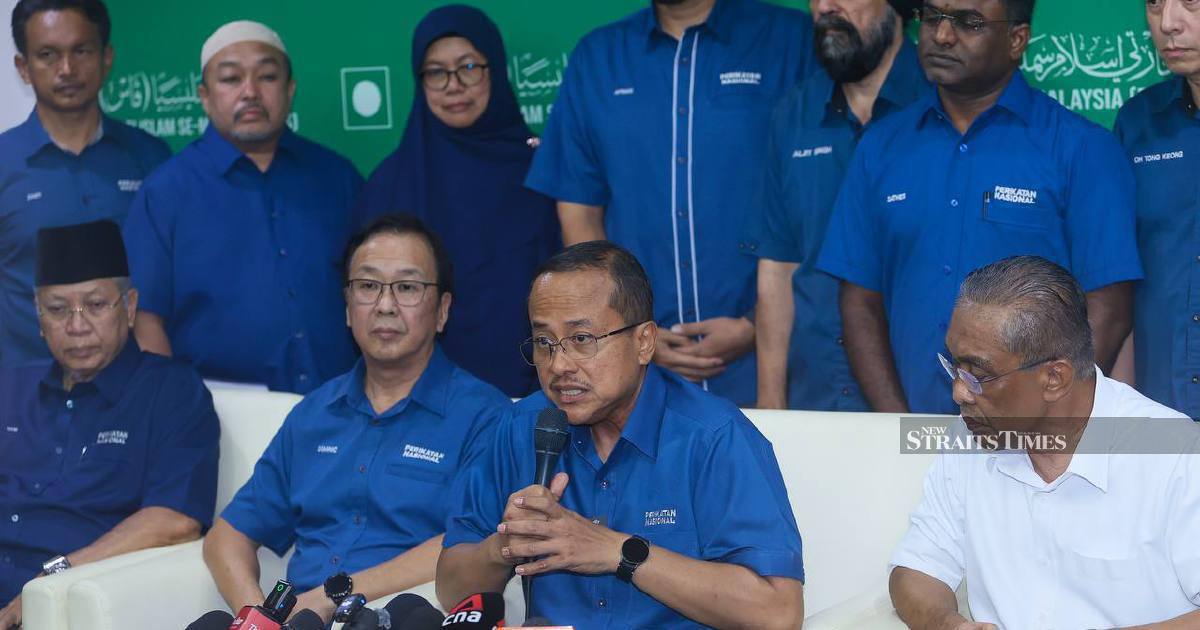
Perikatan Nasional, one of Malaysia's principal political coalitions, has expanded its membership by formally accepting two new political parties at an emergency Supreme Council meeting held in Kuala Lumpur. The decision was announced by PN chairman Datuk Seri Dr Ahmad Samsuri Mokhtar in the aftermath of the meeting, signalling a significant enlargement of the coalition that has positioned itself as an alternative force in national politics since its establishment ahead of the 2020 general election.
The admission of these two parties represents a strategic move by PN to broaden its organizational base and consolidate political influence across different electoral constituencies. By welcoming new members into the coalition structure, PN appears intent on strengthening its capacity to compete in forthcoming elections and administrative challenges. This expansion comes at a time when Malaysian politics remains fluid, with various realignments occurring across the political spectrum as parties respond to shifting electoral dynamics and public sentiment.
However, the newness of the coalition expansion masks underlying complexities that remain unresolved. Despite the apparent momentum of accepting fresh membership, PN leadership did not use the opportunity to address two substantive issues that have generated ongoing discussion within political circles and among observers of the coalition's trajectory. The broader strategic framework, often referred to as Wawasan (vision), was conspicuously absent from the evening's deliberations, according to Dr Ahmad Samsuri's statement.
Equally telling is the non-discussion of the coalition's logo and visual identity matters. These seemingly technical elements carry considerable symbolic weight in Malaysian politics, where organizational branding frequently carries implications about direction, inclusivity, and philosophical orientation. The decision to defer these matters suggests either that they remain contentious among coalition members or that PN leadership judged the timing inappropriate for addressing such considerations at this particular juncture.
The deferral of the Wawasan discussion carries particular significance for political analysts observing PN's evolution. A coalition's articulated vision statement typically delineates its ideological parameters, policy priorities, and long-term objectives. For PN, which comprises several parties with distinct organizational histories and ideological traditions, achieving consensus on a comprehensive Wawasan would constitute an important consolidating moment. The fact that this matter was not tackled during an emergency meeting suggests either that consensus remains elusive or that immediate coalition expansion was prioritized over strategic coherence.
From a Malaysian perspective, the expansion of PN assumes relevance within the context of broader political competition. PN's emergence as a coalition alternative has already disrupted traditional political patterns, and the addition of new parties could further reshape the landscape ahead of future elections. Observers will be watching whether these new entrants strengthen PN's organizational machinery or whether their integration generates internal tensions that complicate coalition governance.
The coalition landscape in Malaysia has become increasingly complex following the 2020 general election and subsequent political realignments. Multiple coalitions now compete for voters' allegiance, each claiming to represent distinct political perspectives and voter aspirations. Within this competitive environment, PN's strategic decisions regarding growth and organizational direction carry implications extending beyond the coalition itself, potentially influencing how other political formations position themselves and what policy directions might gain prominence in public debate.
The timing of the emergency meeting and announcement suggests that PN leadership deemed the expansion opportunity sufficiently important to warrant convening an extraordinary gathering of the Supreme Council. Emergency meetings typically indicate situations requiring urgent decision-making, though the nature of the urgency underlying this particular gathering remains unclear from available statements. The fact that a formal announcement followed immediately suggests the matter had been resolved with reasonable clarity among decision-makers.
Regarding the specific identities of the two incoming parties, Dr Ahmad Samsuri's statement did not elaborate on which organizations would be joining PN or what their respective membership sizes and organizational capabilities might be. Such details could prove significant for understanding the practical implications of the expansion. Larger, better-organized parties would presumably contribute differently to coalition strength than smaller formations with limited electoral footprints.
Looking ahead, PN faces the dual challenge of integrating new parties while simultaneously addressing the strategic questions that were deferred during tonight's meeting. The Wawasan question, in particular, will require resolution before PN can present itself to voters as a cohesive political force with clearly articulated objectives. Similarly, decisions regarding coalition branding and visual identity carry practical consequences for campaign materials, organizational communication, and public recognition.
For Southeast Asian observers tracking Malaysia's political development, PN's trajectory demonstrates the dynamism of contemporary Malaysian politics. The coalition's willingness to expand its membership base while maintaining flexibility regarding deeper strategic questions reflects both its growth ambitions and the pragmatic approach often characterizing Malaysian political coalition-building. However, this flexibility cannot indefinitely substitute for the strategic clarity that successful coalitions ultimately require.
The coming weeks will likely see PN leadership turning toward the deferred matters, as the coalition seeks to transform its numerical expansion into substantive political consolidation. Whether new members can be successfully integrated while simultaneously achieving consensus on overarching vision and identity will significantly influence PN's effectiveness as a political organization. For Malaysian voters and regional observers, the resolution of these internal PN matters carries implications for how opposition alternatives develop and what political options will be available at subsequent election cycles.

