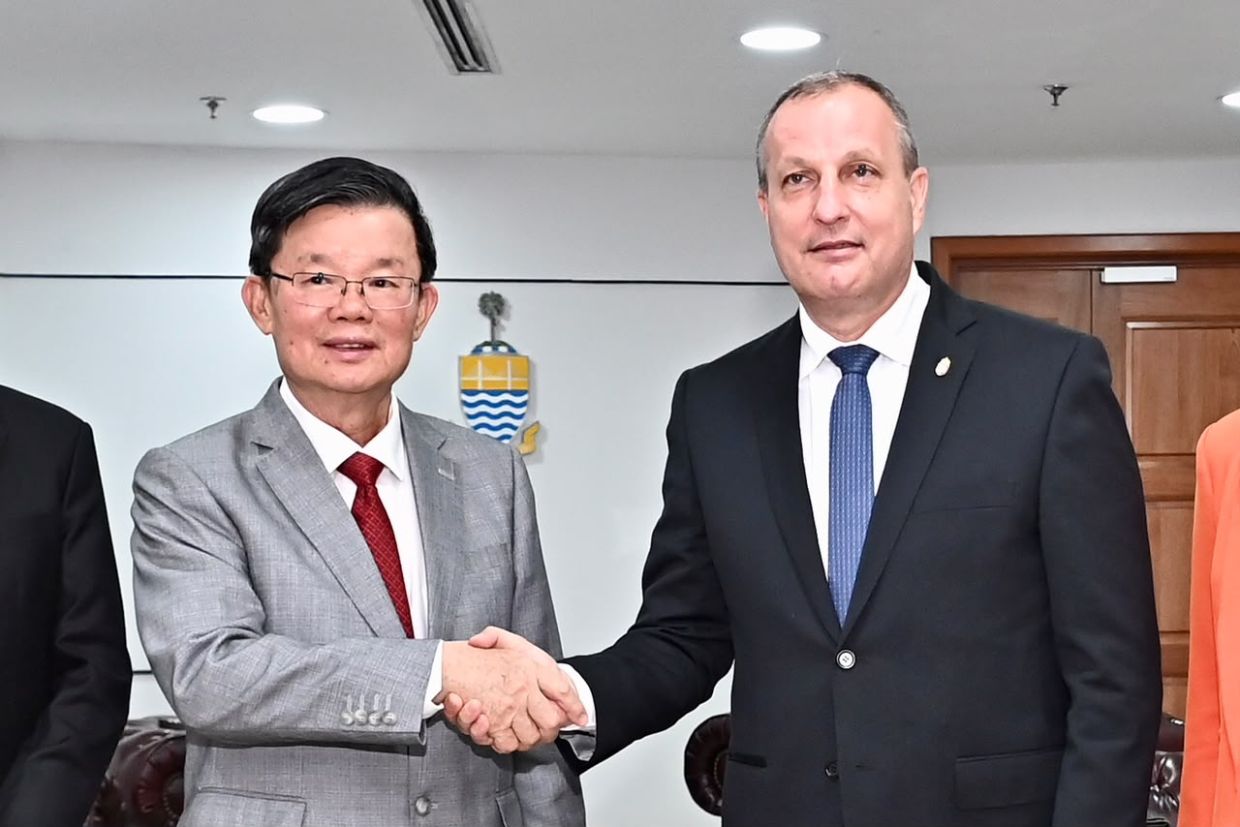
Penang is pursuing a broadened partnership with Hungary across multiple strategic sectors, signalling the state's growing appetite for bilateral ties with Central European nations. Chief Minister Chow Kon Yeow met with Hungarian Ambassador to Malaysia Dr Sándor Sipos and his delegation this week to explore concrete avenues for cooperation spanning higher education, technological advancement, environmental management and heritage conservation. The discussions reflect Penang's recognition of Hungary's substantial expertise and its potential to contribute to the state's development agenda, particularly in sectors aligned with Malaysia's broader sustainability and innovation priorities.
The meeting covered an extensive range of collaborative possibilities, extending well beyond traditional diplomatic courtesies. Participants identified concrete opportunities for engagement among research institutions, commercial enterprises and government bodies, suggesting that both sides view this partnership as having practical, implementable dimensions. The breadth of topics—encompassing water security, renewable energy infrastructure, academic research initiatives, heritage preservation and cultural programming—indicates that discussions went beyond superficial gestures to identify genuine areas of mutual interest and complementary capabilities.
Chow underscored that Penang and Hungary share fundamental commitments to reconciling economic development with environmental stewardship and cultural continuity. His remarks highlight an important positioning: that sustainable growth and preservation of regional identity are not competing priorities but interconnected objectives. For Penang, this framing matters significantly as the state seeks to balance rapid industrialisation and tourism expansion with protection of its Georgetown heritage district and natural resources—challenges that Hungary's own experience navigating Central Europe's complexities may illuminate.
The Chief Minister particularly welcomed Hungary's existing scholarship programme for Malaysian students, which currently offers forty fully funded places annually. Education mobility has emerged as a cornerstone of the proposed partnership, with both sides recognising that student exchanges and academic cooperation generate long-term relationship dividends. For Malaysian students, access to Hungarian universities—particularly in technical fields and water management sciences—represents a valuable pathway to skills development in areas where Central European institutions have accumulated distinctive expertise. The scholarship initiative also serves as a soft-power instrument, cultivating networks of Malaysian-trained professionals with deep understanding of Hungarian systems and culture.
Sipos emphasised Hungary's commitment to expanding educational access for Malaysian talent, explicitly welcoming applications from Penang-based students. This signals that the Hungarian government views Malaysia and specifically Penang as priority recruitment territories for its international education initiative. The ambassador's emphasis on broadening participation from Penang suggests recognition that the state's growing digital economy and manufacturing base create a pool of ambitious young professionals seeking international qualifications. By framing educational opportunities as a bridge-building exercise, both governments position learning exchange as foundational to sustained diplomatic and commercial partnerships.
Water management and renewable energy featured prominently in the discussions, reflecting contemporary regional challenges and global decarbonisation imperatives. Hungary's experience managing water resources across the Danube basin and its emerging green technology sector offer relevant lessons for Penang, which faces pressures from rapid urban development, groundwater depletion and climate vulnerability. The potential for Hungarian expertise in water security to inform Penang's infrastructure planning could yield tangible benefits, particularly if collaboration extends to technology transfer and joint research initiatives that strengthen the state's environmental resilience.
The delegation also engaged with other state officials, including executive councillors Goh Choon Aik and Gooi Zi Sen, expanding the partnership discussion beyond the Chief Minister's office. These secondary meetings suggest that coordination across different governmental agencies is underway, essential for translating diplomatic overtures into functional collaborative frameworks. The attendance of multiple officials signals that Hungary's visit was treated seriously within Penang's administrative apparatus rather than as a perfunctory courtesy.
Sports cooperation emerged as an additional collaboration avenue, with Gooi indicating that the Penang State Sports Council would investigate disciplinary opportunities for bilateral athletic exchanges and shared development programmes. This dimension is noteworthy given Hungary's strong sporting traditions and Olympic track record. For Penang, identifying complementary sports disciplines—whether individual competitive sports or community-based athletic development—could generate valuable coaching knowledge transfers and competitive experience for local athletes while deepening people-to-people connections.
The partnership proposal arrives at a strategic moment for Penang's positioning within Southeast Asia's evolving geopolitical and economic landscape. As the state pursues digital economy advancement, heritage tourism development and sustainable industrial growth, international partnerships with developed European nations offer access to technical expertise, funding mechanisms and institutional best practices. Hungary's Central European location and EU membership also position it as a potential conduit to broader European business networks and investment sources, particularly relevant as Penang seeks to diversify its traditional dependence on manufacturing and tourism.
Concretising these commitments into operational projects will prove crucial. The discussions generated genuine momentum, yet the gap between diplomatic intention and implementation remains substantial. Both governments must establish working groups with defined mandates, realistic timelines and measurable outcomes. Chow's hope that discussions will yield tangible collaborative initiatives within the coming years provides a reasonable operational timeframe, but success will require sustained governmental attention and commitment of dedicated resources.
For Malaysian stakeholders—particularly educational institutions, environmental technology companies and cultural organisations—this partnership trajectory warrants close attention. The potential emergence of Penang-Hungary institutional linkages could create professional opportunities and knowledge-sharing mechanisms currently limited. By positioning itself as intermediary between Hungary and broader Southeast Asian interests, Penang may also enhance its regional profile as a node within interconnected international networks, complementing its existing identity as a tourism and manufacturing hub.

