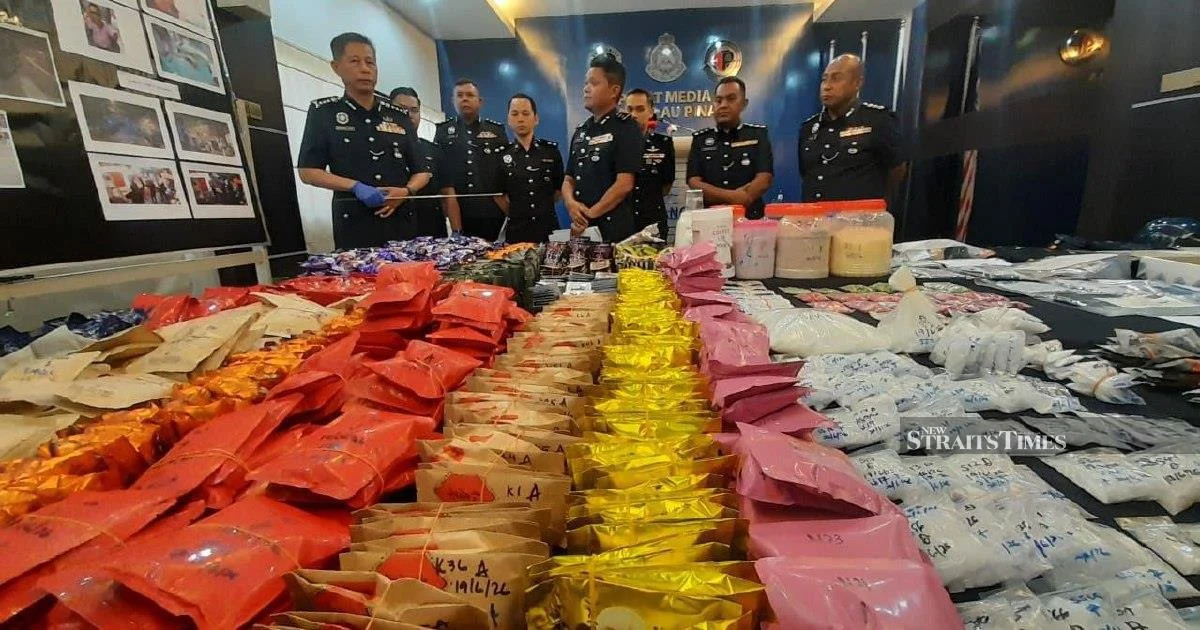
Acting on intelligence gathered through coordinated surveillance efforts, Penang police conducted a carefully planned operation that culminated in the discovery of a fully operational drug processing facility concealed within a private condominium unit in the Butterworth area. The raid resulted in the apprehension of a romantic couple suspected of orchestrating the entire operation, marking another significant victory in the state's ongoing battle against organised narcotics trafficking.
The seized substances, totalling RM9.7 million in street value, represented a substantial quantity of illicit drugs that authorities believe were destined for distribution across Penang and potentially throughout northern Malaysia. The sheer scale of the operation suggests the couple had established sophisticated logistics networks to move their products to multiple markets, a hallmark of well-organised criminal syndicates rather than small-time dealers.
Butterworthand the broader Penang region have long presented law enforcement with particular challenges when it comes to drug trafficking. The area's proximity to the Thai border, its bustling port facilities, and its reputation as a transportation hub have made it an attractive location for criminal organisations seeking to establish distribution centres. This latest bust underscores the persistent vigilance required to combat such networks operating within seemingly ordinary residential settings.
The decision to establish a processing facility within a condominium rather than in more remote or industrial locations reveals the adaptability of modern drug trafficking operations. By embedding their activity within a civilian residential complex, the suspects apparently attempted to evade detection through sheer normalcy, banking on the presumption that neighbours would fail to notice irregular activity or unusual visitors. This approach has become increasingly common among sophisticated traffickers seeking to operate with reduced oversight.
Police investigations into the operation have likely uncovered details about the sourcing of precursor chemicals, the manufacturing processes employed, and the distribution networks utilised to move finished products to end consumers. Understanding these supply chain details proves crucial for authorities as they work to disrupt not just individual operations but entire trafficking ecosystems. The information gleaned from this case will provide intelligence officers with valuable insights into how similar organisations function and maintain operational security.
The arrest of both individuals simultaneously suggests police had been conducting thorough surveillance work prior to executing the raid, gathering sufficient evidence to move on both suspects without risk of one fleeing or destroying crucial evidence. This coordinated approach reflects modern law enforcement practices that emphasise comprehensive intelligence gathering before taking enforcement action, a significant evolution from reactive policing methods of previous decades.
For Malaysian residents, particularly those living in urban condominium complexes, this case serves as an uncomfortable reminder that illicit manufacturing facilities can operate within one's own neighbourhood with neighbours remaining entirely oblivious. The incident raises questions about residential security measures, visitor screening protocols, and the degree to which building management should scrutinise unusual activity within their premises. While privacy concerns must be balanced against security, the incident highlights potential vulnerabilities in how residential communities monitor themselves.
The confiscation of RM9.7 million in narcotics removes a significant quantity of drugs from Malaysian streets and represents resources that will no longer feed addiction and fuel associated crime. Each major bust such as this sends ripples through criminal supply chains, creating temporary scarcities that ultimately drive up prices and marginalise smaller distribution points. However, such seizures also represent only a fraction of the total drugs circulating throughout the country, a sobering reality that underscores why authorities must continue expanding their enforcement capabilities.
The case also demonstrates the continued willingness of individuals to engage in large-scale manufacturing despite Malaysia's strict drug laws, which carry severe penalties including lengthy prison sentences and, in certain circumstances, capital punishment. The couple's alleged decision to operate such a substantial facility suggests either remarkable confidence in their ability to avoid detection or troubling desperation driven by economic circumstances or coercion from criminal superiors. Understanding such motivations proves essential for developing prevention strategies beyond simple enforcement.
Moving forward, this incident will likely prompt a broader review of condominium security protocols throughout Penang's high-density residential areas. Property management associations may need to establish clearer guidelines for identifying and reporting suspicious activity, while still respecting residents' legitimate privacy rights. The balance between community safety and individual freedoms remains delicate, yet cases like this demonstrate why such vigilance cannot be entirely abandoned.
For the wider region, the bust reinforces Southeast Asia's vulnerability to transnational drug trafficking networks that exploit porous borders, corruption, and the region's logistical advantages. Malaysia's position within this geography means continued pressure on law enforcement agencies to maintain robust enforcement capabilities. While individual operations can be dismantled, addressing the fundamental drivers of trafficking—poverty, demand from consuming nations, and vast profit margins—requires collaborative regional approaches extending far beyond police action.

