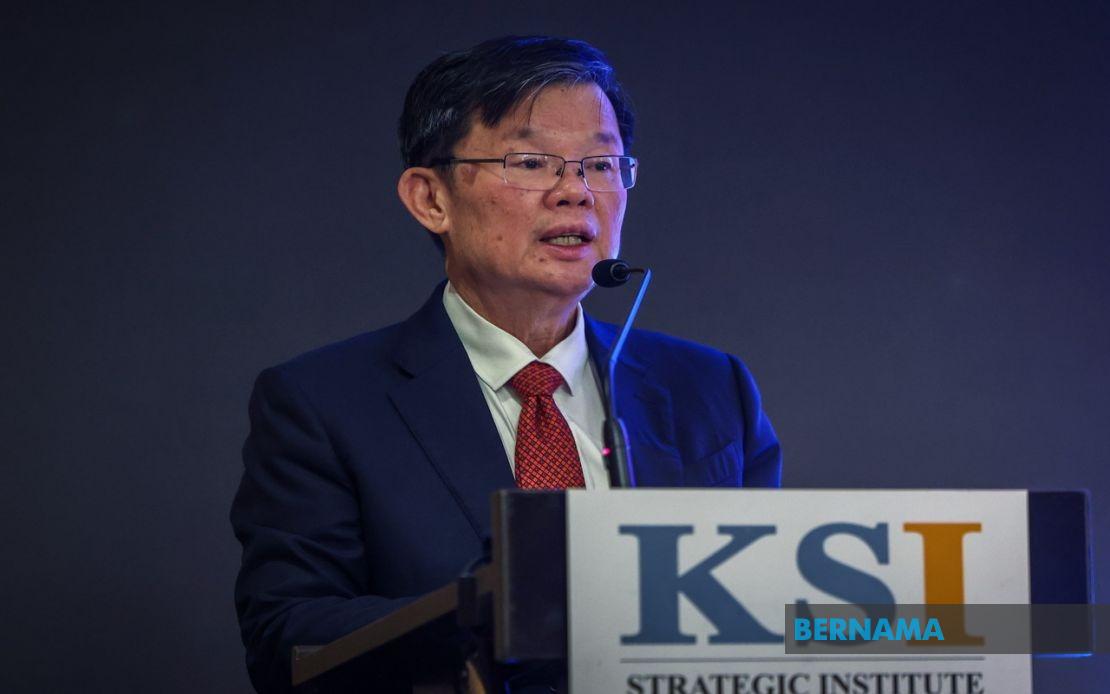
Penang's Pakatan Harapan coalition is determined to expand its slate of female candidates for the state's next election, yet the ambitious goal confronts a stubborn practical reality: too few women are stepping forward to contest. Speaking after opening the World Women Economic and Business Summit 2026 in George Town on June 15, Chief Minister Chow Kon Yeow acknowledged that while the party remains wedded to its objective of achieving at least 30 per cent women's participation in politics and decision-making, the recruitment bottleneck persists as a significant constraint on progress.
The challenge, as Chow explained to reporters, extends beyond simple party preferences or campaign rhetoric. Penang PH has actively pursued the 30 per cent benchmark, yet during candidate selection processes, relatively few women volunteer to contest, deterred by the considerable pressures and demands inherent in political life. This gap between aspiration and reality underscores a deeper structural problem affecting Malaysian politics broadly: women's willingness to enter electoral competition has not kept pace with party commitments to gender diversity.
Nationally, Malaysia's 30 per cent representation target, established in 2009, remains unfulfilled nearly two decades later. Women currently comprise only 13.5 per cent of Members of Parliament and 12 per cent of state assemblypersons across the country. These figures, far below the aspirational threshold, reveal that the challenge facing Penang is not exceptional but symptomatic of entrenched patterns across Malaysia's political landscape. For a region that has seen women advance substantially in professional fields—education, business, engineering, and public service—the disparity in political participation stands out as a singular anomaly.
Chow's remarks highlight an uncomfortable tension within Malaysia's mainstream political narrative. While parties routinely endorse gender parity in principle, fewer mechanisms exist to translate that endorsement into systemic change. The shortfall cannot be attributed simply to women's capacity or qualifications; rather, the barriers are institutional and cultural. Political candidacy demands time, financial resources, personal resilience, and willingness to subject oneself to intense public scrutiny—pressures that affect men and women differently, though particularly discourage female entry into the arena.
The Penang chief minister advocated for concrete measures to narrow the gender participation gap. He called on political parties to institutionalise the 30 per cent target directly into their candidate selection frameworks, transforming it from an aspiration into a binding procedural requirement. Such formalisation would remove discretion from the selection process and create accountability for achieving measurable outcomes. Without institutionalisation, targets remain advisory and vulnerable to abandonment when recruitment proves difficult.
Beyond candidate selection, Chow proposed strengthening women's access to decision-making committees within parties themselves. Women's participation in internal party structures—research committees, policy councils, disciplinary boards—develops the experience and networks necessary for eventual electoral candidacy. Where women remain peripheral to intra-party governance, the pipeline for future candidates remains depleted. Enhancing their committee representation is therefore not merely symbolic but foundational to building a sustainable pool of potential contestants.
Mentorship and resource allocation emerged as equally critical components of Chow's framework for advancing women's political engagement. Emerging female leaders require structured guidance from experienced figures within their parties, coaching that addresses both the strategic and psychological dimensions of campaign preparation. Simultaneously, parties must ensure that women candidates receive comparable funding, campaign support, and media exposure as their male counterparts. Without such resource parity, women enter campaigns with inherent disadvantages that accumulate into electoral disadvantage.
For Malaysian readers, the Penang case carries implications extending beyond state boundaries. As the nation's developed northern state, Penang has historically positioned itself as a leader on social policy issues. Its struggle to expand women's political representation suggests that even in comparatively progressive jurisdictions, structural barriers persist. The coalition's honest acknowledgement of recruitment difficulties—rather than claiming success or blaming women for insufficient ambition—signals a degree of institutional maturity uncommon in Malaysian politics. Yet acknowledgement must now translate into implementation.
The broader Southeast Asian context amplifies the significance of Malaysia's stalled progress on women's political participation. Regional neighbours have achieved higher representation rates through combination of constitutional mandates, party quotas, and sustained advocacy. Thailand has experimented with reserved seats, while Indonesia's decentralisation framework has created pathways for women's advancement in local governance. Malaysia's reliance on voluntary party commitment has proven insufficient, suggesting that the 30 per cent target may require legislative backing or constitutional reform to move from perpetual aspiration to achievable reality.
Chow's call for party-level institutionalisation represents a pragmatic intermediate step, yet its effectiveness will depend on binding enforcement mechanisms. Political parties in Malaysia have historically resisted structural constraints on their autonomy, viewing candidate selection as a prerogative of party leadership. Voluntary adoption of institutional quotas will require both political will and competitive pressure—the sense that failing to do so carries electoral consequences or reputational costs. Civil society organisations and women's advocacy groups will likely play a crucial role in creating and sustaining that pressure.
Looking ahead, Penang's upcoming state election will serve as a test case for whether the coalition can materially increase women's representation despite acknowledged recruitment challenges. The numbers fielded will indicate whether party commitment extends beyond rhetoric to genuine resource allocation and priority-setting. For a state that prides itself on inclusive governance, meaningful progress on women's candidacy has become a benchmark of institutional credibility.