Penang Chinese Town Hall has concluded its 2025 financial year with steady performance, reporting total income of RM12.61mil against expenditure of RM12.55mil, yielding a modest surplus of RM59,191. The organisation's financial health, while not dramatically strengthened, reflects stable community support and operational discipline during a year marked by infrastructure improvements and strategic positioning in emerging technology sectors.
Donations form the financial backbone of PCTH's operations, accounting for RM11.24mil of the organisation's revenue streams. This represents a dominant but concerning reliance on charitable contributions from the community. Beyond donations, the institution derives income from diverse sources: rental and maintenance fees generated RM439,671, while auditorium rental services brought in RM361,245. Anniversary-related receipts contributed a further RM222,498 to the coffers. This diversified approach to revenue demonstrates efforts to reduce dependency on any single income source, though donations remain overwhelmingly significant.
On the expenditure side, the organisation's spending priorities reveal its core mission and values. Donations distributed to beneficiaries consumed RM11.12mil, equivalent to approximately 88.6 percent of total spending. Notably, this represents a substantial decline from RM12.35mil in 2024, suggesting either reduced charitable demands or more selective allocation strategies. Conversely, operational costs associated with staffing have trended upward. Salaries and allowances climbed to RM502,625 from RM452,761 in the previous year, reflecting increased personnel investments or wage adjustments across the organisation.
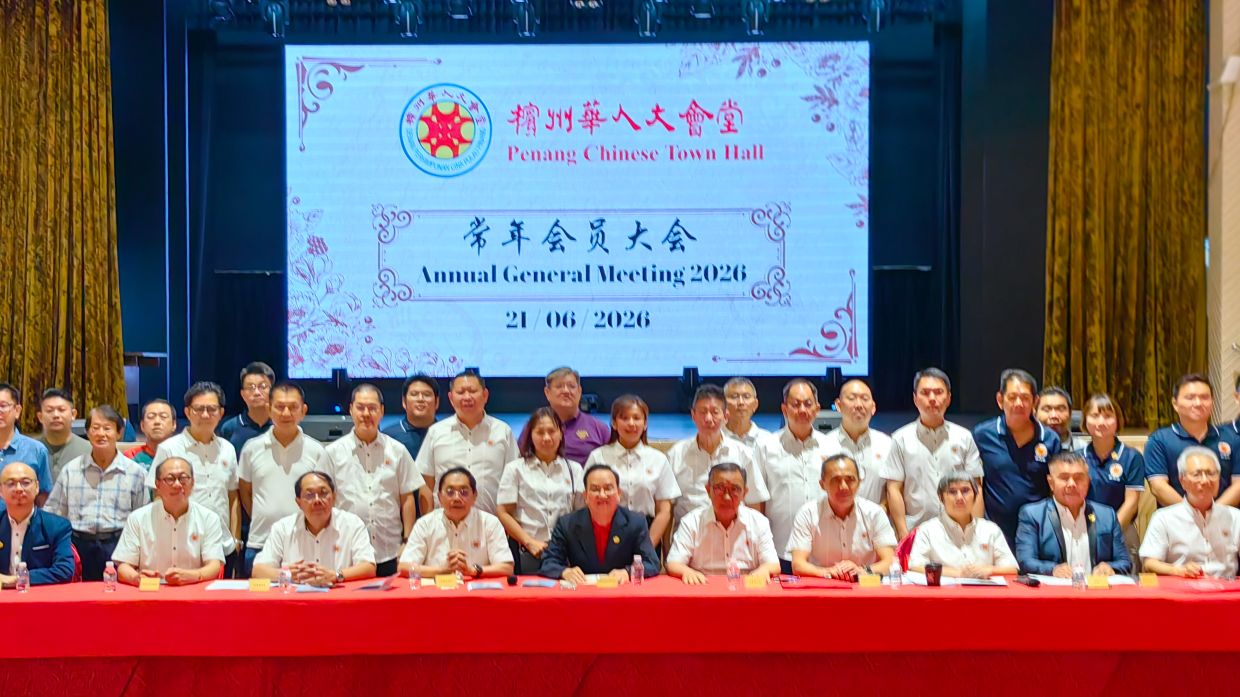
During the annual general meeting held on June 21 and attended by roughly 200 members, Tan Sri Prof Tan Khoon Hai, the organisation's chairman, shifted focus from financial matters to broader civic responsibilities. His remarks underscored the importance of electoral participation as democracy's foundation, positioning PCTH beyond its traditional community role toward advocacy for informed citizenship. With Johor and Negri Sembilan scheduled to conduct state elections this year, his message carried immediate relevance for members across peninsular Malaysia.
Tan's electoral message emphasised rational assessment of competing visions. He advocated for voters to examine party performance records and policy platforms with critical eyes, rather than succumbing to emotion or tradition. His framework highlighted three governance priorities that transcend parochial concerns: the promotion of national unity across Malaysia's diverse communities, the acceleration of economic growth that benefits all demographics, and the maintenance of social stability as a foundation for prosperity. The framing suggests PCTH's vision extends beyond preserving Chinese cultural institutions to embracing Malaysia's pluralistic future.
The chairman contextualised electoral choices within a broader temporal perspective, noting that voting determines not merely immediate local projects but the nation's trajectory across years and decades. This philosophical positioning reflects growing recognition among community organisations that election cycles carry consequences extending far beyond constituency boundaries. For Malaysian readers watching political developments, this statement from an established cultural institution carries weight as evidence of mainstream community concern regarding governance standards.
In parallel with civic engagement efforts, PCTH has invested significantly in physical infrastructure. The organisation unveiled its newly renovated Ping Zhang Hall, which underwent comprehensive modernisation to meet contemporary event standards. The upgraded facility now offers spacious, comfortable environments enhanced by professional-grade sound systems, sophisticated lighting installations, and contemporary LED technology. This repositioning targets multiple market segments, from corporate dining to association celebrations, charity functions and community gatherings. The investment signals PCTH's determination to remain economically sustainable while serving diverse stakeholder needs.
Looking beyond immediate concerns, PCTH has positioned Penang strategically within the regional artificial intelligence ecosystem. The organisation will co-organise the 2026 China-Asean Artificial Intelligence Cooperation Forum in Penang this November, partnering with technology and business organisations spanning China and Asean member states. This initiative reflects sophisticated understanding of Penang's competitive advantages and emerging opportunity areas. As Malaysia and Southeast Asia navigate rapid technological transition, PCTH's willingness to host such forums demonstrates commitment to regional economic positioning beyond traditional cultural preservation.
Penang's identity as the Silicon Valley of the East provides natural foundation for this ambition. The state's established leadership in electrical and electronics manufacturing creates ecosystems and skilled workforces capable of supporting AI industry development. The upcoming forum will convene experts, business leaders and industry representatives to examine cutting-edge artificial intelligence applications, industrial implementation strategies and cross-border commercial cooperation possibilities. For Malaysian technology companies and entrepreneurs seeking regional engagement platforms, such gatherings represent crucial networking and knowledge-exchange opportunities.
Tan encouraged PCTH members possessing relevant expertise to participate actively in forum preparations and implementation. This represents both practical necessity and symbolic statement—that community organisations must serve as bridges connecting Malaysia's technical talent with regional opportunities. The approach acknowledges that in an increasingly interconnected Asia-Pacific economy, provincial or merely national perspectives limit institutional relevance and member advancement. By facilitating such participation, PCTH positions itself as catalyst for economic mobility and knowledge advancement among constituent communities.
The 2025 financial results and strategic announcements collectively illustrate PCTH's evolution. The organisation remains financially prudent, maintaining operational discipline while achieving surplus despite economic headwinds. Yet equally important is the institutional confidence demonstrated through major infrastructure investment and ambitious regional initiatives. As Malaysian civil society organisations navigate between preserving heritage and embracing innovation, PCTH's approach offers instructive example of institutional adaptation without abandoning foundational missions.

