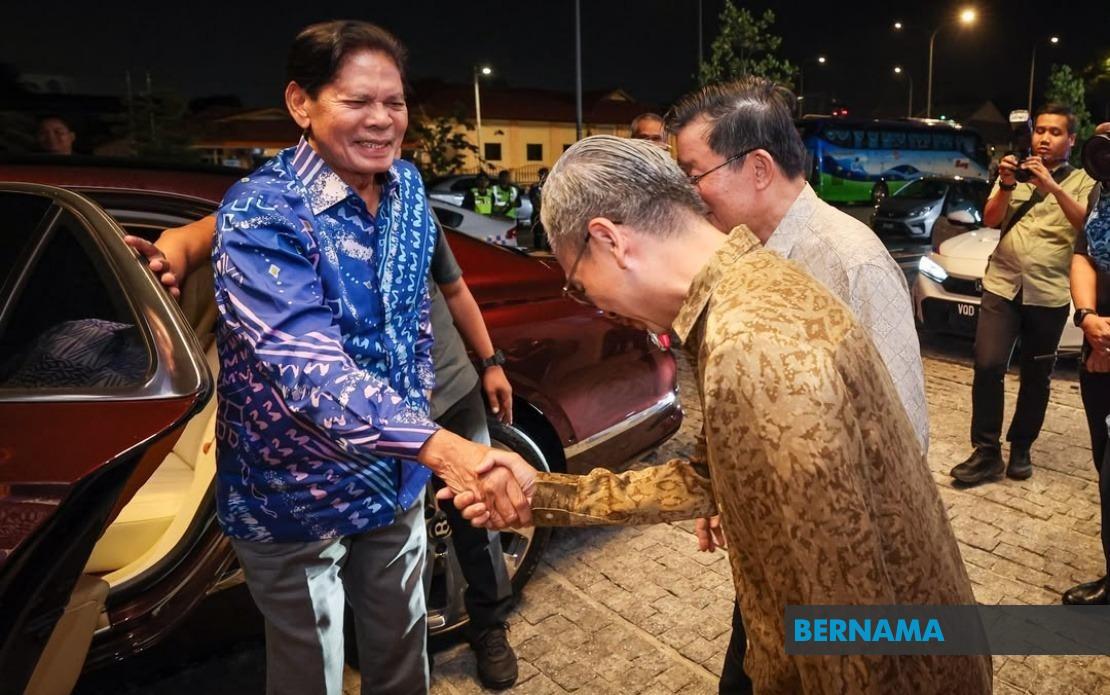
Penang Governor Tun Ramli Ngah Talib brought together nearly 350 media professionals, editors and state leaders at an evening reception in Butterworth on June 19, honouring journalists from Malaysia and across Southeast Asia as part of National Journalists' Day (HAWANA) 2026. The festive state government dinner recognised the media's indispensable contribution to the nation's progress and development, setting the tone for the larger gathering scheduled for the following day.
The celebration reflected the growing stature of HAWANA as a significant regional platform for journalistic excellence and cross-border professional exchange. By hosting delegations from multiple ASEAN nations, Penang positioned itself as a hub for media dialogue in Southeast Asia. The diversity of attendees—spanning local media giants, international news agencies, and government officials—underscored journalism's pivotal role in connecting communities and shaping public discourse across the region.
Among Malaysia's political and media leadership present were Penang Chief Minister Chow Kon Yeow and Communications Minister Datuk Fahmi Fadzil, signalling the government's commitment to supporting press freedom and professional journalism. The inclusion of Timor-Leste's Secretary of State for Social Communication, Expedito Loro Dias Ximenes, demonstrated the event's international significance and the shared values binding ASEAN media communities. Representatives from prominent Malaysian news organisations including Bernama, New Straits Times, Sin Chew Daily, The Star, Daily Express Sabah and Astro Awani attended, reflecting the breadth of Malaysia's media landscape.
International participation added considerable weight to the proceedings. Delegates included the President of Timor-Leste's national news agency TATOLI, Indonesian media representatives from ISWAMI and ANTARA, alongside other Asian journalists. This multilateral representation illustrated how HAWANA has transcended its domestic boundaries to become a recognised forum for elevating journalistic standards and fostering professional networks throughout the region. Such connections prove invaluable for addressing shared challenges in media sustainability, editorial integrity and combating misinformation.
The gala dinner functioned as a prelude to the main HAWANA 2026 event, which would be officiated by Prime Minister Datuk Seri Anwar Ibrahim at the PICCA Convention Centre @ Butterworth Arena. Approximately 1,000 media practitioners from Malaysia and several ASEAN countries converged in Penang to participate in this annual commemoration, making it one of the region's most significant gatherings of journalism professionals. The scale of participation underscores the profession's vitality and the industry's determination to maintain standards amid evolving technological and economic pressures.
HAWANA 2026 adopted the theme 'Media Integrity Strengthens Credibility', a concept that resonates deeply with contemporary challenges facing journalism globally. In an era of proliferating misinformation and eroding public trust in institutions, the emphasis on integrity serves as a powerful reminder that credible reporting depends fundamentally on ethical practice, rigorous fact-checking and transparent sourcing. For Malaysian media practitioners navigating complex political terrain and competitive commercial pressures, this thematic focus provided opportunity for substantive professional discourse and skill-sharing.
The Communications Ministry, working through its implementing agency Bernama, organised HAWANA 2026 as formal recognition of Malaysian journalists' contributions, dedication and professionalism. This governmental sponsorship reflects a broader understanding that media freedom and journalistic excellence constitute essential components of democratic governance and national development. By providing a platform for journalists to gather, learn and network, the ministry acknowledged that the profession's sustainability requires institutional support and professional development opportunities.
Concurrently, the three-day RIUH Pi HAWANA Carnival commenced at the same venue, bringing the celebration beyond the press corps to the general public. Organisers anticipated approximately 30,000 visitors to the carnival, which featured more than 24 local creative product brands alongside 20 food and beverage vendors. This expansion into public space democratised the celebration of journalism, allowing ordinary citizens to engage with media professionals and explore the creative industries more broadly. The carnival's interactive workshops enabled visitors to participate in creative activities, fostering greater media literacy and public appreciation for journalistic work.
The cultural component of the carnival featured 16 stage performances by local artists including Exists, Bunkface, Masdo, Sakura Band, Budak Nakal Hujung Simpang and Chelsea Ng, offered at no admission charge. This programming decision ensured accessibility across socioeconomic strata, aligning with principles of inclusive civic engagement. By integrating entertainment, commerce and professional celebration, HAWANA 2026 demonstrated how a trade conference could simultaneously function as a cultural and community event, strengthening journalism's visibility and social relevance.
For Malaysian media practitioners and editors, HAWANA 2026 offered crucial opportunity to address industry challenges collaboratively. In an environment marked by digital disruption, advertising revenue volatility and increased demand for content across multiple platforms, professional gatherings enable journalists to share strategies for sustainability and quality maintenance. The international dimension proved particularly valuable, allowing Malaysian reporters and editors to benchmark their practices against regional counterparts and adopt best practices adapted to local contexts.
The presence of senior government figures and international delegates conveyed official recognition that journalism remains a fundamental democratic institution worthy of sustained investment and dialogue. This messaging carries particular importance in Southeast Asia, where media freedom remains contested and journalists occasionally face legal harassment or economic pressure. By celebrating media integrity as the theme, HAWANA 2026 reinforced that credible journalism requires both professional commitment and enabling environments supporting ethical practice without intimidation or undue commercial coercion.
Looking forward, the success of HAWANA 2026 in attracting both regional media leaders and substantial public participation suggests the event's enduring relevance. As digital platforms disrupt traditional revenue models and misinformation spreads rapidly across social networks, journalism's need for professional standards and collective advocacy becomes more acute rather than less. Future editions of HAWANA will likely need to address emerging challenges such as artificial intelligence's impact on reporting, platform economics' effect on editorial independence, and strategies for sustaining investigative journalism in resource-constrained environments.

