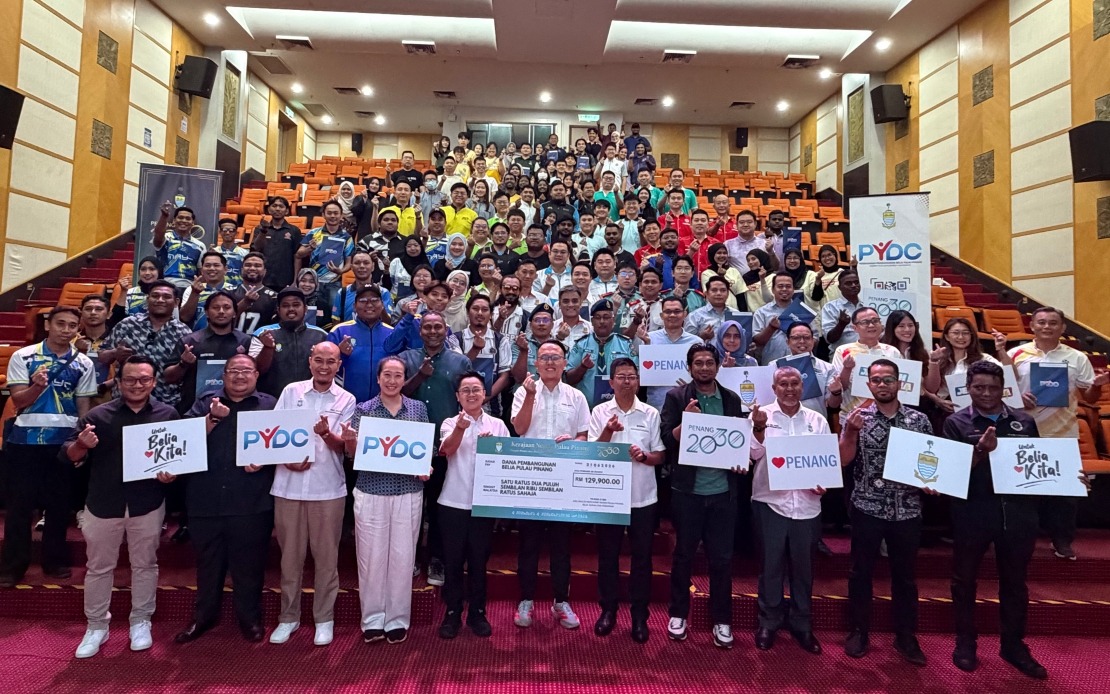
The Penang state government has committed RM129,900 to support 68 youth development initiatives spearheaded by 48 associations throughout the state, marking a significant investment in the region's young population. The allocation represents a portion of the RM200,000 total approved by the state government during a recent Youth State Executive Council Meeting, demonstrating sustained policy focus on youth empowerment at a time when many Southeast Asian economies are prioritising talent development and human capital growth.
Daniel Gooi Zi Sen, chairman of the Penang Youth, Sports and Health Committee, unveiled the funding package during an announcement that underscores the state administration's commitment to structured youth engagement. The programmes being supported span a diverse range of competency areas, including vocational skills training, employability enhancement, civic volunteerism and leadership development—domains that align closely with Malaysia's broader push towards producing job-ready graduates and engaged citizens capable of meeting future economic demands.
Gooi characterised the funding mechanism as far more than routine financial disbursement to youth organisations. Rather, he framed it as a deliberate investment of institutional trust, positioning youth associations as key partners in translating creative ideas and grassroots initiatives into measurable social benefit. This framing reflects an emerging philosophy in Malaysian youth policy that recognises community-based organisations as critical intermediaries between government resources and young people's developmental needs, particularly in ensuring culturally relevant and contextually appropriate programme design.
The scale of the initiative is notable within Penang's governance landscape. Supporting nearly 70 separate programmes across the state requires sophisticated coordination mechanisms and reflects confidence in the capacity of civil society organisations to deliver quality youth development services. For youth associations operating in Penang, the funding opportunity represents a meaningful source of operational capital that many smaller organisations struggle to secure through commercial or philanthropic channels, potentially enabling expanded reach into underserved communities across the state.
Gooi placed particular emphasis on programme quality and integrity, issuing clear expectations that recipient organisations maintain rigorous financial controls, transparent accounting practices and efficient management systems. This requirement signals awareness of public accountability concerns that have shadowed previous youth funding allocations in Malaysia, where financial mismanagement or opaque implementation has occasionally undermined public confidence in government investment programmes. By fronting these expectations prominently, the Penang administration appears intent on establishing clear governance standards from the outset.
Crucially, Gooi articulated a sophisticated understanding of programme evaluation and success metrics that extends beyond simple activity completion. He argued that genuine programme success should be measured through longer-term outcomes and broader societal ripple effects rather than merely tallying events held or participants engaged. This perspective reflects international best practices in youth development programming, which increasingly emphasise lasting behavioural change, skill consolidation and community-level impact rather than activity volume as markers of success.
For Malaysian youth policy observers, the Penang initiative illustrates how devolved governance structures can enable states to craft youth development approaches tailored to local demographics and economic priorities. Unlike centralised national programmes, which must serve diverse needs across vastly different regional contexts, state-level funding mechanisms like Penang's allow for more granular targeting and responsiveness to community-identified needs. This localisation principle has gained traction across Southeast Asia as policymakers recognise that youth development outcomes improve substantially when programmes reflect specific regional labour market conditions and cultural contexts.
The emphasis on multiple developmental dimensions—skills, marketability, volunteerism and leadership—suggests recognition among Penang policymakers that contemporary youth employment challenges require multifaceted interventions rather than narrow technical training alone. Young Malaysians increasingly face competition from regionally mobile talent pools and require not only technical competencies but also adaptive capacities, leadership qualities and demonstrated civic commitment to secure meaningful employment and advance within organisations. By supporting programmes across these domains, Penang is effectively hedging its bets across the full spectrum of youth development needs.
The funding allocation's impact will partly depend on the quality of proposals submitted by associations and the rigour of any selection process employed. If the Penang government has implemented competitive evaluation procedures that prioritise well-designed, evidence-informed programme approaches, the capital will likely generate substantial youth development benefits. Conversely, if funding distribution lacks rigorous assessment mechanisms, resources may be dispersed across programmes of inconsistent quality, limiting aggregate impact and potentially reinforcing negative perceptions about government funding efficiency.
Looking forward, this allocation sets a baseline for tracking youth development investment trends in Penang. Whether the RM129,900 level becomes a recurring annual commitment or represents a one-time initiative will signal the state's serious commitment to youth development as a policy priority. Sustained, predictable funding streams tend to enable civil society organisations to build institutional capacity and plan more ambitiously than year-to-year allocations, which often force organisations into reactive programme design focused on immediate delivery rather than systemic youth development.
The Penang initiative also carries implications for how other Malaysian states might structure their own youth development investments. As youth unemployment and skills mismatches remain persistent challenges across Malaysia, Penang's model of channelling government resources through multiple civil society associations rather than concentrating funding in fewer large institutions offers a blueprint for more distributed, community-responsive youth development architecture. Should the Penang programmes achieve documented success in participant outcomes and community impact, the model may inspire replication or adaptation elsewhere in Malaysia, potentially catalysing a shift toward more devolved, association-led youth development systems across the nation.

