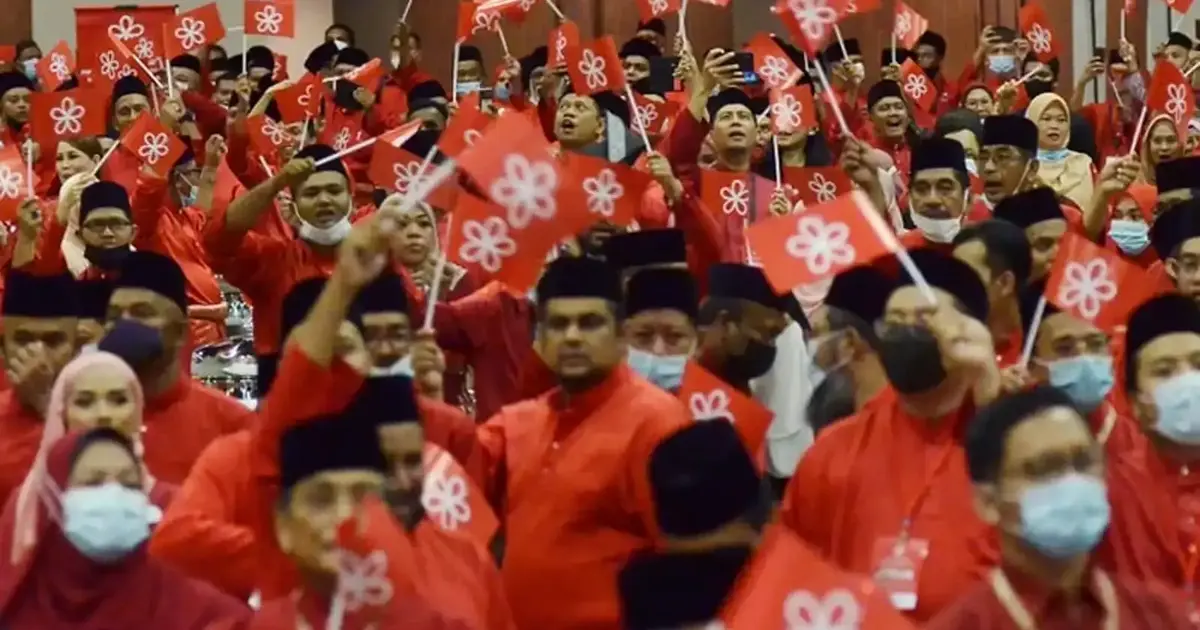
The leadership of Perikatan Nasional faces fresh internal tensions after PAS treasurer Iskandar Abdul Samad publicly questioned whether Bersatu can realistically maintain its position within the three-party coalition. His remarks underscore deepening concerns about the viability of the alliance as Malaysia's political landscape continues to shift, with particular pressure mounting on the smaller member parties to justify their presence in the grouping.
Iskandar's criticism represents a significant escalation in the simmering discontent that has periodically surfaced among senior PN figures. Rather than diplomatic silence, the PAS official moved to articulate what many within the coalition have privately discussed: whether Bersatu possesses sufficient political weight and organisational capacity to contribute meaningfully to PN's operations and electoral prospects. This candid assessment suggests that internal consensus around the coalition's composition may be fracturing.
Bersatu, formed in 2016 by Dr Mahathir Mohamad as a breakaway faction from UMNO, has struggled to establish a stable electoral base or stable political identity since its founding. The party has shifted alliances multiple times—from initially supporting the Pakatan Harapan government to later pivoting towards PN—creating an impression of opportunism that has complicated efforts to build grassroots loyalty. For many PAS members, Bersatu's organisational weakness represents a drag on the coalition's effectiveness, particularly as both parties compete for similar voter demographics in rural and semi-urban constituencies.
The comments also reflect deeper strategic calculations within PN. As Malaysia approaches its political inflection point, with several state-level elections looming and the next general election not yet scheduled but increasingly likely within the next two years, coalition members are calculating which partners add genuine value versus those who merely occupy seats. PAS, as the largest PN component with significant ground presence in northern Malaysia, may be reassessing whether resources devoted to supporting Bersatu could be more productively deployed elsewhere.
Bersatu's predicament has worsened following leadership changes and factional disputes within the party itself. These internal divisions have created perceptions of organisational chaos that undermine confidence among coalition partners. When a party struggles to maintain internal cohesion and present a unified political message, its coalition partners naturally begin questioning the reliability and utility of the partnership. For PN, this timing is particularly inopportune, as the opposition bloc seeks to project strength and competence as a potential alternative government.
The PAS treasurer's intervention also carries implications for Bersatu's political survival. Without the shelter provided by PN membership, Bersatu would face electoral obliteration in most constituencies, lacking the party machinery and voter networks necessary to win seats independently. The party's membership base remains thin compared to established organisations, and its brand recognition has deteriorated since the days of Mahathir's initial leadership. Departure from PN would effectively consign Bersatu to political irrelevance, making the party's leaders vulnerable to internal challenges and potential absorption by larger entities.
Malaysian coalition politics has historically been unstable, with smaller partners frequently facing pressure or rejection from larger ones. The fate of parties like Gerakan demonstrates how even formerly significant political entities can be marginalized when they lose utility to their partners. Bersatu may be heading towards a similar trajectory unless it can demonstrate renewed organisational vitality and electoral viability in the near term.
For PKR and other Pakatan Harapan components, Iskandar's remarks offer potential strategic opportunities. If PN's internal cohesion continues deteriorating, with PAS and Bersatu increasingly at loggerheads, the main opposition coalition might exploit these divisions to reclaim political initiative. However, Pakatan itself remains burdened by its own coordination challenges and competing ambitions among member parties, limiting its capacity to capitalize on PN's difficulties.
The broader significance of these tensions lies in what they reveal about Malaysian opposition politics more generally. Neither PN nor Pakatan has successfully developed institutional structures capable of managing multi-party coalitions with genuine equity and mutual respect. Instead, both blocs remain characterised by dominant parties managing smaller partners in arrangements that often appear hierarchical rather than genuinely collaborative. This structural weakness undermines opposition credibility as a potential government alternative.
Looking ahead, Bersatu faces a critical juncture. The party could attempt an internal reorganisation and renewal strategy, seeking to rebuild its base and demonstrate renewed political relevance within PN. Alternatively, party leadership might pursue merger discussions with larger political entities, either within or outside the current PN framework. A third possibility is gradual decline into irrelevance, with members defecting to other parties and the party itself becoming a hollow shell. Iskandar's comments suggest that without rapid and significant change, PAS and other PN partners increasingly view Bersatu as a political liability rather than an asset to the coalition's future prospects.