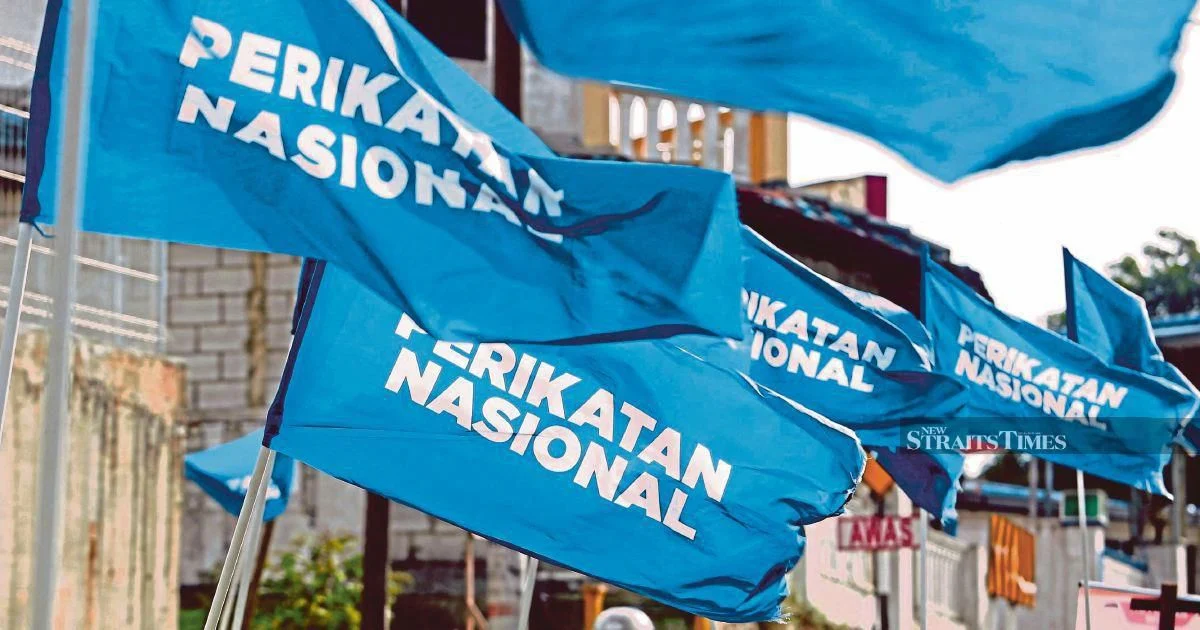
The fissures within Perikatan Nasional have widened considerably, with PAS leadership now openly questioning whether Bersatu possesses the authority to deploy the coalition's logo during the upcoming state elections in Johor and Negri Sembilan. The dispute, articulated by senior party figures from Kota Baru, underscores deepening institutional tensions that have been simmering beneath the surface of the political alliance since the formation of the broader Pakatan Harapan government.
At the heart of the disagreement lies a fundamental question of governance within coalition structures: who holds the legitimate power to authorise the use of shared symbols and branding. PAS representatives have made explicit that only the coalition chairman possesses such authority, a position that effectively challenges any unilateral action by Bersatu in electoral matters. This assertion reflects not merely procedural concerns but a deeper anxiety about power distribution and decision-making mechanisms within Perikatan Nasional, which has struggled to maintain internal cohesion since its establishment.
The timing of this controversy is particularly significant for Malaysian electoral politics. Johor and Negri Sembilan have emerged as crucial battlegrounds where various political alliances are jockeying for advantage. For PAS, which commands substantial grassroots networks particularly in rural constituencies, the ability to control campaign messaging and symbolic representation directly affects electoral prospects. The party's intervention suggests it views Bersatu's use of the coalition logo as either a strategic overreach or a sign of internal disrespect for established protocols.
Bersatu's position in Perikatan Nasional has been increasingly precarious following the transition to the broader Pakatan Harapan coalition government. The party, which was founded by former Prime Minister Mahathir Mohamad, has faced accusations from rivals of pursuing individual advantage while claiming to act in the coalition's collective interest. This latest controversy adds credence to such concerns, particularly if Bersatu had indeed proceeded without formal authorisation from the coalition's leadership structure.
The implications for Malaysian political stability extend beyond the immediate squabble over logo usage. Coalition politics has become the dominant organisational form in Malaysian elections, yet the mechanisms for resolving disputes within these multi-party arrangements remain underdeveloped. When constituent parties cannot agree on fundamental matters like symbol deployment, it raises questions about whether such coalitions can function effectively during campaigns or, more critically, in governing.
For voters in Johor and Negri Sembilan, this internal dispute carries practical consequences. Campaign confusion arising from conflicting messaging or unclear party positioning can undermine voter engagement and informed decision-making. Additionally, if parties within a coalition are spending energy on internal disputes rather than articulating policy positions, the quality of electoral competition may suffer significantly.
PAS's explicit assertion that only the coalition chairman can grant such authorisation suggests the party is attempting to establish clear institutional boundaries within Perikatan Nasional. This defensive posture indicates that PAS may fear systematic sidelining in decision-making processes, particularly if larger or more resourced parties like Bersatu can act unilaterally. Such concerns have historical precedent in Malaysian coalition politics, where smaller parties have occasionally found themselves marginalised despite formal membership status.
The broader context reveals that Perikatan Nasional has struggled to develop mature institutional practices since its formation. Unlike more established coalitions, it has not yet successfully codified procedures for resolving disputes or establishing clear hierarchies of decision-making authority. The absence of such frameworks leaves room for exactly the kind of controversy now unfolding, where parties operate on differing assumptions about their respective powers.
From a Malaysian political perspective, this episode underscores the ongoing volatility in the nation's electoral ecosystem. The shift from the dominant single-party era toward coalition-based governance has created new complexities that the political system continues to grapple with. As elections approach, such internal disagreements may become more frequent rather than less so, particularly if parties perceive that forceful action could enhance their electoral positioning.
Moving forward, Perikatan Nasional faces a critical choice about whether to invest in institutional development. Establishing clear protocols for logo usage, decision-making authority, and dispute resolution would prevent future controversies of this nature. Alternatively, continuing to resolve such matters through public disagreement risks further damage to coalition cohesion and public confidence in the alliance's viability.
For observers monitoring Malaysian political developments, this dispute about a coalition logo represents something far more substantial: a window into the structural weaknesses that continue to plague multi-party alliances in the country. Until these underlying institutional challenges are addressed, similar controversies are likely to recur with each electoral cycle.